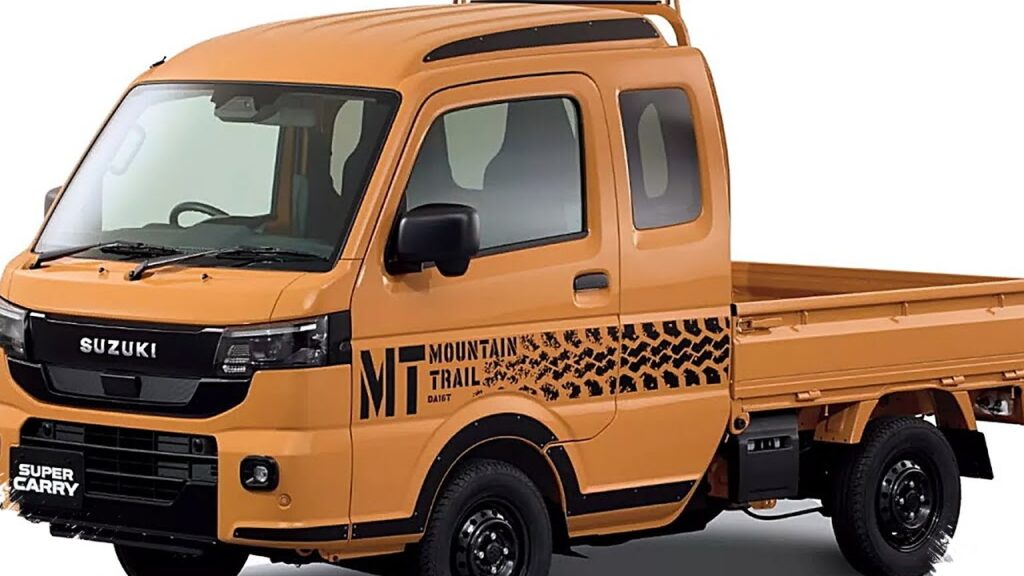
Suzuki New Carry is drawing fresh attention as a practical base for a modern city minibus, or angkot, in Indonesia. With a starting price equivalent to about $10,670, it appeals to operators who want low running costs, a durable engine, and a platform that can be converted by body builders for public transport use.
The model has long been familiar in the commercial vehicle market, and that familiarity matters in an industry where uptime and serviceability often matter more than flashy features. Its 1,500 cc engine, efficient fuel consumption, and the ability to carry heavy daily workloads make it relevant at a time when transport operators are under pressure to keep fares affordable and margins healthy.
A familiar workhorse for daily transport
Suzuki Carry has already built a strong reputation across many Indonesian cities and towns as a dependable commercial vehicle. That reputation comes from simple ownership economics, easy maintenance, and parts availability, three factors that remain decisive for angkot operators.
The New Carry concept shown at GIICOMVEC positions the model as a more modern foundation for public transport without changing its core identity. Instead of chasing advanced features that may not fit operator budgets, the focus stays on practicality, durability, and low operating expenses.
Why the 1.5-liter engine matters
At the center of its appeal is the K15B-C 1,500 cc engine. This engine is built for repeated use, stop-and-go traffic, and routes that involve constant starting, braking, and carrying passengers throughout the day.
For angkot duty, stable torque and dependable response matter more than headline performance figures. A vehicle that can climb, maneuver in tight streets, and continue working for long hours without frequent mechanical issues gives operators a clearer business advantage.
Fuel efficiency supports daily profit
Fuel economy is one of the strongest selling points of the New Carry for transport businesses. Based on the reference article, fuel consumption is estimated at around 13 to 15 km per liter, which is competitive for a light commercial vehicle.
That figure can make a meaningful difference in daily operating profit. When a vehicle runs multiple trips in congested urban traffic, even a small improvement in fuel use can help reduce overhead and protect cash flow.
- Lower fuel spending improves daily margins.
- Easier servicing helps reduce downtime.
- Simple construction supports faster repairs.
- Strong resale value can reduce long-term ownership risk.
Price positioning remains a key advantage
The base chassis pricing places the New Carry in a competitive range for small and medium transport businesses. The reference data lists the following starting prices, converted below into US dollars using an approximate exchange rate of Rp16,000 per $1.
| Variant | Starting Price |
|---|---|
| PU Flat Deck | about $10,670 |
| PU Wide Deck | about $10,738 |
| PU Flat Deck Power Steering | about $11,169 |
| PU Wide Deck Power Steering | about $11,225 |
These figures do not include the cost of angkot body construction from a coachbuilder. Even so, the starting point leaves room for conversion costs, registration, and interior adaptation, which helps operators plan investment more realistically.
Useful platform for more than one commercial role
New Carry also stands out because of its flexibility. The same platform is often used for different commercial purposes, including travel services, mobile shops, and ambulances, which shows how adaptable the chassis can be.
That flexibility matters in a market where business owners want assets that can generate revenue in more than one format over time. A vehicle that can shift roles more easily may hold greater value than a model designed for only one job.
A practical answer to modern angkot needs
The angkot concept based on New Carry reflects a wider shift in urban transport thinking. Modernization does not always require expensive technology or complex systems that raise costs for operators.
A more realistic path starts with a proven commercial vehicle, then adds bodywork, comfort improvements, and a more organized passenger layout. In that context, Suzuki New Carry offers a balance of affordability, toughness, and fuel efficiency that could help reshape how city transport is built and operated in many parts of Indonesia.
As cities continue to face traffic congestion and changing mobility habits, operators will keep looking for vehicles that are simple to maintain, economical to run, and strong enough for daily commercial use. Suzuki New Carry fits that brief with a 1.5-liter engine, a reported fuel range of 13 to 15 km per liter, and a starting price near $10,670 before body conversion.