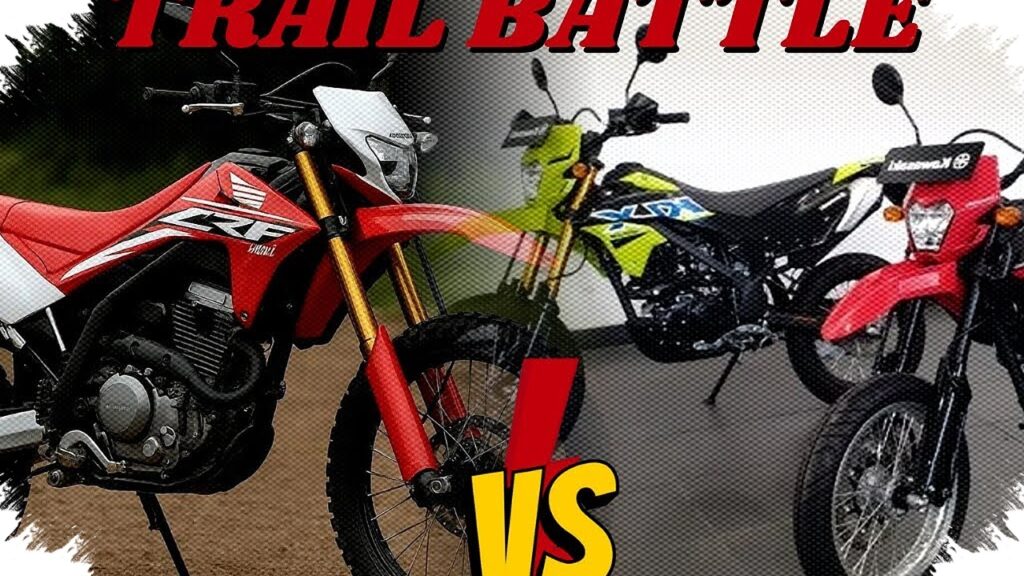
For riders who look at 150cc trail bikes through the lens of real off-road use, the comparison between Honda CRF150L and Kawasaki KLX150 usually comes down to how each model behaves when the terrain stops being friendly. One leans toward stronger readiness for rough ground, while the other prioritizes lightness and easier movement in tight sections.
That difference becomes clearer when the discussion moves beyond engine figures alone. In trail riding, ground clearance, weight, suspension character, and how the engine delivers power all shape the bike’s behavior on steep climbs, muddy tracks, rocky sections, and narrow technical paths.
Power delivery sets the first contrast
On paper, the Honda CRF150L comes with around 12.9 PS and 12.4 Nm of torque. It also uses PGM-FI fuel injection, which gives its fueling a more modern setup than its rival in the same class.
That setup is reflected in its riding character. The CRF150L is generally described as having a sharper response, which helps when the bike needs steady drive on long climbs or through mud that demands consistent pulling power.
The Kawasaki KLX150 sits slightly lower at around 12 PS and 11.3 Nm. It still uses a carburetor, which some off-road riders value because it allows manual adjustment when riding far from a workshop.
Ground clearance changes how each bike handles rough terrain
In off-road conditions, clearance underneath the bike often matters as much as engine output. The CRF150L stands out here with a ground clearance of 285 mm, while the KLX150 sits at 255 mm.
That gap gives the Honda a clearer advantage when crossing large rocks, exposed roots, or uneven terrain. For riders who regularly face taller obstacles on dirt tracks, the extra height can reduce the risk of scraping the underside.
The higher stance does come with a weight trade-off. The CRF150L weighs about 122 kg, while the KLX150 is lighter at around 116 kg.
KLX150 feels lighter and easier to move
The lower weight gives the KLX150 a more agile feel, especially on narrow routes where quick direction changes are common. That lighter character can make a real difference on twisty or slippery trails that require repeated corrections.
In technical terrain, a bike that feels easier to shift side to side can improve confidence, particularly for riders who prefer simple handling over a heavier, more planted feel. The KLX150 is often seen as the more approachable option in that respect.
The CRF150L, by contrast, feels larger and more prepared for obstacles. Its extra mass may reduce some of the quickness that lighter riders look for, even if it adds a sense of solidity on harsher ground.
Suspension also shapes the riding experience
Honda equips the CRF150L with an upside down front suspension, or USD. This type of setup tends to offer better stability when the bike is pushed faster or when the trail becomes more violent under the wheels.
That makes the CRF150L feel more composed on open dirt sections and in more aggressive riding situations. When large impacts become part of the route, the USD fork adds a noticeable advantage.
The KLX150 takes a different approach with a softer and more flexible suspension character. That trait helps with comfort and control, especially for riders who are still adapting to a trail bike’s behavior.
Which bike suits rough trails better?
The CRF150L is the stronger choice for terrain that demands steady pull, long climbs, and bigger obstacles. Its slightly higher output, stronger torque, and taller ground clearance make it feel more prepared for demanding off-road conditions.
The KLX150 makes more sense on narrow, winding, and technical routes. Its lighter body, easier maneuverability, and friendlier suspension give it an edge for relaxed off-road riding and for riders who care most about control.
In practical use, the CRF150L comes across as the tougher and more aggressive option for heavy trails, while the KLX150 wins on agility and ease of handling. The better pick depends on the terrain most often faced, because both bikes are built for off-road riding, just with different strengths in the same 150cc trail class.