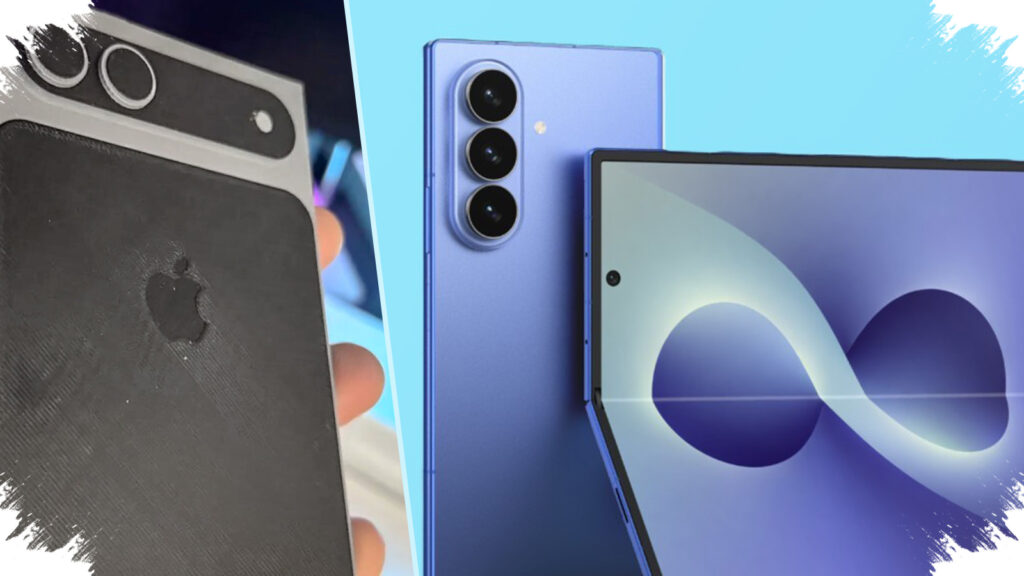
The premium foldable market is entering another round of pressure, with Galaxy Z Fold 8 and the long-rumored iPhone Fold pointing to two very different strategies. One is built around familiarity and faster availability, while the other leans on a new design direction, larger battery capacity, and a cleaner front display.
At the high end, the conversation is not only about innovation but also about price. Interest is centered on a segment around Rp32 jutaan, while the top iPhone Fold variant is said to approach Rp39 juta, a level that could place it among the most expensive foldable phones in Indonesia.
Samsung keeps the formula recognizable
Galaxy Z Fold 8 is expected to stay close to the design language that Samsung users already know. The device is said to retain the large main screen and the elongated cover screen that have long defined the Fold series.
That approach gives Samsung an advantage in usability. For many users, a familiar form factor makes the transition between the outer screen and the inner display feel natural, especially in daily mobile use.
Apple takes a different visual path
The iPhone Fold is being described with a wider display ratio, which would make it feel closer to a mini tablet when unfolded. That positioning is aimed at users who want a broader canvas for reading documents or editing content.
This also shows that Apple is not merely copying Samsung’s format. Instead of repeating the established Fold shape, the iPhone Fold appears to be heading toward a more open and spacious viewing experience.
Camera choices separate the two models
The strongest hardware contrast may come from the camera system. Galaxy Z Fold 8 is rumored to carry a 200MP main sensor, a specification that immediately stands out for users who value high-resolution photography.
That number gives Samsung a clear calling card for mobile creators who want detailed shots without relying on extra equipment. In a premium foldable, that kind of headline spec can carry real weight in buying decisions.
The iPhone Fold is said to take a different route with a 48MP camera. Apple is expected to rely on its usual optimization approach to keep results consistent for everyday use, rather than chasing the highest number on the spec sheet.
There is also a rumor that Apple may use an under-display camera. If that happens, the unfolded screen would look cleaner and less interrupted, which could become one of the device’s most attractive premium details.
Battery capacity points to different priorities
On endurance, the iPhone Fold is rumored to bring a battery around 5,500 mAh. That figure suggests Apple wants to target users who need long-lasting power for intensive all-day activity.
Galaxy Z Fold 8 is still expected to hold a large 5,000 mAh battery. While smaller than the rumored iPhone Fold capacity, it remains competitive in the premium foldable category.
Battery size is not the only factor that matters, though. Samsung also benefits from years of experience in the Fold line, especially in software maturity, which often becomes a major consideration on foldable devices.
Release timing may matter as much as specs
The launch schedule could become a deciding point for many buyers. Galaxy Z Fold 8 is expected to arrive first in July 2026, making its entry into the Indonesian market appear more realistic and faster.
The iPhone Fold, by contrast, is likely to launch only in late 2026 or even early 2027. For premium buyers who do not want to wait long, that difference may be enough to shift interest toward Samsung.
In the end, the two phones represent different answers to the same demand in the foldable premium segment. The iPhone Fold is shaping up as a mysterious new entrant with a wider display, a larger battery, and a cleaner front design, while Galaxy Z Fold 8 is pressing ahead with a 200MP camera, a familiar foldable format, and a quicker route to market.