


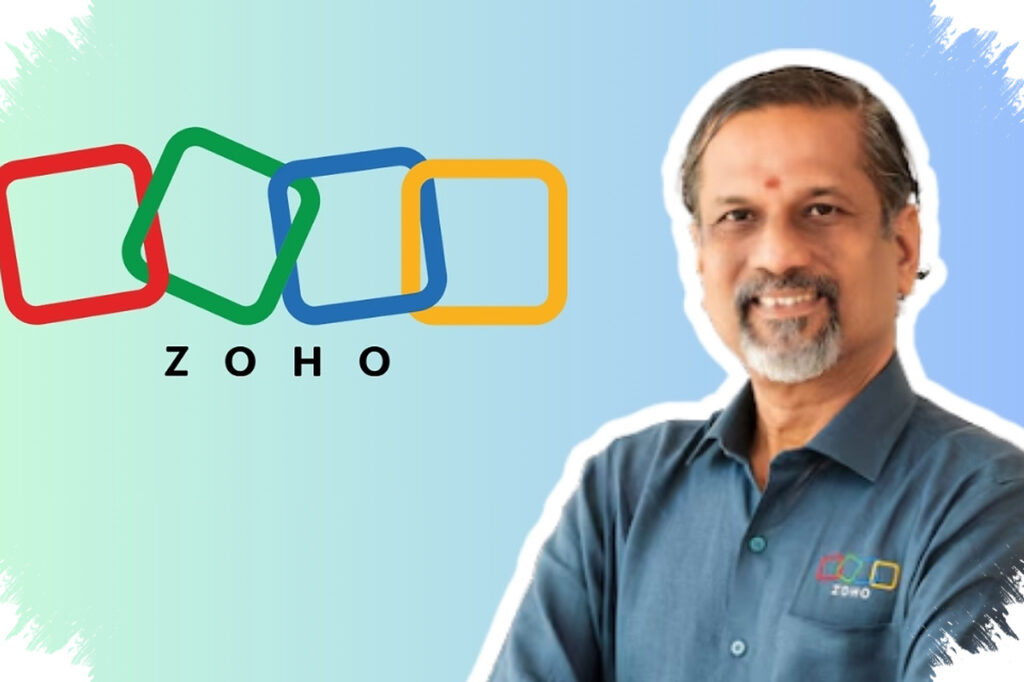
Software engineers are facing a shift that is harder to ignore as AI tools speed up many parts of software development. In response, Zoho founder Sridhar Vembu is urging engineers to build expertise that cannot be easily replaced by automation.
His message is not simply about coding faster. Vembu argues that the stronger advantage lies in understanding the industry being served, because customers ultimately judge software by how well it solves real problems.
Domain knowledge as the real differentiator
On X, Vembu reminded readers that customers do not pay for typing speed alone. They pay for solutions that are stable, secure, compliant, and backed by long-term support.
He condensed that point into a short line: “Be very good domain experts.” The remark reflects a broader view that business and industry knowledge can matter as much as technical output, if not more.
For Vembu, a programmer still needs a strong technical base. But that foundation becomes more valuable when it is paired with a clear understanding of how an industry works and what users expect from the product.
AI can accelerate early development, but not replace product judgment
Vembu acknowledges that generative AI can help in several early stages of software creation. It can make prototypes and working models faster to build, which gives teams more room to move quickly at the start.
That speed, however, does not turn a prototype into a finished product. Once software is used by real customers, the demands change because reliability, security, compliance, and ongoing support become central.
Those are the areas where human judgment still matters. In Vembu’s view, AI may reduce the time needed to produce an initial version, but it does not remove the need to decide whether the software is truly ready for practical use.
Why faster output is not always better
The wider industry debate over AI and developer productivity remains unsettled. Some companies report strong efficiency gains, but the benefits are uneven and depend heavily on the type of work involved.
Vembu warns against measuring engineering value only by speed. If performance is judged mainly by how quickly code is produced, important qualities such as user experience and product trust can be overlooked.
That is why he pushes teams to ask a different question: whether AI is actually helping create a better experience for customers. The focus, in his view, should move from raw output to outcomes that matter more to end users.
Software complexity still needs human oversight
Vembu also points to what he describes as “incidental complexity” in modern software. This is the extra layer of complexity that builds up over time and makes systems harder to maintain.
That kind of burden can consume significant team resources. He believes AI can help reduce inefficient parts of that complexity and make software systems healthier.
Even so, not every task can be compressed into automation. Large-scale software still requires people who can assess trade-offs, manage risk, and keep products functioning consistently in demanding business environments.
The skills he says engineers should protect
From Vembu’s perspective, programming remains a necessary foundation for software engineers. After that, he считает broader domain expertise becomes a major source of value.
He also highlights reliability, security, support, and compliance as essential strengths. These are the features that separate software that merely works from software customers trust over time.
AI, then, should be treated as a tool that helps remove repetitive work and reduce unnecessary complexity. Human engineers remain critical where context, accountability, and product decisions cannot be automated.
Vembu has also rejected the idea that AI will eliminate all paid work and make universal basic income the only viable answer. He called that vision “dystopian” and questioned the assumption that rising production would not be followed by price adjustments.
He further noted that many socially important jobs still require human presence, including caregiving, education, care services, and religious roles. For software engineers, the broader message is direct: as AI takes over repetitive technical tasks, the most durable value lies in understanding context, managing risk, and building products that users can trust.