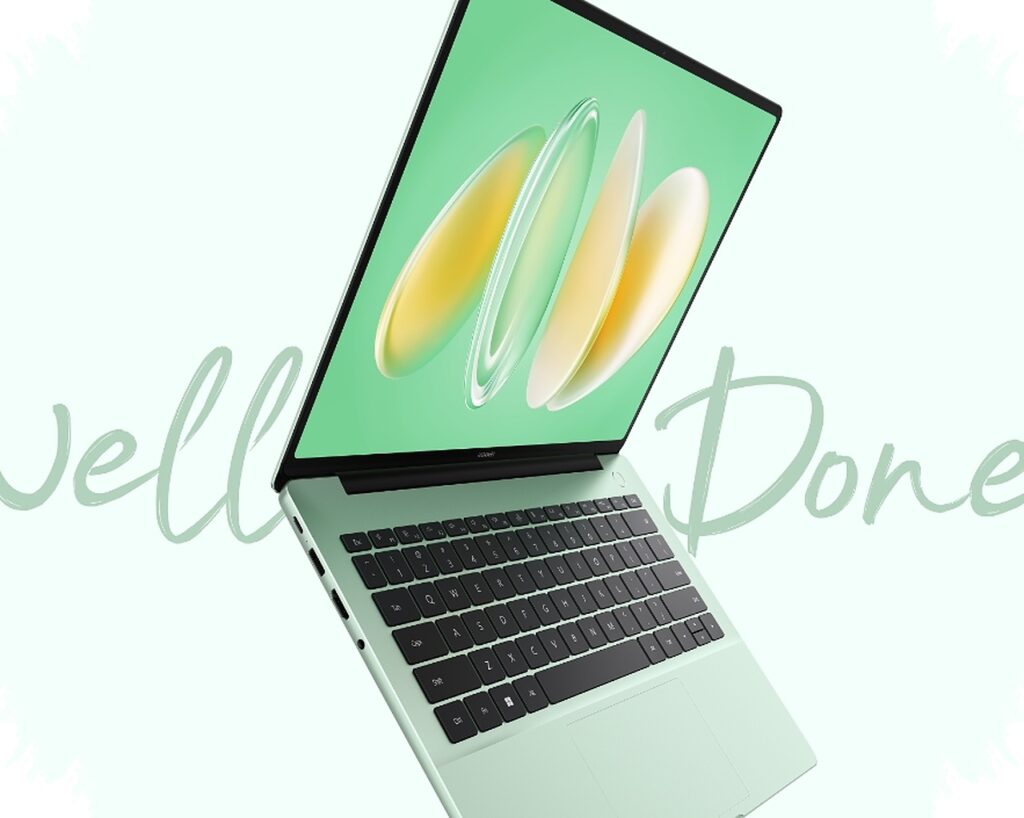
Huawei is expanding its laptop lineup with a new MateBook 14 HarmonyOS edition that aims squarely at the premium thin-and-light segment. The device pairs a 14.2-inch OLED display with a slim 14.5 mm profile, positioning itself as an alternative to the MacBook Air while adding hardware options that are more often associated with higher-end productivity machines.
The most attention-grabbing configuration goes beyond the usual ultrabook formula. Huawei offers up to 32GB of RAM and 1TB of storage, while keeping the chassis relatively light at around 2.86 pounds.
A slim body without giving up connectivity
One of the more practical aspects of the MateBook 14 HarmonyOS edition is its port selection. At a time when many thin laptops reduce wired connectivity, Huawei has kept two USB 3.2 Gen 1 Type-A ports, one HDMI port, one 3.5 mm audio jack, and one USB Type-C port.
That choice makes the laptop easier to use in everyday work settings. It can connect to external displays, accessories, and storage devices without relying heavily on adapters.
OLED panel with a high refresh rate
The display is another major selling point. Huawei equips the laptop with a 14.2-inch OLED panel featuring a 2880 x 1920 resolution, a 120Hz refresh rate, and a peak brightness of 500 nits.
This combination gives the MateBook 14 a specification set that fits well in the premium category. The high refresh rate should make general navigation feel smoother, while OLED technology promises stronger contrast and a sharper visual presentation for content viewing and creative work.
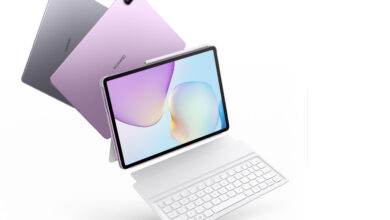
Huawei also says the laptop supports the M-Pen 3 stylus. The accessory includes an Air Mouse mode that is designed to help with interface navigation and tab management during work.
Memory and battery options aimed at heavier workloads
Huawei is offering the MateBook 14 HarmonyOS edition in more than one configuration. A version with 24GB of RAM and 512GB of storage is available, while the top model comes with 32GB of RAM and 1TB of storage.
Battery life also appears to be a key part of the pitch. The laptop uses a 70Wh battery, and Huawei claims it can play local video for up to 21 hours.
Charging support is broad as well. The device supports 66W reverse charging and is compatible with SCP, UFCS, and PD protocols, giving users more flexibility when powering the system or sharing power with other devices.
Kirin X90 and dual-fan cooling
Under the hood, Huawei uses the Kirin X90 SoC. The company does not provide detailed technical specifications for the chip, but says it is capable of handling AI workloads and common day-to-day applications smoothly.
To manage thermals, the laptop uses a dual-fan cooling system. Huawei says the setup helps keep temperatures under control during heavy workloads while avoiding excessive fan noise.
That combination suggests that this model is not only meant to look slim, but also to stay usable under sustained productivity demands. Huawei appears to be targeting users who want a portable machine that still has some room to grow beyond basic ultrabook tasks.
HarmonyOS continues to grow on PC
The MateBook 14 HarmonyOS edition runs Huawei’s own HarmonyOS platform. According to the company, the system already supports more than 17,000 applications and continues to receive regular updates.
Software support remains central to Huawei’s broader PC strategy. A larger app ecosystem helps make the HarmonyOS experience more practical, especially as the company pushes the platform further into the laptop market.
There is still one major limitation, however. Huawei has not clarified whether the MateBook 14 HarmonyOS edition will be sold outside China, and HarmonyOS-based PCs have not been officially launched globally.
Pricing and configuration details
Huawei lists two main versions of the MateBook 14 HarmonyOS edition. The 24GB RAM and 512GB storage model is priced at CNY 6,599, while the 32GB RAM and 1TB storage variant costs CNY 8,599.
With those configurations, Huawei is clearly trying to combine a slim chassis, a high-end display, and large memory capacity in a single package. For now, the product remains focused on the China market, while international availability is still unresolved.