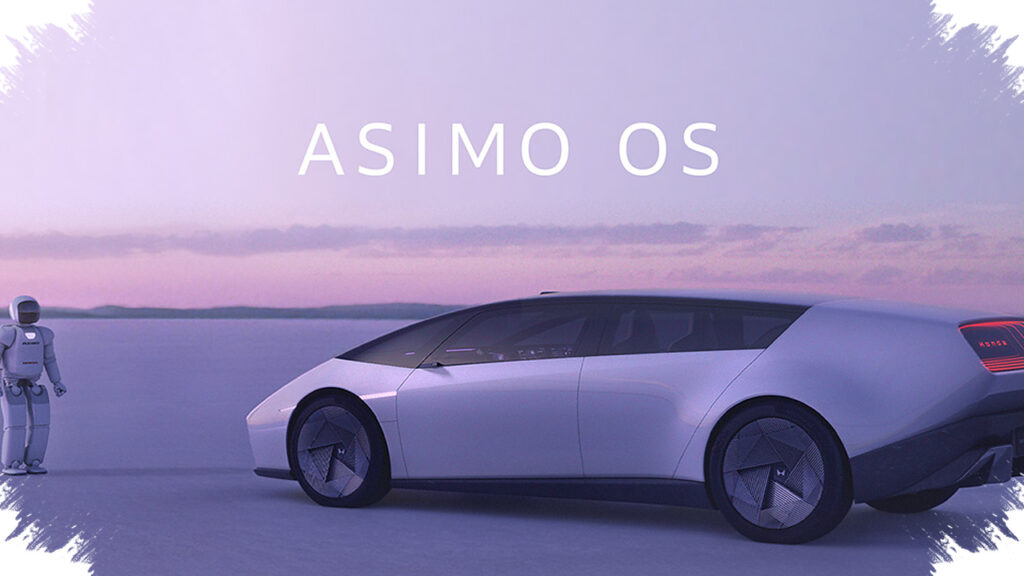
Honda is preparing a new electric vehicle family that is meant to stand out not only through its powertrain, but through the way it thinks and responds. The Honda 0 Series is scheduled for a global rollout in 2026 and brings together AI, a dedicated operating system, and advanced autonomous driving features in one package.
That combination matters because the range is being positioned as more than a conventional EV lineup. Honda appears to be aiming for a car that can adapt to its owner’s habits, reduce stress in heavy traffic, and deliver a lighter, more efficient driving experience.
ASIMO OS sits at the center of the cabin experience
The most distinctive technology in the Honda 0 Series is ASIMO OS. Developed from Honda’s humanoid robot technology, the system is designed to understand the driver more deeply and make the car feel more personal over time.
According to Honda’s concept, ASIMO OS can learn the owner’s routines. It is also meant to recognize driving patterns and in-cabin entertainment preferences, creating a vehicle that adapts to everyday use instead of forcing the driver to adapt to the car.
That direction reflects a broader shift in the EV market. Buyers are no longer evaluating electric cars only by design, range, or charging needs, because digital intelligence is becoming part of the purchase consideration as well.
Autonomous support is aimed at traffic-heavy conditions
Honda is also placing strong emphasis on autonomy in the 0 Series. The brand says the system brings advanced autonomous driving capability for certain situations, with a focus on reducing the burden on the driver.
One of the clearest use cases is traffic congestion on highways. In those conditions, Honda says the driver can significantly reduce the demands of active driving, while the vehicle handles more of the workload.
The system relies on a 3D gyro sensor and AI that reads road conditions and the driver’s state in real time. Honda has also stressed that safety remains the main priority, so the autonomy features are not presented as a replacement for control, but as support designed to keep the experience secure.
For dense urban markets, that approach could be especially relevant. Long traffic jams on city roads and toll routes make driver-assistance technology more appealing, particularly when daily commuting already consumes time and attention.
Lightweight body design is another key part of the plan
Beyond software and self-driving capability, the Honda 0 Series is also being built around a slim and lightweight structure. Honda is using a thin platform to improve aerodynamics and energy efficiency at the same time.
That choice helps differentiate the range from many EVs that are often associated with heavier construction. A lighter vehicle can contribute to lower energy use, which is an important factor for daily driving, especially in crowded urban environments.
The narrower body concept may also influence how the car feels on the road. A more compact and agile driving character can be useful in places where quick maneuvering and stable handling matter.
Three models have already been introduced
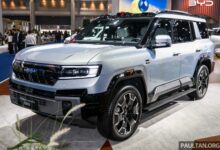
Honda has already shown several models that will be included in the Honda 0 Series family. The global debut is planned to begin in North America before the lineup moves into Asian markets, including Indonesia.
The models currently introduced are:
- Honda Saloon – a futuristic sedan
- Honda Space Hub – an MPV with a living-space concept
- Honda 0 Alpha – a compact EV
All three are expected to arrive in 2026. Honda has not yet announced official pricing for the lineup, although the reference material indicates that the entry-level model is likely to target the middle segment.
That positioning is important in markets where price sensitivity remains high. If Honda brings the range into Asia after the initial North American launch, the balance between smart features, efficiency, and affordability may determine how competitive the series becomes.
With ASIMO OS, autonomous support, and a lighter body concept working together, the Honda 0 Series is being shaped as a more adaptive kind of electric vehicle. Honda’s plan appears focused on making mobility less tiring and more intelligent, especially for drivers who spend a large part of their time in traffic.