Apple appears to be widening its premium ambitions beyond the familiar Pro tier, with reports pointing to a new Ultra label for devices that sit above the company’s current flagship lineup. The most notable candidates are a foldable iPhone and a MacBook with a touchscreen OLED display, both of which would mark a sharper break from Apple’s existing product playbook.
That direction suggests Apple is not only looking to refresh its top-end hardware, but also to create a more distinct ultra-premium category. If those reports prove accurate, the company would be setting up a clearer ladder between standard models, Pro devices, and a newer class reserved for its most advanced offerings.
A new tier above Pro
For years, Apple has used the Pro name to signal higher-end versions across several product families. The emerging Ultra branding would appear to go one step further, positioning selected devices as more exclusive, more expensive, and more ambitious in technical scope.
That strategy also fits a broader industry pattern. Instead of chasing only mass-market volume, companies increasingly target smaller groups of buyers willing to pay more for cutting-edge features. Apple Watch Ultra is often viewed as evidence that this approach can work inside Apple’s ecosystem.
A stronger Ultra tier would also give Apple room to experiment with hardware changes that may be too disruptive for mainstream products. Foldable displays, redesigned hinges, and OLED touch panels all fall into that category.
Foldable iPhone Ultra takes the spotlight
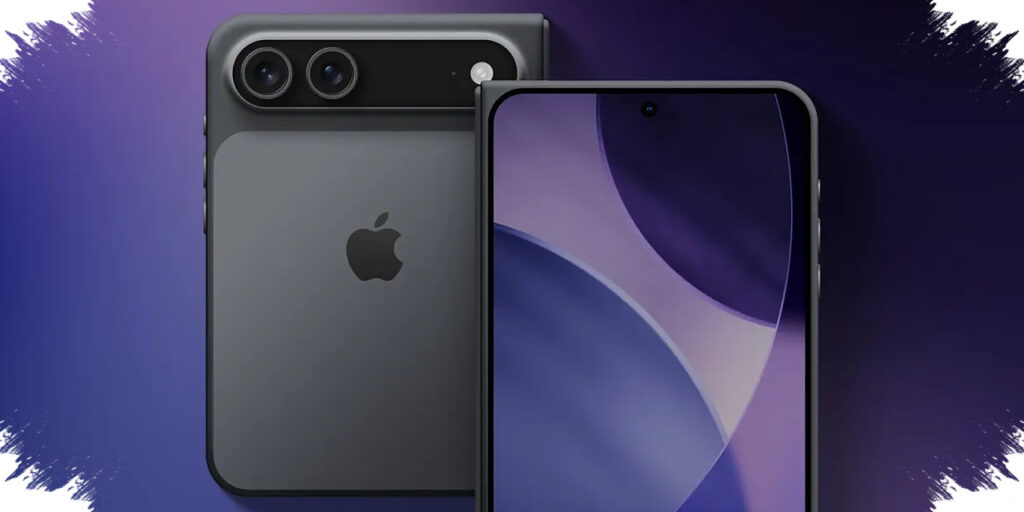
The device drawing the most attention is the foldable iPhone Ultra. Reports indicate it would sit above the current iPhone flagship line rather than joining the regular series.
The rumored design follows a book-style fold. When opened, it would expand into a tablet-like screen experience, which is the main reason the device has become such a closely watched project.
If the reports are correct, the external display would measure 5.5 inches, while the inner OLED panel would stretch to 7.8 inches. Apple is also said to be using titanium and aluminum for the body, with a redesigned hinge intended to make the crease less noticeable and improve durability.
The hardware package is expected to be built around a next-generation A20 chipset. Other reported specifications include 12GB of RAM and storage options ranging from 256GB to 1TB.
Camera and security choices may shift
A foldable form factor brings compromises, and the camera setup appears to be one of them. Instead of the triple-camera array often seen on Pro models, the foldable iPhone Ultra is said to use just two 48MP rear sensors.
That does not necessarily mean a weaker photography focus. Apple is believed to rely heavily on image processing to maintain strong results, even with a simpler hardware layout.
Security may also change with the form factor. Reports suggest Face ID could be left out, with Touch ID moving to the side of the device instead. Space constraints around the folding design are likely part of the reason for that shift.
A larger screen opens room for new software behavior
The bigger internal display could change how the phone is used day to day. A foldable screen would naturally lend itself to multitasking, with multiple apps running at once and an interface closer to what users expect from an iPad-like device.
Apple is reportedly preparing software optimizations specifically for foldable hardware. Split-screen support, better app scaling, and improved productivity features are among the expected adjustments.
Battery capacity is another area where the foldable model may stand out. The device is said to carry a 5,400mAh to 5,800mAh battery, which would place it among the largest in the iPhone family.
Pricing has not been confirmed, but early estimates place the foldable iPhone Ultra at $1,500 to $2,000 or more, depending on storage and features. The reported launch window is tied to the next iPhone generation, possibly around late 2026, although the device could arrive a little later than standard iPhone models because foldable panel production is more complex.
MacBook Ultra could break another long-standing rule
Apple’s premium push does not stop at phones. Reports also point to a MacBook Ultra, a model that would sit above the MacBook Pro and introduce one of Apple’s biggest laptop changes in years.
The headline feature is a touchscreen OLED display. That would mark a major shift for the MacBook line, which has traditionally remained non-touch while Apple reserved touch interaction for the iPad family.
If introduced, the MacBook Ultra would likely target professionals and technology enthusiasts looking for the highest available specifications. It would also reinforce the idea that Ultra is becoming a designation for Apple’s most advanced and most expensive devices.
Some reports further suggest Apple may eventually extend the Ultra label to other products, including AirPods Ultra. If that happens, Ultra could become a recurring marker for Apple’s most exclusive hardware across several categories.
Source: sundayguardianlive.com