


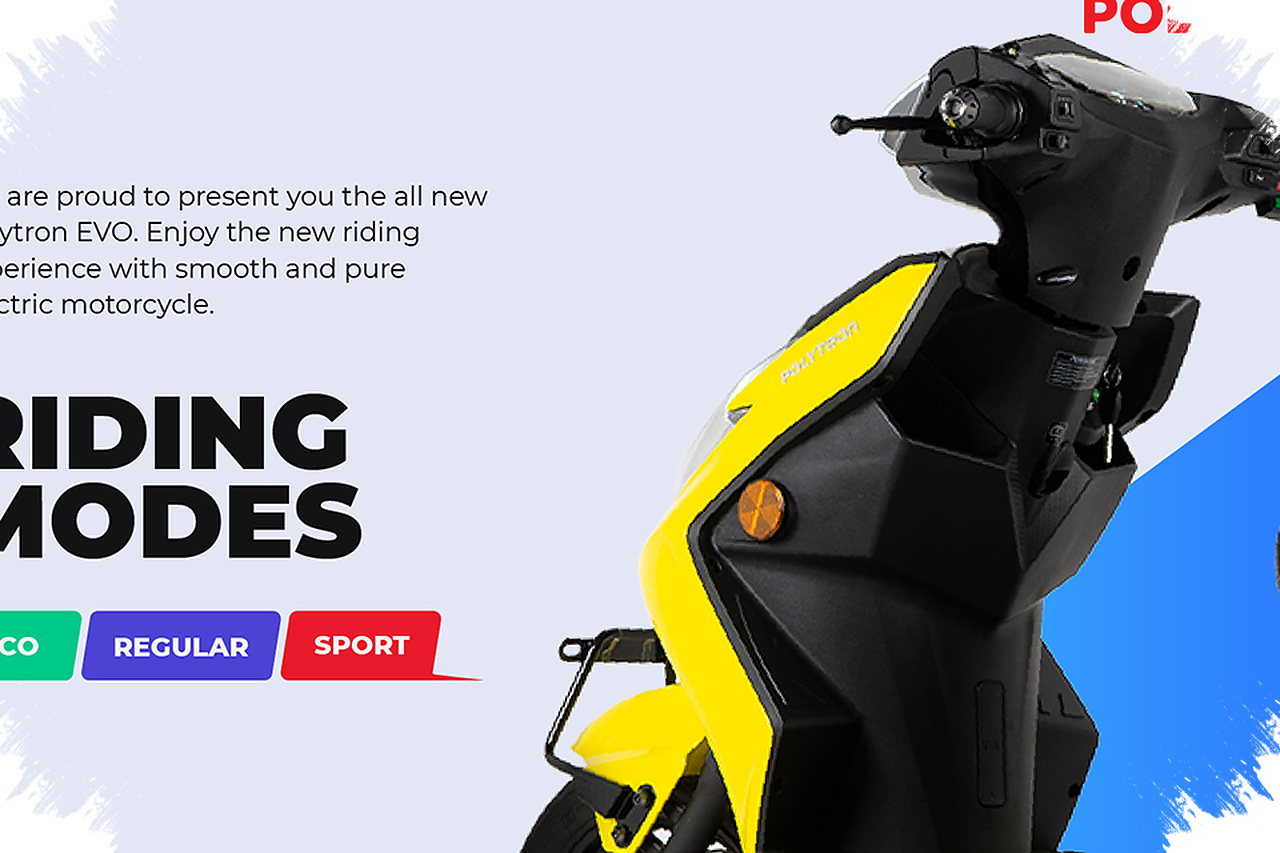
Polytron EVO 2026 is drawing attention not simply because it is an electric motorcycle, but because its claimed operating cost sits at around Rp50 per kilometer. That figure places it far below the Rp300 to Rp500 per kilometer that is often associated with gasoline scooters, and the gap is large enough to change how daily commuting costs are calculated.
For urban riders, that difference is not a small detail. On routine trips, the savings are described as being more than 80 percent, which makes the model stand out in a market that is increasingly sensitive to daily transport spending.
Low running cost as the main selling point
Polytron is not relying only on design or technology to attract attention. The company is also pushing a very direct message: the cost of use is low enough to matter in everyday life.
That claim is tied to a lithium-ion battery with a capacity of around 4.2 kWh. The battery is aimed at daily use, with efficiency positioned as the key value rather than sheer size or complexity.
Based on simple calculations using household electricity rates, a full charge is said to cost only tens of thousands of rupiah. Spread across the claimed maximum range, that is where the Rp50 per kilometer figure comes from.
Range and charging made for daily routines
The battery setup is paired with a claimed range of up to 150 kilometers on a single full charge. That makes the model relevant for commuters who want a vehicle that can cover regular trips without constant charging.
Polytron also highlights fast charging, which is said to cut charging time to around 1 hour for a significant amount of power. This is important because charging time remains one of the most common concerns around electric motorcycles.
A shorter charging process makes the vehicle easier to fit into a busy schedule. Riders can plug in during a break, then continue their trip without waiting too long.
Performance is not left behind
The efficiency message does not come at the expense of basic usability. Polytron EVO 2026 is said to deliver around 5 kW of power, with instant torque that should make acceleration feel responsive.
That kind of torque is one of the defining strengths of electric motorcycles in city traffic. It helps in stop-and-go conditions, when moving away from a standstill, and when overtaking in tight traffic.
The claimed top speed reaches 100 km/h, which keeps the model flexible for both city riding and some intercity use. In other words, the low-cost narrative is paired with performance that still supports everyday mobility.
Modern features support the package
Polytron has also included features that strengthen the motorcycle’s practical appeal. These include smart key functionality, app connectivity for battery monitoring, and advanced security systems.
A digital display and LED lighting complete the modern look. These details help the motorcycle fit consumer expectations for a vehicle that is not only efficient, but also easy to use and visually current.
In the broader market, models like this show where electric motorcycles are heading. They are no longer being presented only as alternatives to gasoline-powered vehicles, but as daily transport solutions that try to combine low cost, practicality, and environmental awareness.
If the Rp50 per kilometer claim holds up in real use, Polytron EVO 2026 could influence how consumers think about the cost of riding a motorcycle every day.