


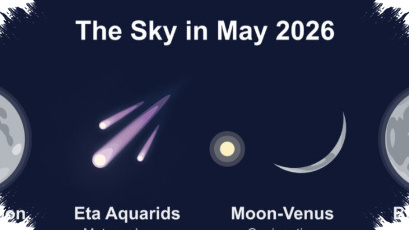
May offers a dense run of skywatching opportunities for people in Indonesia, with several easily observed celestial events appearing within the same month. From bright moons to meteor activity and planet sightings, much of the action can be followed with the naked eye if the weather cooperates.
The strongest appeal lies in how varied the lineup is. A clear horizon, low light pollution, and dry conditions can make the experience much more rewarding, especially for observations close to dawn or after sunset.
A bright start to the month
May begins with the Flower Moon on 1 May, a full moon that is bright enough to stand out all night long under clear skies. The name comes from a North American tradition that links the May full moon with seasonal blooming.
For observers in Indonesia, the Moon does not require any equipment to enjoy. Its full shape and strong brightness make it one of the month’s most accessible sights.
Meteor activity peaks before sunrise
The most anticipated event arrives on 5-6 May, when the Eta Aquariid meteor shower reaches its peak. The shower comes from debris left behind by Comet Halley, which burns up as it enters Earth’s atmosphere.
In ideal conditions, NASA says Eta Aquariid can produce as many as about 50 meteors per hour. Indonesia has a reasonably good viewing position because it sits near the equator, and the best direction to look is toward the east before dawn.
Venus and the Moon share the evening sky
Later in the month, the Moon also pairs up with Venus on 18 May after sunset in the western sky. Venus is the brightest object visible after the Sun and the Moon, which makes the pairing relatively easy for casual skywatchers to spot.
This kind of close approach is useful for people who want a simple target in the evening sky. A wide-open western view helps, since the objects sit low and become harder to follow if the horizon is blocked.
Jupiter returns after dusk
As the month moves toward its final days, Jupiter starts appearing again after twilight and can be seen low in the western horizon. The giant planet becomes an interesting target not only for the naked eye, but also for users of small telescopes.
Those with basic equipment may have a chance to look for the Galilean moons around Jupiter. Even without tools, the planet adds another layer to May’s already busy skywatching schedule.
The month ends with a rare full moon
The final highlight comes on 31 May with the Blue Moon, a term used for the second full moon in a single calendar month. The name does not refer to an actual blue color in the Moon itself.
That rarity is part of why the event draws attention. If the night sky stays clear, it can serve as one of the month’s most notable sights from Indonesia.
Better conditions improve the view
Indonesia often gets a better chance to observe these events during the dry season, when skies are more likely to stay clear. That matters most for meteor showers and for planets that appear close to the horizon.
Areas with little light pollution and open views of the sky give the best results. Weather still remains a key factor, since clouds and rain can quickly limit what can be seen during the month’s most interesting nights.