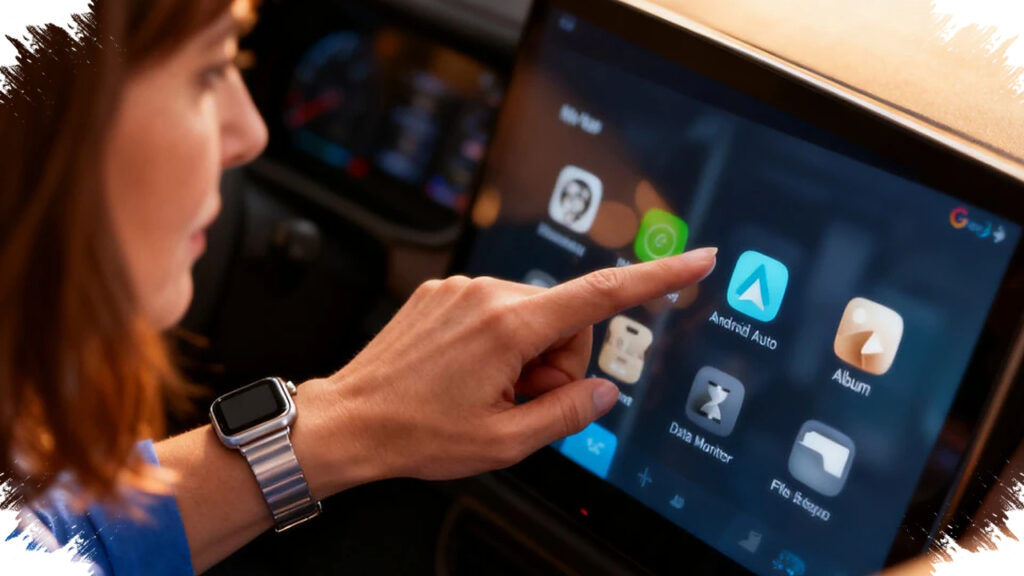
Android Auto may soon close one of its most annoying gaps for drivers. An alarm that rings on a phone could appear directly on the car’s head unit, with Snooze and Stop controls available on the screen instead of forcing a hand back to the device.
That change matters because Android Auto was built to reduce phone handling while driving. The platform has already moved many common functions to the car display, but alarms have remained an exception that still sends users back to their phones.
A small feature with a practical impact
Early signs of the new behavior appeared in Android Auto version 16.8.161804. Android Authority found clues in the app’s code showing that alarms may be surfaced directly on the head unit.
The alert is expected to work like a normal notification on the car screen. It also appears to extend into the notification shade, similar to how alarm alerts behave on Android phones.
Simple controls designed for driving
The visible controls look intentionally limited. Users would see only two main buttons, Snooze and Stop, with enough spacing to suit the layout of a car display.
That kind of design could make it easier for drivers to react quickly without shifting attention away from the road. The interaction would stay inside the Android Auto interface, which is already the central point of control in the car.
Why the change stands out
Alarm handling has long been a weak spot in the Android Auto experience. When an alarm rings, users usually still need to stop or snooze it on the phone itself, unless they have a compatible smartwatch that can silence it from the wrist.
That leaves Android Auto in an awkward position. It is meant to reduce distractions, yet alarms have continued to pull users back to the handset while driving.
An old request finally getting attention
The limitation has existed for a long time, even if it has not always drawn much public attention. A quick online search reportedly turns up requests for a similar feature from about eight years ago.
The problem is especially noticeable for people who rely on multiple alarms. For daily reminders or scheduled wake-up times, reaching for a phone during a drive is far from ideal.
No public release schedule yet
There is still no official word on when the feature will roll out widely. Even so, the fact that the function already appears to be working in early form suggests the launch may not be too far away.
Android Auto is also in a busy period of updates. Google is moving the platform toward Gemini as a replacement for Assistant, although availability is still uneven.
That transition has not been entirely smooth, with some users reporting that Android Auto can randomly switch back from Gemini to Assistant. Beyond that, Google has also added audio-only Google Meet calling and appears to be preparing a fix for autoplay behavior.
Taken together, those changes show that Android Auto is still evolving through both major upgrades and smaller practical fixes. In that context, bringing alarm controls to the head unit may be one of the most useful everyday improvements for drivers who depend on the platform.