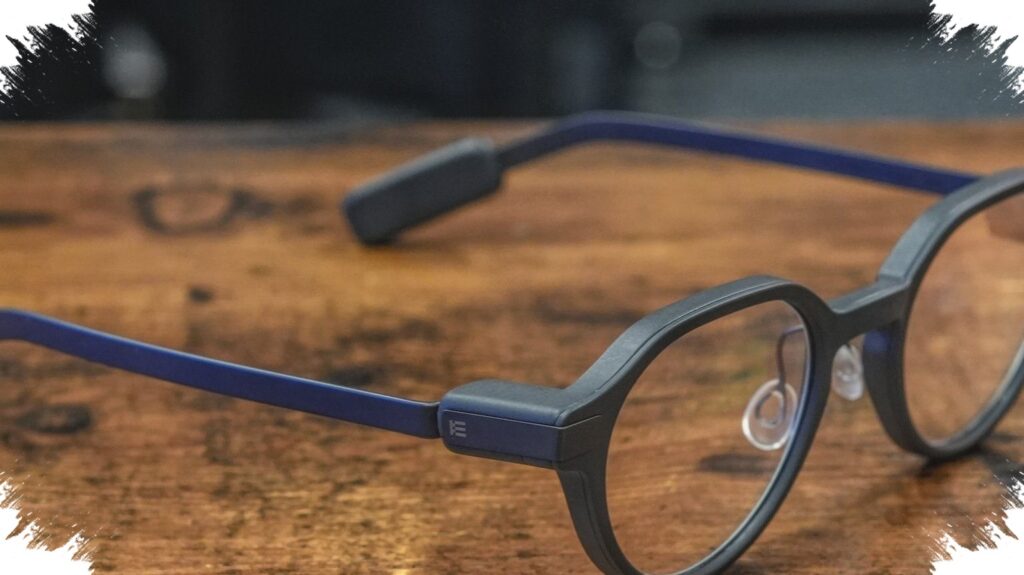
Rokid AI Glasses is not trying to win the same race as Even G2. Instead of centering its appeal on a visual display experience, it leans into AI, audio, and voice assistance in a lightweight frame that is meant to stay practical for everyday use.
That difference matters because the device is aimed at a different kind of buyer. For users who value fast, hands-free utility over a screen in front of the eyes, Rokid’s approach may feel more relevant than a more display-focused smart glasses concept.
Built around utility, not a display
Priced at $299, Rokid AI Glasses sits in the midrange wearable category with a clear emphasis on AI features. Real-time translation, object recognition, and a voice-based assistant form the core of the experience.
Those functions make the glasses feel suited to daily tasks that need quick interaction. Understanding a foreign language or identifying an object nearby can be more useful in practice than relying on a small visual panel.
Translation is the standout feature
One of the strongest points is offline translation support for 89 languages. That gives the glasses a meaningful advantage for travelers and for users who often end up in places with limited connectivity.
Even so, not every AI function works equally well without internet access. Some features still depend on a strong connection, so performance can drop when the network is weak or unstable.
Light on the face, limited in style
The glasses weigh only 38.5 grams, which helps them feel comfortable during longer use. That lightweight design also supports the idea of a wearable built for movement and frequent short interactions.
The trade-off appears in the materials. The plastic body does not feel especially premium, and the glossy surface can easily pick up fingerprints.
Style choices are also narrow because only one design is available. For users who want a more personal look or prefer a frame that matches a specific fashion style, that limitation will stand out quickly.
Audio is clear, but privacy is not perfect
Rokid uses an open-ear audio design, and that gives the glasses clear sound for music, voice responses, and routine interaction. The audio is also loud enough for casual everyday use.
The downside is sound leakage. In public spaces or busy environments, nearby people may be able to hear what is playing, which reduces privacy and limits the sense of immersion.
Camera and battery support the concept
The device includes a 12 MP camera with video recording in several modes. It is functional for basic use, especially when paired with AI features such as object recognition.
Image quality drops when zoom is used, which shows that photography is not the main focus here. Rokid AI Glasses is not built to compete as a camera-first wearable.
Battery life is said to reach up to 12 hours under optimal conditions. That is a competitive figure for smart glasses and should be sufficient for typical daily use.
There is one small power-related caveat: leaving the temple open in low-power mode can accidentally drain the battery. Charging also relies on a proprietary magnetic charger rather than USB-C.
What comes in the box
The package includes the magnetic charger, a soft pouch, and extra nose pads. A charging case is not included in the base package and is sold separately for $99.
Support for prescription lenses is also available. That adds practical value for users who need vision correction without giving up comfort.
A different kind of smart glasses
Rokid AI Glasses is not a direct replacement for Even G2 if the priority is a visual display experience. The device was never designed to match that kind of screen-based use case.
Its strength is narrower but clearer: lightweight hardware, useful AI tools, offline translation, and hands-free operation. For users who care more about everyday function than visual immersion, that makes Rokid a more practical choice in its own lane.