


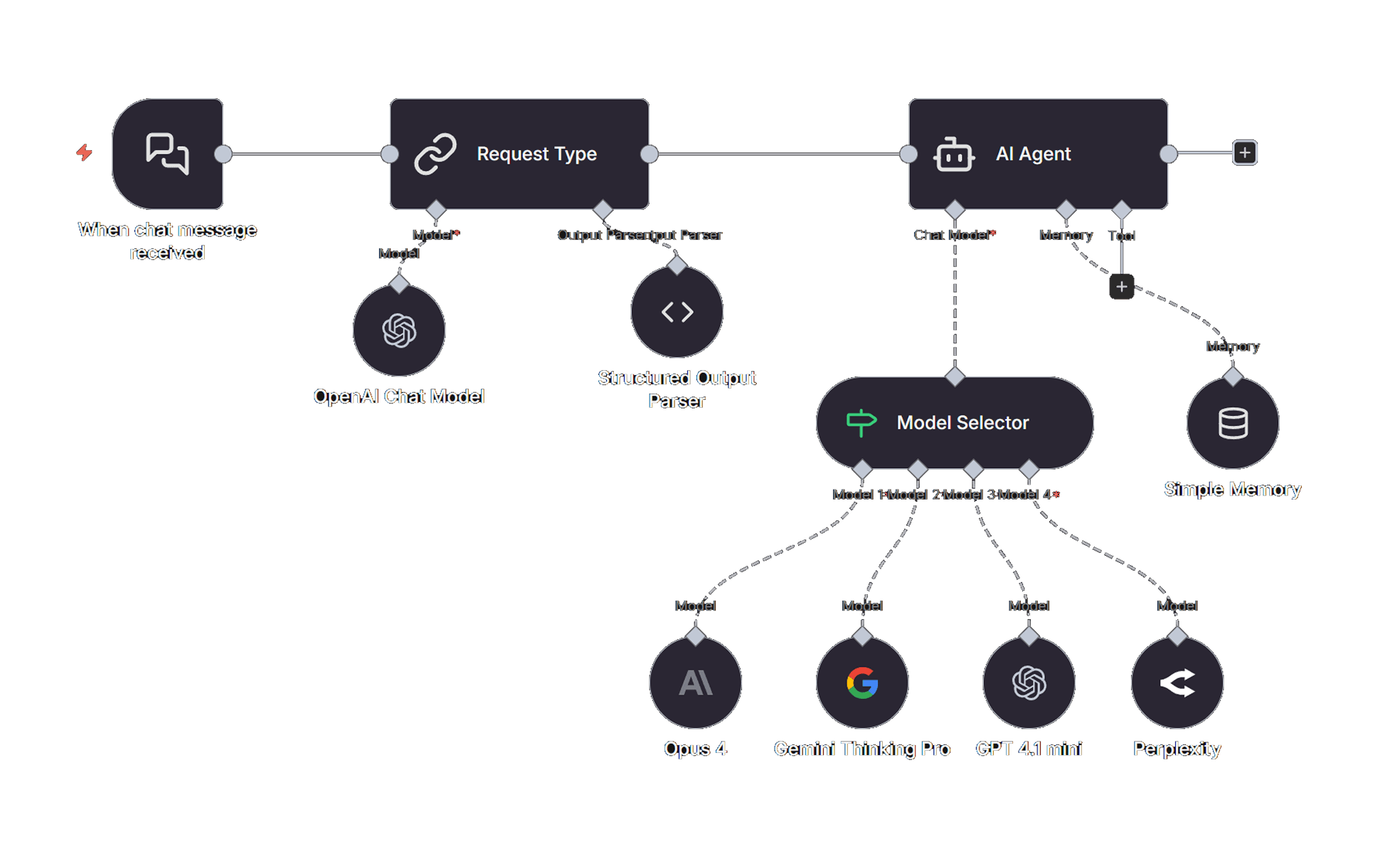
The appeal of AI agents is not just that they answer questions. Their value lies in carrying a task forward on their own, step by step, until the goal is reached.
That is what sets them apart from ordinary chatbots. A chatbot usually stays inside a conversation window, while an AI agent is built to reason, remember context, set objectives, and execute actions across multiple steps.
Why AI agents stand out
AI agents are drawing attention because they can handle more complex workflows than a typical chatbot. They are useful when a job does not end with a single reply and instead needs planning, follow-up, and adjustments along the way.
That makes them suitable for work such as building a project timeline, coordinating updates, and changing direction when new input arrives. The main distinction is autonomy, since the system is expected to keep working until the assigned task is complete.
The core loop behind the system
A common structure used in AI agents is the Observe-Think-Act loop. In this pattern, the agent observes data, processes context, takes action, and repeats the cycle until the target is achieved.
This approach makes the system better suited to dynamic tasks. When conditions shift, the agent can adjust the next step without restarting the entire process from scratch.
What needs to be prepared first
The main engine of an AI agent is usually a large language model, or LLM. It serves as the reasoning center that processes input and produces outputs based on context.
To work in real-world settings, the agent also needs APIs and supporting tools. These may include access to a browser, file system, or terminal commands so the agent can interact with external systems.
Memory is another important component. It stores context across sessions so the agent does not lose rules, preferences, or corrections that were given earlier.
Goal-setting also has to be defined from the start. A clear objective gives the agent a reference point for action and a way to measure whether the task has been completed successfully.
How to begin without overbuilding
The fastest way to start is to pick one real task that genuinely needs automation or deeper reasoning. That is usually more effective than trying to build a general-purpose agent for every possible job.
After that, the next step is writing a prompt contract. This structure reduces ambiguity and helps keep the agent’s output aligned with expectations.
A prompt contract should include four basic parts: the goal, the boundaries, the output format, and how to handle failure or uncertainty. The goal defines the final result, while the boundaries prevent unwanted actions.
The output format keeps results consistent and easier to use. Failure-handling instructions matter as well, because the agent needs to know what to do when information is unclear or an error occurs.
In practice, a structured prompt can be used for tasks such as preparing an overview. The user can specify the required sections, the word count, and the tone so that revisions stay minimal.
Why memory changes the result
Memory is one of the biggest differences between an AI agent and a standard chatbot. With a memory file, the agent can store rules, preferences, and corrections for later sessions.
That makes it possible for the system to learn from previous interactions. If the same formatting mistake keeps appearing, updating the memory file can stop the issue from repeating.
Some more advanced agents also support self-modifying memory. In that setup, the system can review feedback and improve its own process over time.
The result is more consistent and more personal output. In repetitive workflows, that can improve both efficiency and accuracy.
Platforms that fit different needs
Platform choice affects how easy the agent is to build and run. Each option offers different strengths depending on the task being automated.
Claude Code from Anthropic is known for reasoning that is easier to interpret and for step-by-step transparency. It is suited for complex workflows and coding work.
Codex from OpenAI is aimed at users already familiar with the OpenAI ecosystem. Its integration with ChatGPT supports smoother task execution in the same environment.
OpenClaw focuses on everyday automation. It is integrated with messaging apps to help with personal productivity and real-world tasks.
Antigravity from Google stands out for stronger multimodal capabilities. It is described as a good fit for visual and front-end work such as design, marketing, and UI/UX.
When one agent is not enough
For content production, a single general-purpose agent may not handle every nuance well. That is why more specialized systems are starting to split work across several connected agents.
One agent can build the content framework based on audience and goals. Another can refine language, tone, and style, while a third handles format, design, and visual presentation.
This division of roles creates a more orderly workflow. It also makes the final output more likely to fit strategic needs while remaining readable and polished.
For anyone looking to move quickly, the path is straightforward: choose a platform, define one task, write a prompt contract, prepare an initial memory file, then run the system and refine it until the agent behaves consistently.