


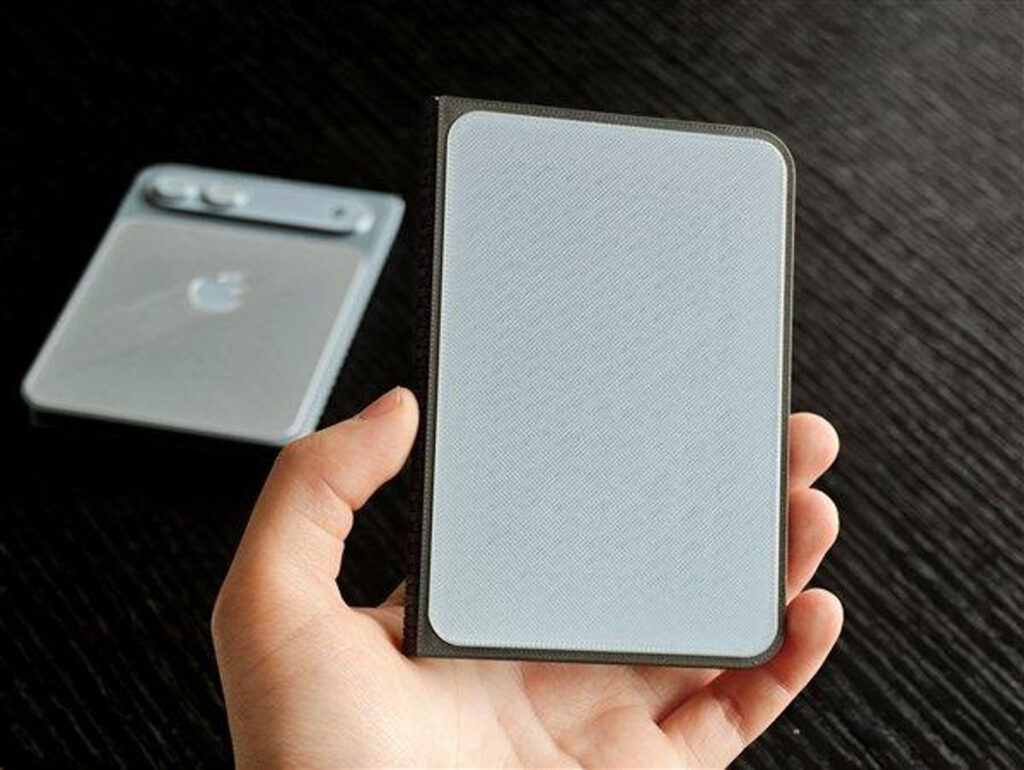
The next major shift in smartphones may not come from faster chips or better cameras, but from the way the screen itself is shaped. Apple and Samsung are both being linked to design changes that could make phones feel much more radical in everyday use, especially through horizontal foldables and a fully bezel-free iPhone.
A new foldable direction takes shape
For years, foldable phones have mostly followed one familiar formula. They open into a device that still feels close to a regular phone, then expand into a larger display when unfolded.
That approach now appears to be changing. Huawei’s Pura X and Pura X Max, introduced in April, brought a wider horizontal foldable design that makes films and reading feel more natural while still remaining comfortable to hold with one hand when folded.
Samsung is expected to move in a similar direction at its foldable launch event in July. Alongside the Galaxy Z Fold 8, the company is said to be preparing a Galaxy Z Fold 8 Wide, also referred to as the Galaxy Z Wide Fold, with a horizontal folding concept similar to Huawei’s.
Apple is also reported to be entering this segment with its first foldable iPhone, temporarily called iPhone Ultra. That device is rumored for release later this year, and both Samsung and Apple reportedly see the new format as highly appealing to users.
If this design proves successful in the market, other Android manufacturers are expected to move quickly as well. Over time, the horizontal foldable approach could start to replace the traditional Fold-style layout that has dominated the category.
The bigger leap may come from the iPhone display
Beyond foldables, the most dramatic change under discussion involves the iPhone 20 Pro. Industry sources say the device is expected next year with a full-screen design that removes the bezel, the notch, Dynamic Island, and even the hole-punch camera.
That experience depends heavily on under-display camera technology being refined in time. If that target is achieved, users would get a screen with no visible interruptions, something the smartphone industry has been chasing for nearly a decade.
Apple is not alone in pursuing that direction. Many Android makers are also working on similar display concepts, and the trend toward borderless screens could spread just as quickly as the earlier wave of notch-based designs.
The impact would be felt most in daily use. Watching videos, playing games, and handling routine phone tasks could all feel different if the full-screen format becomes the new standard.
Phone shapes may be redesigned too
The changes are not limited to bezels and folding mechanisms. Another design shift under examination is aspect ratio, with many future phones potentially becoming shorter but wider rather than long and narrow.
That suggests smartphone design is being reconsidered inside Apple, Samsung, and other technology companies. The goal is to create devices that feel more intuitive, easier to use, and better suited to modern entertainment habits.
Screen sizes are also continuing to grow. In the near future, phones with displays above 7 inches are said to become more common, giving consumers options that range from ultra-compact devices to models that feel close to mini tablets.
Smart glasses are part of the same push
The changes on phones are happening alongside broader work on new device categories. Meta has already advanced its Ray-Ban Meta smart glasses line with integrated display and AI features, creating a more immersive experience than earlier generations that relied only on cameras and speakers.
Samsung has also announced its Android XR smart glasses platform after years of development. Apple, meanwhile, is said to be building its own AR glasses ecosystem, showing that competition for future devices is no longer confined to phone screens.
If glasses from familiar phone brands begin showing notifications, navigation, language translation, and AI support directly in front of the user, everyday technology habits could change sharply. Smartphones are not going away soon, but the next two years appear set to become the most important transition period since the first iPhone arrived in 2007.