


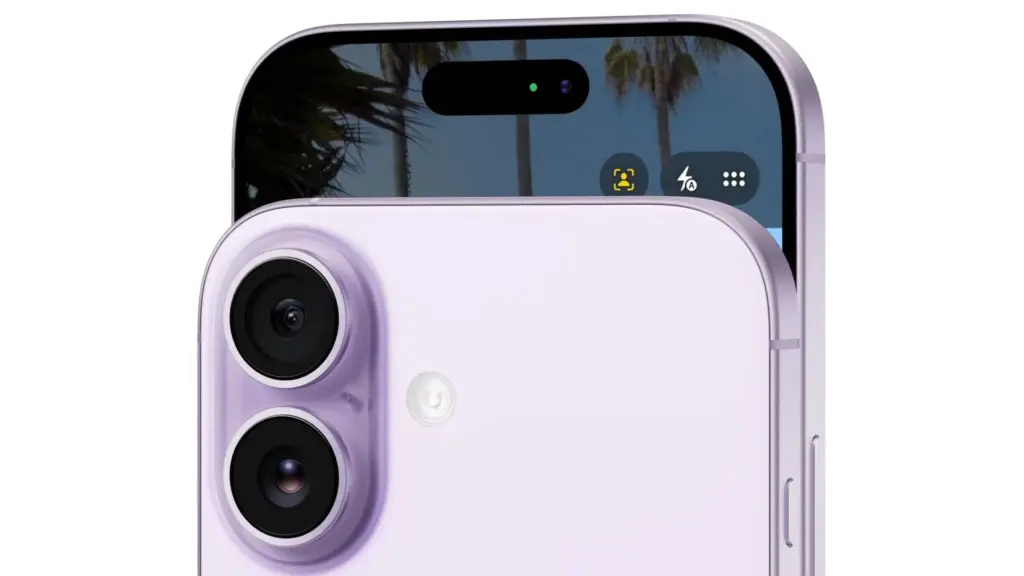
Apple’s iPhone 20 is being linked to one of the biggest design shifts the company has considered in years. The latest rumor points to a nearly full-screen front with no notch and no Dynamic Island, signaling a far more dramatic visual reset than the flat-edged iPhones familiar to users today.
The claim comes from Jon Prosser on Front Page Tech, and it frames the device as a major milestone tied to the 20th anniversary of the iPhone. If accurate, the model would not simply refine the current look but would push Apple toward a new design identity across the whole device.
A cleaner front panel takes center stage
The most eye-catching part of the leak is the display itself. iPhone 20 is said to use a quad-curved or micro-curved panel with extremely thin bezels, making the front appear almost completely covered by glass.
Dynamic Island is also said to disappear entirely. Under this rumor, Face ID and the front camera would move under the display, creating a much cleaner front face and bringing Apple closer to the all-screen concept it has long pursued.
A different body shape is also being discussed
The changes are not limited to the display. Apple is also said to be moving away from flat edges and returning to a more rounded body design, including a curved screen and a back glass that blends more smoothly into a rounded middle frame.
Prosser also mentioned a glossy frame, which would give the device a more premium appearance. Taken together, these details suggest a redesign that goes beyond an annual refresh and into a full visual overhaul.
Samsung panel technology may make the design possible
To support the rumored look, Apple is said to be using a new Samsung panel technology called Color Filter on Encapsulation. This approach removes the need for a polarizer layer that is normally placed on top of an OLED panel.
In that setup, the encapsulation layer integrates the color filter directly. The result could be a thinner and brighter display, since one separate layer is no longer needed.
There is also a trade-off. Such a layer may create stronger reflections, which is why Apple is reportedly developing a new anti-reflective coating as part of the effort.
Camera, chip, memory, and battery changes are also mentioned
The display rumor is only one part of the picture. Prosser also says Apple is preparing a custom HDR camera sensor for the iPhone 20, with the possibility of improved camera performance when paired with the variable-aperture rumor previously linked to iPhone 18.
On the performance side, the device is said to run on Apple A21. That naming lines up with the assumption that iPhone 18 would use A20, although the final naming has not been confirmed and remains part of the broader rumor cycle.
Apple is also said to be working on High Bandwidth Memory, or HBM, for mobile use. The goal would be to deliver much higher memory bandwidth for Apple Intelligence features.
Battery technology may also change. The company is reportedly considering silicon-anode batteries, which are described as having higher energy density and allowing greater capacity without a major increase in physical size.
Physical buttons may also disappear
Another notable detail is the possible removal of mechanical buttons. The leak suggests iPhone 20 could become the first iPhone to replace all physical buttons with capacitive ones.
Those capacitive buttons would reportedly work with the Taptic Engine so that they still feel like real presses. The idea recalls the non-moving home button experience on the iPhone 7, iPhone 8, and iPhone SE, but extending it to the side controls would change daily interaction much more broadly.
The name itself may signal the anniversary move
Prosser also believes Apple may skip iPhone 19 and move directly to iPhone 20. That would mirror the company’s earlier jump from iPhone 9 to iPhone X and would fit the 20th-anniversary theme.
For now, all of these details remain unconfirmed. Still, if the leaked direction proves accurate, iPhone 20 could become one of the most radical shifts in iPhone history, combining a hidden-camera display, a redesigned body, capacitive controls, and internal hardware built with AI-focused capabilities in mind.
Source: tech.sportskeeda.com