


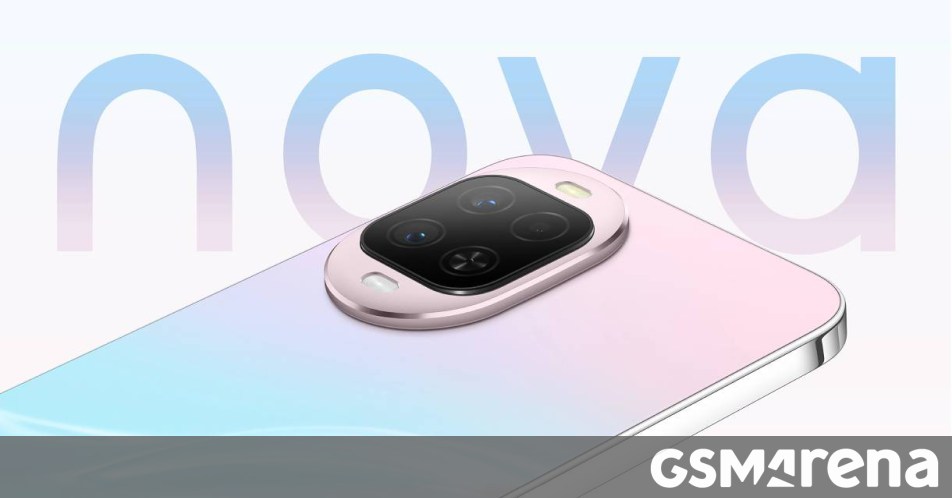
Huawei’s nova 16z is not trying to win attention with a dramatic redesign or a major performance leap. Instead, it puts its strongest argument in one specific place: BeiDou satellite messaging, a feature that makes the phone more compelling for people who care about staying connected beyond normal mobile coverage.
That choice gives the device a practical edge over a specification list that otherwise remains very close to the nova 15. Huawei appears to have kept the familiar foundation intact and added a communication tool that can matter far more than cosmetic changes or a modest hardware refresh.
Satellite messaging as the main upgrade
The standout feature on the nova 16z is support for sending and receiving messages through the BeiDou satellite network. Huawei also says the feature can help users request assistance in emergencies and check the weather when they are far from cellular coverage.
The satellite capability even supports photo messages, which adds another layer of usefulness beyond basic text communication. For users who spend time in remote areas, that kind of function can be more valuable than a larger design update or a major jump in raw performance.
A familiar display and camera setup
Outside that headline feature, the phone stays in familiar territory. The nova 16z uses a 6.7-inch OLED display with a resolution of 1,084 x 2,412 pixels, along with 10-bit color support and aluminosilicate glass protection.
The panel is not LTPO this time, but Huawei still keeps the overall visual package aligned with the rest of the series. The camera arrangement also remains recognizable, with a 50MP f/2.4 selfie camera on the front and a rear setup built around a 50MP f/1.9 main camera plus a 12MP 3x telephoto camera equivalent to 69mm.
The telephoto unit uses an RYYB sensor, an f/2.4 lens, and OIS. That combination shows Huawei is preserving the core imaging approach instead of rebuilding the camera system from scratch.
Connectivity, navigation, and everyday hardware
Huawei gives the nova 16z a broad set of connectivity options. The phone includes dual-band Wi‑Fi 7, Bluetooth 6.0, StarFlash, NFC, and USB-C with USB 2.0 data transfer support.
Navigation is also well covered, with tri-band BeiDou alongside dual-band GPS and Galileo. The fingerprint sensor remains mounted on the side of the body, continuing the same approach used before.
Battery, charging, and chipset choice
The battery remains a 6,000mAh unit, paired with 100W wired SuperCharge. No wireless charging is mentioned, but the combination of large capacity and fast wired charging should suit users who need the phone to last through busy or remote days.
Under the hood, the nova 16z uses the Kirin 8020 chipset. That differs from the nova 16 regular model, which uses the Kirin 9010S, the same chip found in the Pro model.
Memory, colors, and pricing
Huawei offers the nova 16z in two memory configurations. One version comes with 12GB of RAM and 256GB of storage, while the other pairs 12GB of RAM with 512GB of storage.
The available color options are Iridescent Mother of Pearl, White Sky, and Starry Night Black. In China, the phone is sold through vmall, where the 12/256GB version is priced at CNY 2,700 and the 12/512GB model costs CNY 3,200.
The nova 16z was introduced alongside the nova 16, nova 16 Pro, and nova 16 Ultra. Among that group, it stands out less for changing the formula and more for adding a satellite messaging feature that gives its upgrade path a clear and practical purpose.