The smartphone market in Indonesia is unusually crowded in May 2026, with new arrivals spanning from the Rp 1 million range to nearly Rp 30 million. That spread gives buyers a rare choice between basic phones built for endurance and premium devices designed around cameras and video.
The most expensive model in the lineup is Vivo X300 Ultra, which pushes the upper end of the market with prices of Rp 25.999.000 for the 16 GB/512 GB variant and Rp 29.999.000 for the 16 GB/1 TB version. Its strongest selling point is the camera system, centered on ZEISS Triple Prime Lenses with a 200 MP Sony LYTIA-901 main camera, a 200 MP telephoto camera with gimbal-like stabilization, and a 50 MP ultrawide camera with OIS.
Vivo also gives the X300 Ultra a serious video package. All rear cameras support 4K 120 fps recording, along with Dolby Vision and an ACES workflow, making the device stand out as a tool for content production.
Beyond imaging, the phone runs on Snapdragon 8 Elite Gen 5 and comes with 16 GB of RAM. Buyers can choose between 512 GB and 1 TB of storage, while the 6.82-inch LTPO AMOLED display offers 2K resolution, a 144 Hz refresh rate, and HDR10 Plus.
The battery capacity reaches 6,600 mAh, supported by 100W fast charging and 40W wireless charging. Vivo ships the device with Android 16 based on OriginOS 6, and it promises five Android upgrades plus seven years of security patches.
At the opposite end of the market, Poco C81 Pro opens the affordable side of the month with a starting price of Rp 1.649.000 for the 4 GB/64 GB model. A 4 GB/128 GB version is also available at Rp 1.799.000, while the hardware package includes a 6.9-inch 120 Hz display, Unisoc T7250 chipset, 6,000 mAh battery, and 15W fast charging.
Poco does not leave the budget segment entirely stripped of extras. The C81 Pro also includes NFC, a fingerprint sensor, and AI features such as Gemini and Circle to Search, while the software side is based on Android 15 with HyperOS 3.
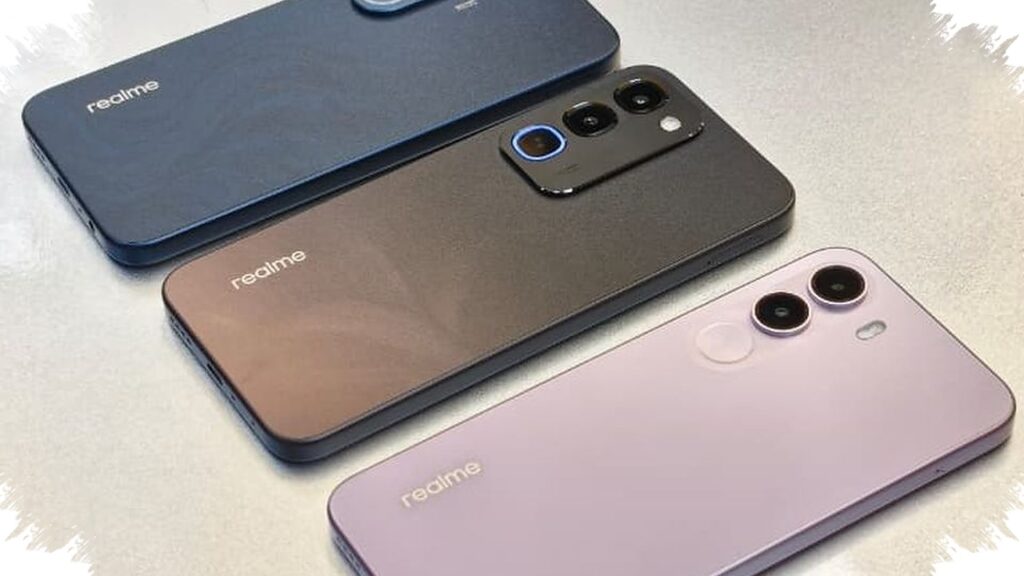
Realme is the most active brand in the middle of the month’s lineup, bringing three models at once: Realme C100, C100i, and C100x. The three devices share a common focus on large batteries and practical pricing, but each one targets a different level within the crowded midrange and entry-level space.
Realme C100 sits near the top of that trio with an 8,000 mAh battery, 45W fast charging, reverse charging, and battery health support claimed for up to seven years. It also carries IP69 Pro certification and is said to survive drops from up to two meters.
Its core specifications include a 6.8-inch 120 Hz display, MediaTek Helio G92 Max chipset, 6 GB or 8 GB of RAM, and 128 GB or 256 GB of storage. Pricing starts at Rp 3.799.000 for the 6 GB/128 GB variant and rises to Rp 4.399.000 for the 8 GB/256 GB model.
Realme C100x lands below it with the same 8,000 mAh battery and 45W charging. The phone is priced at Rp 3.399.000 for 6 GB/128 GB and Rp 3.799.000 for 6 GB/256 GB, and it uses a 6.8-inch HD Plus panel with a 120 Hz refresh rate and 900 nits of brightness.
This model also uses the Unisoc T7250, adds a 50 MP main camera and a 5 MP front camera, and includes NFC plus AI features. Realme C100i, meanwhile, is positioned as the more affordable battery-focused option in the group.
It is sold at Rp 2.499.000 for 4 GB/128 GB, Rp 2.799.000 for 4 GB/256 GB, and Rp 2.999.000 for 6 GB/128 GB. The phone features a 6.8-inch 120 Hz display, Unisoc T7250 chipset, 50 MP main camera, 8 MP front camera, and a 7,000 mAh battery with 45W fast charging and reverse charging.
Realme C100i also runs Android 16 with Realme UI 7.0. That combination of a large battery, relatively low price, and current software makes it one of the more competitive names in the dense lower-midrange segment.
Taken together, these launches show how wide the Indonesian smartphone market has become in May 2026. From Poco’s sub-Rp 2 million entry point to Vivo’s near-Rp 30 million flagship, the month packs in an unusually broad range of choices for buyers with very different priorities.
Source: tekno.kompas.com