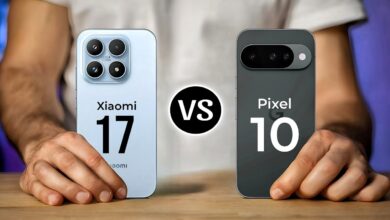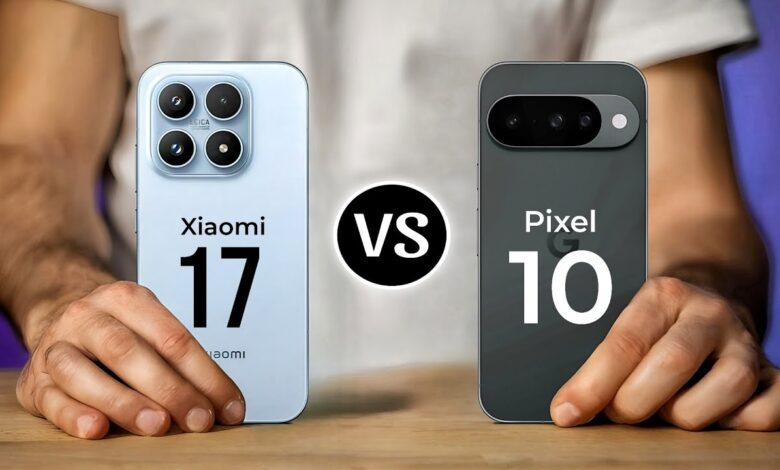
Xiaomi 17T stands out in this matchup because it offers a more complete camera package for users who want flexibility. Google Pixel 10a still appeals to those who value natural color and consistent results, but its missing telephoto lens narrows its range.
The strongest divide between the two phones is not just image quality, but how each brand approaches photography. Xiaomi relies on more capable hardware, while Google continues to lean on the strength of computational photography.
Zoom is the clearest advantage
Xiaomi 17T comes with a 50 MP main camera, a 50 MP periscope telephoto camera, a 12 MP ultrawide camera, and a 32 MP front camera. Google Pixel 10a offers a 48 MP main camera, a 13 MP ultrawide camera, and a 13 MP front camera.
The periscope lens gives Xiaomi 17T a major edge for users who shoot distant subjects, travel scenes, and portraits with a more compressed perspective. Its 5x optical zoom makes it far more adaptable in situations where digital zoom alone would not be enough.
Pixel 10a does not include a dedicated telephoto camera, which makes its zoom capabilities less versatile. That limitation becomes more obvious outside basic point-and-shoot use.
Google still has a clear photographic identity
Even without a telephoto lens, Pixel 10a retains the classic strengths associated with the Pixel line. Its main camera is designed to deliver natural-looking colors, strong dynamic range, and stable results across different shooting conditions.
For many users, that consistency matters more than having extra lenses. Pixel 10a is a practical option for people who want to open the camera app and get dependable shots with minimal adjustment.
More than camera hardware
Xiaomi 17T is not only stronger on paper because of its lens setup. The combination of a main camera, ultrawide camera, and periscope telephoto camera makes it ready for a wider variety of daily shooting scenarios.
For portraits, the dedicated zoom lens helps produce stronger subject separation. For distant objects, the advantage is even more decisive against Pixel 10a.
Xiaomi also benefits from image processing tuned by Leica, adding to its appeal for users who want a more varied photography experience rather than a purely safe and consistent one.
Display and performance support the camera experience
Xiaomi 17T uses a 6.59-inch AMOLED display with a 120Hz refresh rate, a 1268 x 2756 resolution, and a peak brightness of 3500 nits. Pixel 10a has a 6.3-inch AMOLED display with a 120Hz refresh rate, a 1080 x 2424 resolution, and a peak brightness of 3000 nits.
The larger and brighter panel on Xiaomi 17T makes framing shots and reviewing photos easier outdoors. That adds a practical benefit for users who often shoot in daylight or while traveling.
| Model | Chipset | GPU | RAM |
|---|---|---|---|
| Xiaomi 17T | Dimensity 8500 Ultra | Mali-G720 MC8 | 12 GB |
| Pixel 10a | Google Tensor G4 | Mali-G715 MP7 | 8 GB |
Performance numbers from Nanoreview also favor Xiaomi 17T in raw power. Its AnTuTu score is around 2,407,614, while Pixel 10a is listed at about 1,400,792.
On Geekbench, Pixel 10a slightly leads in single-core performance at around 1,750, compared with Xiaomi 17T at about 1,704. Xiaomi 17T pulls far ahead in multi-core testing with around 6,686, versus Pixel 10a at about 4,516.
That gap matters for fast photo processing, multitasking, and longer camera sessions. It also suggests Xiaomi 17T is better prepared for heavier workloads beyond photography alone.
Battery, design, and software round out the comparison
Xiaomi 17T includes a 6,500 mAh battery with 67W fast charging and 22.5W reverse wired charging. Pixel 10a comes with a 5,100 mAh battery, 30W charging, 10W wireless charging, and bypass charging.
For users who spend long days shooting photos and recording video, Xiaomi 17T’s larger battery is a meaningful advantage. It supports outdoor use, travel, and extended camera sessions more comfortably.
Both phones carry IP68 certification. Xiaomi 17T is also described as having a slimmer 8.2 mm profile and a more premium feel thanks to thinner bezels and a larger display.
Pixel 10a still has one important strength on the software side. It runs Android 16 and is noted for faster updates, while Xiaomi 17T ships with Android 16 based on HyperOS 3.
Its compact size also makes Pixel 10a easier to use with one hand. The minimalist Pixel design remains appealing for users who do not need a more complex camera module.
Overall, Xiaomi 17T comes out ahead as a camera phone because it offers a more versatile hardware package and strong image processing support. Pixel 10a remains a solid choice for natural-looking photos and a reliable point-and-shoot experience, but the absence of a telephoto lens leaves it less complete in this comparison.