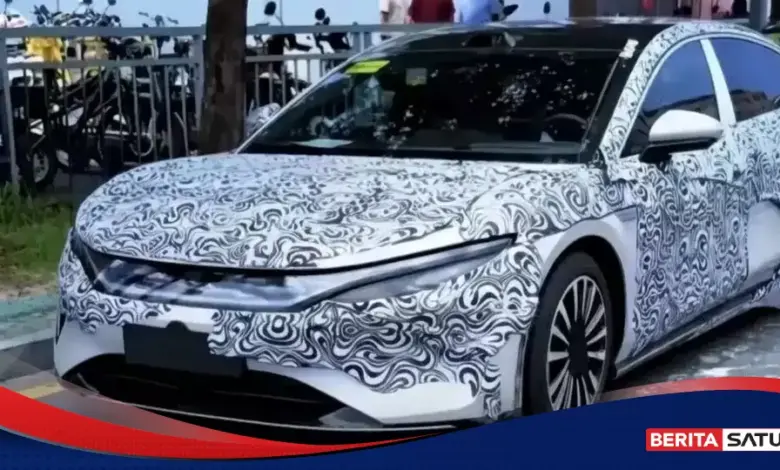
BYD is being linked with Formula 1 at a moment when the series has become one of the most valuable marketing platforms in global sport. For the world’s largest electric vehicle maker, the attraction is clear: F1 offers instant visibility, elite brand association, and a stage that reaches far beyond the racetrack.
But the path into Formula 1 is not the same as the desire to be seen there. Analysts say building a team from scratch would be expensive, technically demanding, and risky for a company whose racing experience remains limited.
A marketable stage with global reach
Bernstein analyst Ian Moore described Formula 1 as one of the best marketing tools available to automakers. He said that “all companies want to get involved in Formula 1 because this event is the best marketing vehicle for automakers,” according to Reuters.
That appeal is easy to understand. Ferrari, Mercedes-Benz, Ford Motor, and Cadillac, owned by General Motors, already occupy a grid that doubles as a showcase for technology, engineering, and prestige.
Why BYD could still enter on its own
Formula 1 still has one open slot for a 12th team, which keeps the possibility of a BYD entry alive. The company also brings commercial strength, supported by its position as the world’s largest electric vehicle maker by sales.
China itself is an important F1 market, with the Shanghai Grand Prix and an estimated fan base of 221.1 million people. BYD has also been pushing its overseas expansion, including a target to have all cars sold in Europe produced locally by 2028.
The financial and technical barrier is high
Felipe Munoz, an independent analyst, said building a team from zero would require very large funding. He also noted that BYD does not yet have enough Formula 1 experience to jump straight into that level of competition.
“From a financial point of view, spending a huge amount of money on an area they do not really master may not be a wise decision,” Munoz said.
The infrastructure burden would also be heavy. Facilities such as a research center and wind tunnel could require hundreds of millions of dollars, with no guarantee of competitiveness in return.
Aston Martin’s new Silverstone facility, which includes a wind tunnel, is estimated to have cost between £150 million and £200 million. A new team would also likely face an antidilution fee of more than US$ 450 million, similar to what Cadillac paid to join F1 this season.
Buying into an existing team is not simple either
An alternative would be to buy a stake in an existing team, but that route is also complicated. Ownership in Formula 1 teams is often tightly controlled, and not all teams are open to a change in control.
One possibility that surfaced was a partial acquisition of Alpine, but Renault, as the majority shareholder, was reported to be unwilling to give up control. Christian Horner, the former head of Red Bull Racing, has also been said to be in contact with BYD about investment opportunities in the sector.
Sponsorship remains the lowest-risk route
For now, sponsorship appears to be the most practical path. Nick De Marco, a sports lawyer at Blackstone Chambers, said it reduces risk because it does not require a company to meet the full technical and governance demands of the FIA.
“Being a sponsor is the lowest-risk option because it does not require compliance with various FIA regulatory requirements,” De Marco said.
The cost is also far more manageable. Sponsors can join a mid-field or lower-ranked team with a much smaller commitment than the price of running a top team.
Oracle reportedly spent around US$ 300 million on a five-year title sponsorship deal with Red Bull Racing, while Atlassian’s title sponsorship with Williams is said to be worth between US$ 40 million and US$ 60 million per year. Bernstein data also shows that the automotive sector accounts for only about 1% of total Formula 1 sponsorship value each year, far below technology at 14% and luxury goods at 26%.
That makes sponsorship the safest route, but not necessarily the most powerful one. It can raise awareness, yet it does not fully showcase a company’s engineering and manufacturing strength in the way a full team presence might.
For BYD, the real question is whether brand exposure is enough, or whether the company wants Formula 1 as proof of industrial capability on a global stage. With the sport’s commercial value still rising, any decision will likely come down to the balance between ambition and risk.