This week’s most attention-grabbing launches came from three very different directions. Redmi Turbo 5 doubled down on endurance, Sharp Aquos R11 leaned into a serious telephoto camera, and DJI moved the portable imaging market with its first dual-camera handheld gimbal device.
The common thread is clear: smartphone and imaging brands are narrowing their focus around standout strengths instead of broad, incremental upgrades. Battery life, optical zoom, and compact creator tools are becoming the features meant to define a product at first glance.
Redmi Turbo 5 focuses on battery life above all
Redmi Turbo 5 launched in India with one of the biggest batteries in this week’s lineup. Xiaomi fitted the phone with a 7,540mAh battery, paired with MediaTek Dimensity 8500 Ultra and 100W fast charging.
The display is a 6.59-inch AMOLED panel with a 120Hz refresh rate, keeping the phone in the performance-focused midrange space. Pricing starts at INR 35,999, and sales begin on 19 June.
That combination makes the device stand out for users who care most about staying away from the charger. In a market where heavy daily use is the norm, the battery becomes the headline feature rather than a secondary spec.
Sharp answers with a stronger camera identity
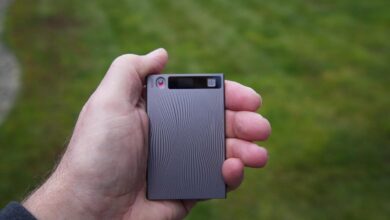
Sharp took a different route with the Aquos R11, its latest flagship for Japan. The most notable upgrade is a 38.5MP telephoto camera with 2.8x optical zoom, giving the phone a clearer imaging identity.
Inside, the Aquos R11 uses Qualcomm’s Snapdragon 8s Gen 4. It also brings a 6.5-inch OLED display with a 240Hz refresh rate, a 5,000mAh battery, and Android 16 out of the box.
Sharp has scheduled the launch for next month in Japan, with no global release plan announced so far. That keeps the phone positioned as a region-specific flagship for now, even as its camera hardware draws the most attention.
DJI expands its pocket camera formula
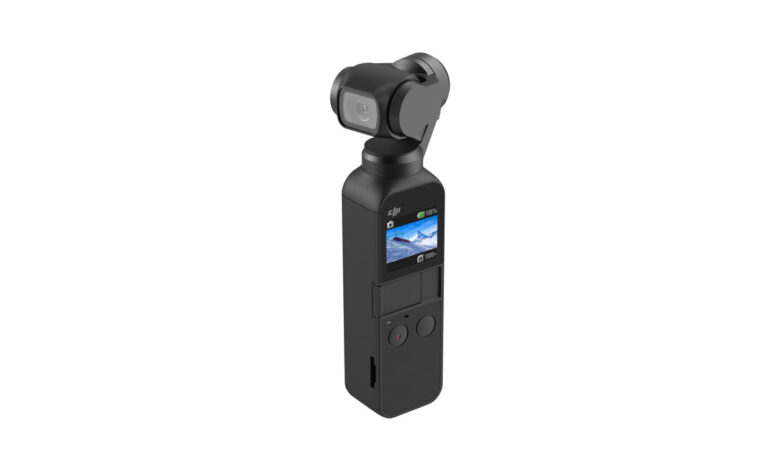
DJI’s Osmo Pocket 4P is another product aimed at users who want more capability without carrying bulk. It is the company’s first dual-camera handheld gimbal camera, and it combines a 1-inch main sensor with a new 60mm telephoto lens offering 3x optical zoom.
The device also supports video recording at up to 4K 240fps, while DJI says the dynamic range reaches 17 stops. Those specifications place it among the most technically ambitious compact video products announced this week.
Osmo Pocket 4P launched in China with a starting price of CNY 3,799 and is already open for pre-order there. The product reinforces DJI’s push toward creator-focused gear that keeps professional-style flexibility in a small body.
A wider industry pattern is taking shape
The three launches reflect a broader shift in consumer tech. Manufacturers are increasingly building their pitch around one strong advantage, whether that means a larger battery, more capable zoom hardware, or a more versatile camera package.
That strategy matters because the market is crowded and buyers are easier to reach when a device offers a simple, memorable promise. Redmi Turbo 5 promises long endurance, Aquos R11 leans on telephoto imaging, and Osmo Pocket 4P targets creators who want more from a compact camera.
Other product news this week adds to the same sense of momentum. Apple is again being linked to a RAM increase for the iPhone 18, with reports suggesting a jump from 8GB to 12GB to support on-device AI features.
Reports around future iPhone pricing remain mixed, while another update says the iPhone Ultra is facing further production and supply chain hurdles that could push it into 2027. At the same time, Apple’s first foldable iPhone is still expected to be announced alongside the iPhone 18 series.
OnePlus has also confirmed that its first N series phone will debut in India on 30 June, targeting younger buyers and first-time OnePlus users in the INR 18,000 to 25,000 range. The first model is expected to be called the OnePlus N6.
Honor, meanwhile, has confirmed the X80 Pro Max for 22 June, and the main draw is its 11,000mAh battery. Android 17 stable has started rolling out to Pixel phones, limited to the Pixel 6 and newer models.
Tecno has entered the conversation with the Spark 50 Pro, which was recently unboxed and tested, while Oppo Find X10 Pro leaks point to a September arrival. Across all of these announcements, the most competitive features are becoming more focused and more extreme.
That is exactly why Redmi Turbo 5, Aquos R11, and DJI Osmo Pocket 4P stand out this week. Each product uses a single decisive strength to try to cut through a market that is becoming harder to impress with ordinary upgrades.