Smartphone makers have been removing microSD slots one by one, but the problem that storage cards once solved has not disappeared. Cloud storage is useful for backups and syncing, yet it does not fully replace the practical comfort of local expandable storage in everyday use.
That gap is most obvious when a phone is used away from a stable network. On a plane, on a train with weak signal, or anywhere Wi-Fi is unreliable, files stored locally are still easier to open than content that depends on an internet connection.
Local access still matters
Cloud storage works well for photos, documents, and other files that need to be accessed from anywhere. It also removes the need to carry a separate memory card inside the phone.
Even so, local storage remains valuable for large media collections. Many users still keep films, TV shows, music, podcasts, and camera recordings on the device because opening them locally does not consume mobile data every time.
Expandable storage was once the easiest upgrade
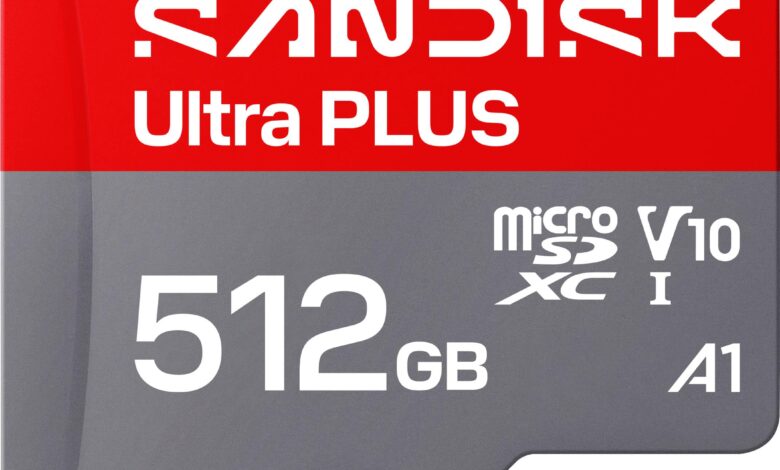
There was a time when expandable storage was one of the simplest ways to make a smartphone more useful. When space ran out for photos, videos, downloads, or offline media, users could insert a microSD card and instantly add hundreds of gigabytes of capacity.
That convenience has become harder to find as industry priorities changed. Internal storage is now faster and more reliable than removable cards, especially for app loading, camera processing, and high-resolution video recording.
Removing the card slot also helps device design. Without an extra physical opening, internal layouts become simpler and water and dust resistance can be improved.
Business decisions also played a role
There is also a commercial side to the shift. Storage choices are now a major part of smartphone pricing, and moving from 128GB to 256GB or 512GB often comes with a significant cost increase.
In the past, users could buy a microSD card once and expand storage as needed. Today, the model pushes buyers toward a larger built-in storage variant from the start, while cloud storage subscriptions add another layer of recurring cost.
Cloud storage is not really free either. Subscription fees may seem small at first, but they become harder to ignore as photo libraries, 4K video, app data, and full-device backups keep growing.
Still available, but no longer mainstream
Although most flagship phones have moved away from microSD, the feature has not disappeared completely. Many entry-level and midrange Android phones still include expandable storage to stay competitive on price and offer more flexibility.
Samsung still offers microSD support on some models, mainly in its midrange line rather than the Galaxy S flagship series. Sony is also one of the few major brands that still provides expandable storage on premium Xperia phones.
That makes expandable storage more common in entry-level devices or niche models than in mainstream flagships. For premium smartphone buyers, the practical choice is usually limited to internal memory or cloud storage.
Why the old advantage still feels relevant
Basic storage capacities have increased, with 128GB and 256GB now widely available. But file sizes, backup needs, and the habit of storing more media continue to grow, while storage pricing has not become dramatically more favorable for users.
Cloud storage remains helpful for backup and synchronization, but it does not offer the same direct control as a microSD card. That is why expandable storage still solves a very real problem: storage space eventually runs out.