


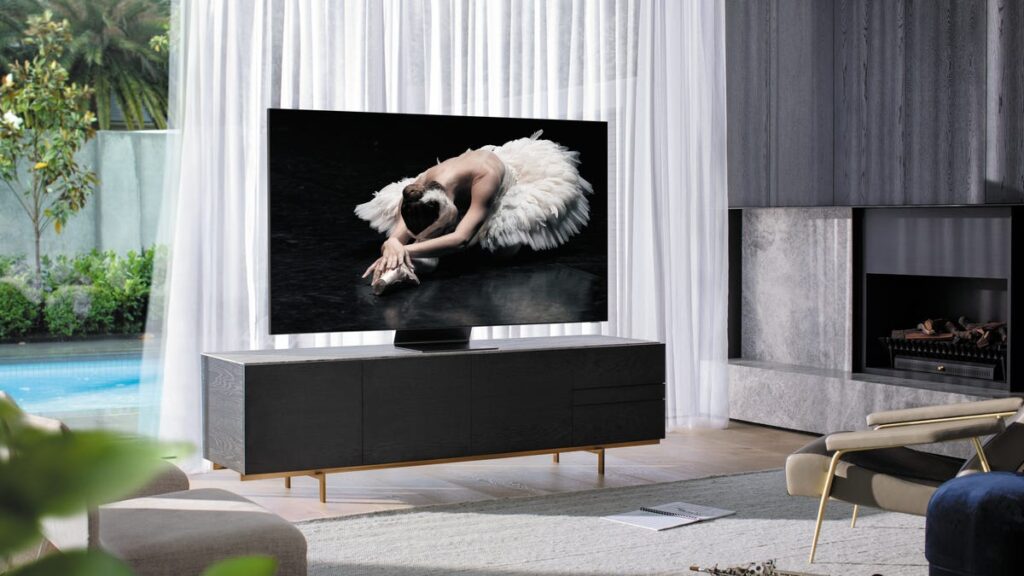
QLED TVs remain a popular choice in the affordable to mid-range segment because they deliver bright, vivid colors through quantum dot technology paired with a backlight. That appeal is real, but several limitations usually become noticeable only after daily use.
The trade-off is important for buyers to understand, especially because QLED still relies on traditional LED-based construction with added enhancements. In a few key areas, it still cannot fully match OLED, and those differences are often felt most in everyday viewing.
Black levels are still not truly deep
One of the clearest drawbacks is the way QLED handles black. Because it uses a backlight behind the panel, light cannot be switched off individually for each pixel.
As a result, dark scenes can look slightly gray, especially in a dark room. Local dimming helps, but the limited number of dimming zones still keeps contrast precision below OLED.
Blooming can be distracting
The same dimming limitation can also create blooming or halo effects around bright objects. This is easiest to notice when a small bright point appears against a dark background.
The glow can spread into surrounding areas, especially during HDR viewing or when the screen is seen from an angle. OLED avoids this issue because each pixel controls its own light.
Side viewing is not as flexible
QLED also inherits one of LCD’s long-standing weaknesses: narrower viewing angles. The picture looks best when the viewer sits directly in front of the screen.
From the side, colors can lose accuracy, the image may look washed out, and blacks can turn grayish. That limitation matters in living rooms with multiple viewers, unless the TV uses an IPS panel.
Fast motion can still blur
Response time is another area where QLED can fall short. When the screen shows fast-moving objects such as balls, cars, or action scenes, motion blur may become visible.
Competitive gamers may also feel the impact in responsiveness. Motion smoothing tools can reduce the blur, but they may also make the picture look less natural.
Power use tends to be higher
Energy consumption is another point worth weighing. QLED TVs usually draw more power than Mini-LED or OLED models because they rely on a very bright backlight across the whole display.
The brighter the picture, the more electricity is used. Even in dark scenes, the backlight remains on, which wastes energy as heat and may affect the TV’s lifespan over the long term.
These limitations do not make QLED a poor choice, but they do show why the technology is best judged beyond its bright colors and attractive pricing. For buyers, the right decision depends on room conditions, viewing habits, and which compromises matter most in daily use.