


Google’s Play Store is entering a major transition after the company lost its legal battle with Epic Games. The biggest shift is not only lower fees, but also a broader opening for developers to move away from Google’s own payment system.
For app developers, the change affects two of the most sensitive parts of digital distribution: how much revenue is kept by the platform and who controls the payment flow. That combination could reshape how digital apps and services are priced in key markets.
Lower fees for the first $1 million
Google is reducing its revenue share from 30% to 10% for the first $1 million in annual earnings generated by developers on the Play Store. If developers continue to use Google’s billing system, an additional billing fee still applies.
In the United States, the United Kingdom, and the EEA, that billing fee is set at 5%. The new structure will begin on 30 June in those three regions.
Third-party payments are coming in more markets
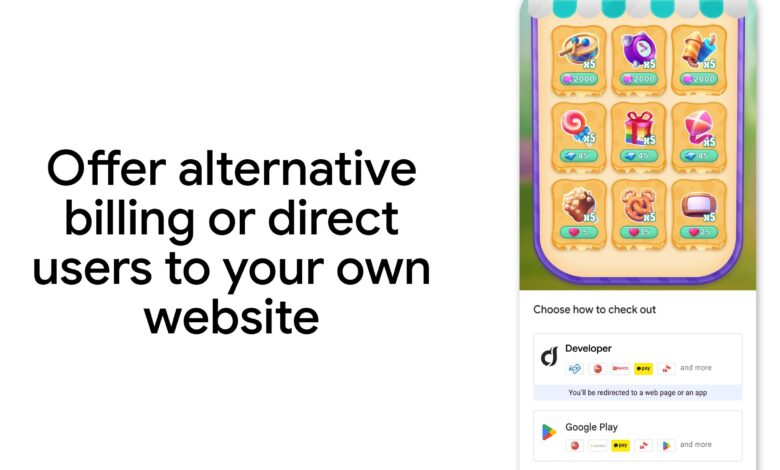
Another significant change is the opening for developers to use third-party payment systems. That means transactions for digital services or digital content no longer have to rely entirely on Google’s own payment mechanism.
This policy will be available globally to all developers offering digital services or content to users in the United Kingdom and the EEA, alongside the program already active in the United States. The rollout starts on 30 June.
Phased rollout across regions
After the United States, the United Kingdom, and the EEA, non-Google billing access will expand to Australia on 30 September. Japan and Korea are next, with a rollout scheduled for 31 December.
For the rest of the world, the expansion is much later, with Google setting the global rollout for 30 September 2027. That staggered schedule means developers will need to check local rules carefully, since the policy will not arrive everywhere at the same time.
For developers selling subscriptions, in-app items, or app-based services, the new structure could directly affect margins. Lower commission rates and alternative billing options may provide more room to manage pricing and revenue.
New programs could unlock even lower rates
Google is also introducing updated guidance for its Games Level Up and Apps Experience programs. Apps and games that meet all of the requirements in those programs will qualify for lower rates.
Google says the programs will be available from 30 September. The exact eligibility rules remain the key factor for developers hoping to secure the preferred pricing.
The new programs suggest that Play Store fees will no longer depend on a single universal rate alone. Going forward, an app or game’s position within Google’s program ecosystem may also influence the level of fees it pays.
The changes also reflect the wider fight over app platform rules. Commission rates and mandatory use of internal billing have long been two of the most disputed issues between app store operators and developers.
In that context, the Epic Games case has forced Google into concrete policy changes. The company is not only lowering the cut for early revenue, but also allowing payment choices that were previously far more limited.
For smaller developers, the most important figure is the $1 million threshold in annual earnings. At that level, the drop from 30% to 10% can meaningfully change how revenue is split.
Users may not notice major changes in the Play Store interface right away. Behind the scenes, however, the new policy could influence how developers set prices, manage payments, and plan business strategies on Android.
Starting on 30 June, the first visible changes will apply in the United States, the United Kingdom, and the EEA. Australia, Japan, Korea, and eventually other global markets will follow according to Google’s timeline.