


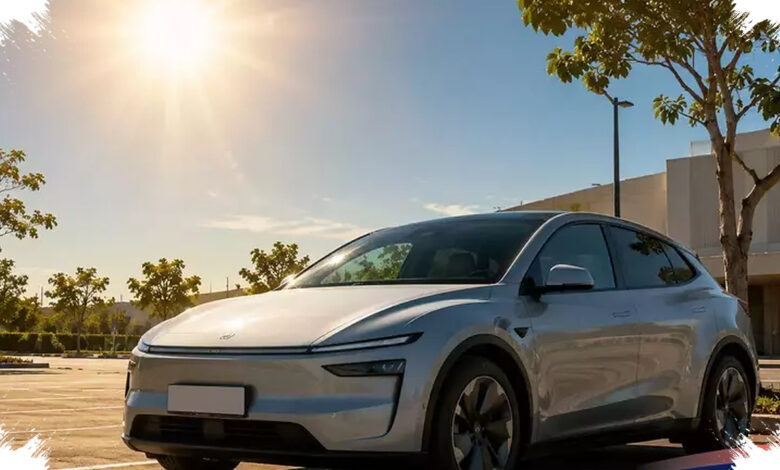
Parking an electric car with a nearly empty battery under intense sun may seem harmless, but the damage can build quietly. In hot weather, low charge levels and sustained heat can shorten battery life, reduce usable capacity, and raise safety concerns.
That risk is especially relevant because lithium-ion batteries continue reacting to temperature even when the vehicle is parked. If the battery stays low for too long in extreme heat, the effects may not appear immediately, but they can accumulate over time.
What heat does to a low battery
Heat speeds up the chemical reactions inside a lithium-ion battery, and that can make internal components wear out faster. In warm climates, Geotab data cited by BeritaSatu shows electric-vehicle batteries may degrade about 0.4% faster each year than those in temperate regions.
Low charge makes the situation worse because a battery can slip into deep discharge when it stays close to zero for too long. That condition can permanently damage battery cells and, in some cases, require special handling at an authorized workshop before the pack can be charged again.
Safety and performance can both suffer
One concern is the damage to the protective layer known as the solid electrolyte interphase, or SEI. When heat weakens that layer, the battery must spend some of its energy rebuilding protection, which gradually reduces storage capacity and efficiency.
There is also a more serious safety risk if the battery continues to overheat. Extreme heat can increase the chance of thermal runaway, a chain reaction that raises temperature without control and can produce toxic gases, fire, or even an explosion.
The article notes that organic electrolyte in the battery begins to break down at around 150 to 200 degrees Celsius. The risk becomes higher when a car sits for a long time in direct sunlight without adequate ventilation, especially in tropical or desert conditions.
Five important consequences for owners
| Risk | Main impact | Trigger condition |
|---|---|---|
| Faster battery degradation | Capacity drops earlier | Extreme heat |
| Deep discharge | Cells may be permanently damaged | Battery stays very low for too long |
| SEI layer damage | Efficiency and storage capacity decline | Ongoing exposure to heat |
| Thermal runaway | Fire or explosion risk | Heat buildup without ventilation |
| Reduced driving range | Shorter usable range | Temperature above 35 degrees Celsius |
Why range also falls in hot conditions
High temperatures do not only affect parked vehicles. Consumer Reports found that electric cars driven in temperatures above 35 degrees Celsius can lose about 20% of their driving range.
At around 38 degrees Celsius, the reduction can reach 31%, partly because the cooling system must use extra energy to keep the battery at a stable temperature. That means drivers may see less range exactly when the battery needs to work harder.
How owners can reduce the risk
Keeping the battery from falling to near zero is one of the simplest ways to protect it. For daily use, charging before it drops below 20% is recommended, while long parking periods are better handled with the battery kept around 50% to 70%.
Parking in the shade or inside a garage also helps limit direct sun exposure. During charging, it is better to avoid the hottest part of the day, and in hot weather an 80% charge limit is generally more practical than filling the battery to 100%.
For vehicles with a precooling feature, using it while the car is still plugged in can cool the cabin without drawing power from the battery. That small step can help reduce unnecessary strain when the weather is already working against battery health.
Why the warning matters
Electric vehicles are designed for long-term use, but battery care still determines how long they stay efficient. Leaving an electric car parked empty in intense heat can accelerate wear that may not be visible right away, yet still shorten battery life and reduce driving comfort over time.