

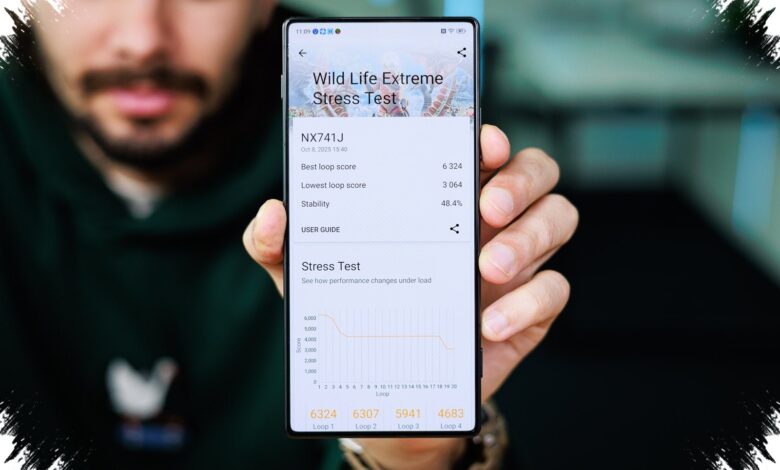
Snapdragon 8 Elite Gen 5 is shaping up to be one of the defining chips of the 2026 flagship race. The five phones below show how far brands are willing to go to turn the same chipset into very different selling points.
Some models lean on cameras, others on battery life, and one is built almost entirely around gaming performance. For buyers, that makes the choice less about raw speed and more about which flagship strengths matter most in daily use.
Flagship models at a glance
| Model | Main focus | Battery | Key highlight |
|---|---|---|---|
| Samsung Galaxy S26 Ultra | All-around premium use | 5,000mAh | Snapdragon 8 Elite Gen 5 for Galaxy, seven years of Android updates |
| Oppo Find X9 Ultra | Camera and endurance | 7,050mAh | Four rear cameras, including two 200MP sensors |
| Xiaomi 17 Ultra | Balanced performance and imaging | 6,000mAh | 200MP periscope telephoto with continuous optical zoom |
| OnePlus 15 | Value-focused flagship | 7,300mAh | 165Hz LTPO AMOLED and 120W charging |
| Nubia RedMagic 11S Pro | Gaming-first design | 7,500mAh | Leading Version chipset and active cooling system |
Samsung Galaxy S26 Ultra stands out as the most complete package in this group. It uses Snapdragon 8 Elite Gen 5 for Galaxy, a tuned version with higher clock speeds than the regular variant, and that extra headroom is aimed at multitasking, gaming, and AI processing.
Its 6.9-inch Dynamic LTPO AMOLED 2X display supports a 120Hz refresh rate and peaks at 2,600 nits. The camera setup is equally ambitious, led by a 200MP main sensor and supported by 10MP and 50MP telephoto cameras plus a 50MP ultrawide lens.
Samsung also backs the phone with a 5,000mAh battery, 60W fast charging, and up to seven generations of Android updates. That combination makes it the safest choice for users who want a flagship that tries to do everything well.
Camera-heavy options push harder on hardware
Oppo Find X9 Ultra takes a more aggressive approach by putting imaging at the center of the story. Its rear setup includes four cameras and two 200MP sensors, while the 50MP front camera gives it strong credentials for selfies and video calls.
The rest of the hardware is just as assertive. A 7,050mAh battery, 100W wired charging, 50W wireless charging, and a 6.82-inch LTPO AMOLED panel with a 144Hz refresh rate and 3,600 nits of brightness make it a serious endurance-focused flagship.
Xiaomi 17 Ultra sits between the all-rounder and the camera specialist. It runs on Snapdragon 8 Elite Gen 5, pairs that chip with a 6,000mAh battery, and focuses on a 200MP periscope telephoto camera with continuous 3.2x to 4.3x optical zoom.
That zoom system is the most notable part of the phone’s imaging package, while 8K video recording and a 50MP front camera with 4K video support keep it relevant for creators. For buyers who want a premium phone without giving up balance, this is one of the more measured choices.
Battery and gaming are the real difference makers
OnePlus 15 approaches the same chip from a more practical angle. It brings Snapdragon 8 Elite Gen 5, a 165Hz LTPO AMOLED display, and a large 7,300mAh battery that should easily appeal to users who hate charging too often.
Its 120W charging support is another major advantage, and the rear camera system uses three 50MP sensors, including a periscope telephoto camera with 3.5x optical zoom. In a crowded flagship market, that mix gives OnePlus a strong value argument without drifting too far from top-tier performance.
Nubia RedMagic 11S Pro is the most specialized phone here. It uses Snapdragon 8 Elite Gen 5 Leading Version, which is claimed to be faster than the standard version, along with a RedCore R4 chip that handles audio, vibration, and other supporting tasks.
Cooling gets serious treatment too, with a built-in 24,000 RPM fan, liquid metal thermal interface, and a large vapor chamber. The phone’s 6.85-inch AMOLED display runs at 144Hz and adds capacitive shoulder buttons for easier control in competitive gaming.
Its 7,500mAh battery is the biggest in this group, and 80W charging helps keep downtime short. Even with its gaming-first identity, the 50MP + 50MP + 2MP rear cameras and 16MP under-display front camera still leave it usable as an everyday phone.
Snapdragon 8 Elite Gen 5 is not just about benchmark numbers. In this lineup, it supports five very different ideas of what a flagship should be, from Samsung’s balanced premium formula to Nubia’s uncompromising gaming focus.
That variety gives buyers a clear advantage: the best choice depends less on the chip itself and more on which brand turns it into the right mix of screen, battery, camera, and software support.