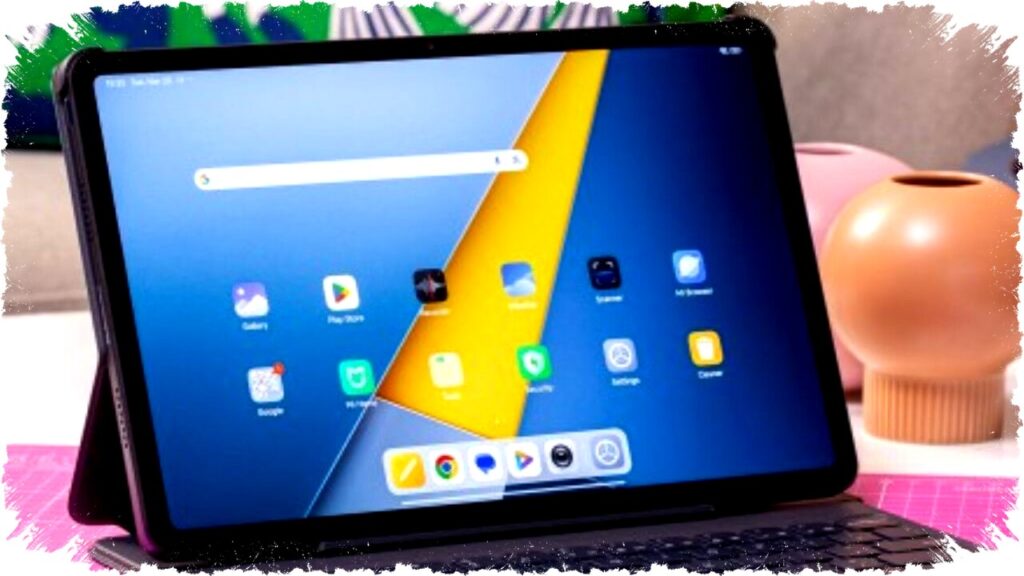
Redmi Pad 2 Pro and Poco Pad M1 have become popular tablets in the mid-range segment. Both models target multimedia users looking for durable devices capable of providing an enjoyable viewing experience during long travel or mudik. The core appeal lies in their impressive battery life and high-quality displays, making them suitable companions for watching films and streaming content during extended trips.
These tablets share many common features but have subtle distinctions that could determine which device fits individual preferences better. Understanding their similarities and differences helps consumers decide which tablet delivers more value for entertainment, especially during the demanding conditions of travel.
Display and Visual Experience
Both Redmi Pad 2 Pro and Poco Pad M1 come equipped with a large 12.1-inch IPS LCD screen. The resolution is a sharp 2.5K (2560×1600 pixels) paired with a high 120Hz refresh rate. This combination results in smooth animations and crisp images. The peak brightness reaches up to 600 nits in High Brightness Mode (HBM), ideal for outdoor use or bright conditions during travel.
Adding to the visual appeal is the support for Dolby Vision technology, which enhances HDR content with more vivid colors and contrasts. Both tablets use a 16:10 aspect ratio, balancing wide cinematic views and productivity tasks. Eye-care certifications also reduce blue light emission, helping minimize eye strain for prolonged viewing sessions.
Performance and Sound
Under the hood, both tablets are powered by the Snapdragon 7s Gen 4 chipset, offering stable and efficient performance for multimedia consumption and everyday productivity. This SoC ensures smooth playback of high-resolution video without lag or stuttering, making these devices excellent for movie fans during long trips.
In terms of audio, each tablet features quad stereo speakers with Dolby Atmos support. The placement of the four speakers allows immersive and balanced sound, elevating the entertainment experience. Redmi Pad 2 Pro offers a unique volume-boosting feature that amplifies sound output by up to 300%, although high volume may reduce sound clarity. Meanwhile, Poco Pad M1 emphasizes consistent audio quality and loudness better suited for daily multimedia use.
Battery Life and Charging
One of the standout features for travelers is the massive 12,000 mAh battery in both the Redmi Pad 2 Pro and Poco Pad M1. This capacity translates to impressive endurance, with testing revealing these tablets can stream video nonstop for more than 14 hours. Music playback time extends over 100 hours, letting users enjoy content without frequent recharging.
Charging speed is moderate, with support for 33W fast charging that fills the battery in approximately 2 to 3 hours. Poco Pad M1 further adds a convenient reverse charging function (27W), allowing it to act as a power bank in emergencies. Such stamina and versatility make these tablets reliable companions during lengthy travel days without easy access to power outlets.
Design and Build
Both tablets exhibit a premium metal unibody design that feels solid in hand and helps dissipate heat during extended use. Despite the large battery, their thickness is managed at around 7.5 mm, and weight approximates 610 grams, which is comfortable for landscape viewing. This balance of portability and robustness is crucial for users looking to carry their tablets during travel without strain.
Overall, the design language of Poco Pad M1 and Redmi Pad 2 Pro is strikingly similar, often leading to perceptions of one being a rebrand of the other. However, this close resemblance is coupled with high build quality that elevates both models above their predecessors.
Camera Capabilities
Though not the main focus, both tablets include an 8 MP rear camera and an 8 MP front camera. These sensors handle basic photography tasks such as scanning documents, capturing quick photos, and video calls. However, image quality is not their strength, especially under low-light conditions where pictures become noisy and less detailed. Users prioritizing photography might consider other devices, but these cameras suffice for essential functional use.
Price and Value Consideration
The price difference between Redmi Pad 2 Pro and Poco Pad M1 is minimal when converted to USD, placing both firmly within the mid-range market. Buyers selecting between these two should consider preferences such as audio quality enhancements, need for reverse charging, or brand affinity.
Key Comparison Summary
| Feature | Redmi Pad 2 Pro | Poco Pad M1 |
|---|---|---|
| Display | 12.1" IPS LCD, 2.5K, 120Hz, 600 nits max | 12.1" IPS LCD, 2.5K, 120Hz, 600 nits max |
| Processor | Snapdragon 7s Gen 4 | Snapdragon 7s Gen 4 |
| Battery Capacity | 12,000 mAh | 12,000 mAh with 27W reverse charging |
| Audio | Quad speakers, enhanced volume boost | Quad speakers, Dolby Atmos with stable output |
| Camera | 8 MP rear, 8 MP front | 8 MP rear, 8 MP front |
| Build | Metal unibody, 7.5 mm thick, 610 g | Metal unibody, 7.5 mm thick, 610 g |
| Charging Speed | 33W fast charging | 33W fast charging |
With their impressive battery endurance and large, vibrant displays, both tablets are engineered to maximize entertainment during mudik or extended travels. The choice depends mainly on fine preferences such as sound volume boosting or reverse charging capability.
Users can expect a highly portable, visually sharp, and well-performing device from either model. Their professional-grade display technologies, combined with power-efficient processors and large batteries, make them top choices for movie lovers requiring lasting usage without frequent charging breaks.
Selecting between Redmi Pad 2 Pro and Poco Pad M1 for film watching while traveling reduces to personal priorities regarding audio nuances and auxiliary charging features. Both devices break the mold within their price segment by offering premium multimedia experiences backed by enduring battery life.