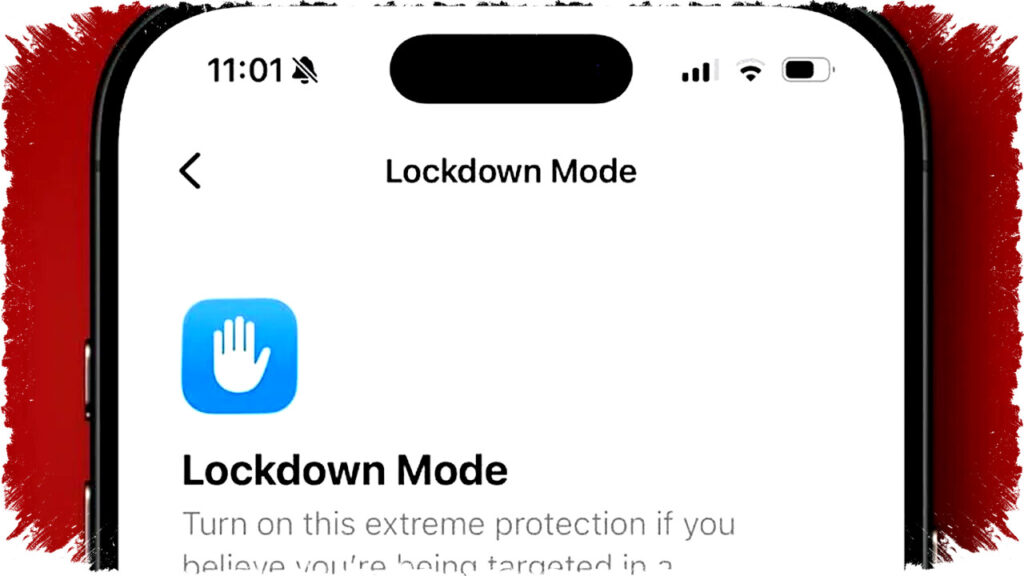
Apple’s Lockdown Mode on the iPhone has proven to be incredibly robust, effectively preventing even the FBI from extracting data. Recently, the FBI admitted they failed to access data from an iPhone 13 seized during an investigation, highlighting the feature’s effectiveness against high-level digital intrusions.
The device belonged to Hannah Natanson, a journalist for The Washington Post. It was confiscated by the FBI in January as part of a probe into a possible leak of classified Pentagon documents. Despite having physical possession of the phone, the FBI was unable to bypass the Lockdown Mode security barrier.
The Incident: FBI’s Challenge with an iPhone 13
During the search, the FBI collected several items including two MacBook Pros, an external hard drive, a Garmin smartwatch, and most notably, the iPhone 13. The phone was found powered on and charging but displayed a notification that Lockdown Mode was active. This prevented the FBI’s Computer Analysis Response Team (CART) from extracting any data.
Even after two weeks, attempts to retrieve data from the device were unsuccessful. This rare glimpse into the real-world effectiveness of Lockdown Mode demonstrates how much protection it provides, even against advanced forensic tools used by federal law enforcement.
What Exactly Is Lockdown Mode?
Apple introduced Lockdown Mode in 2022 alongside iOS 16. It is a specialized security setting designed to protect users who face extreme digital threats. Apple explicitly targets this feature at people like journalists, activists, government officials, and others who might be targeted by sophisticated spyware.
Spyware is malicious software that secretly spies on users, stealing credentials, banking information, and monitoring device activity without permission. Lockdown Mode acts as a hardened defense to minimize vulnerabilities to such attacks.
How Lockdown Mode Restricts Device Functions
When activated, Lockdown Mode imposes strict limitations on various iPhone features to close potential security loopholes. The restrictions are extreme but necessary for maximum protection. Key limitations include:
- Messages: Attachments are blocked, previews and link data are disabled.
- Web Browsing: Complex web technologies are blocked, which may prevent some sites from loading.
- FaceTime: Incoming calls are limited; features like SharePlay and Live Photos are turned off.
- Apple Services: Invitations and requests via Apple services are blocked; Game Center is disabled.
- Photos: Location data is removed from shared photos; Shared Albums are disabled.
- Device Connections: Devices must be unlocked before connecting to computers or accessories.
- Wireless Connectivity: Unsafe Wi-Fi is disconnected automatically; 2G and 3G networks are disabled.
- Configuration Profiles: Installing profiles or Mobile Device Management (MDM) is blocked.
Regular calls, SMS, and emergency services like SOS remain operational, balancing security with usability.
Why Lockdown Mode Poses a Forensic Challenge
Many forensic tools rely on the ability to connect to devices physically or remotely to copy data. Lockdown Mode’s restrictions effectively block these points of access. As a result, typical forensic extraction methods fail, even against expert teams like the FBI’s CART.
While designed to guard against spyware infections and cyberattacks, Lockdown Mode also prevents unauthorized data extraction attempts, illustrating its broader impact on digital privacy and security.
Steps to Enable Lockdown Mode
Users must manually activate Lockdown Mode; it is not enabled by default. To turn it on:
On iPhone or iPad:
- Open Settings
- Go to Privacy & Security
- Tap Lockdown Mode
- Select Turn On Lockdown Mode
- Confirm and restart the device
On Mac:
- Open System Settings
- Select Privacy & Security
- Click Lockdown Mode
- Choose Turn On and restart the Mac
Implications for Digital Security
This case reveals a significant advancement in user-controlled cybersecurity. Lockdown Mode offers protection that even powerful government agencies struggle to overcome. It represents a shift toward empowering individuals with tools to secure their devices against highly sophisticated threats.
For professionals in sensitive fields, enabling Lockdown Mode can be a crucial step in safeguarding private communications and data. Apple’s commitment to enhancing this feature confirms its role as a frontline defense in an age marked by escalating digital risks.
Future updates are expected to maintain and improve this protection model, ensuring that users facing the highest security threats can rely on their iPhones and Apple devices to keep critical information private.