


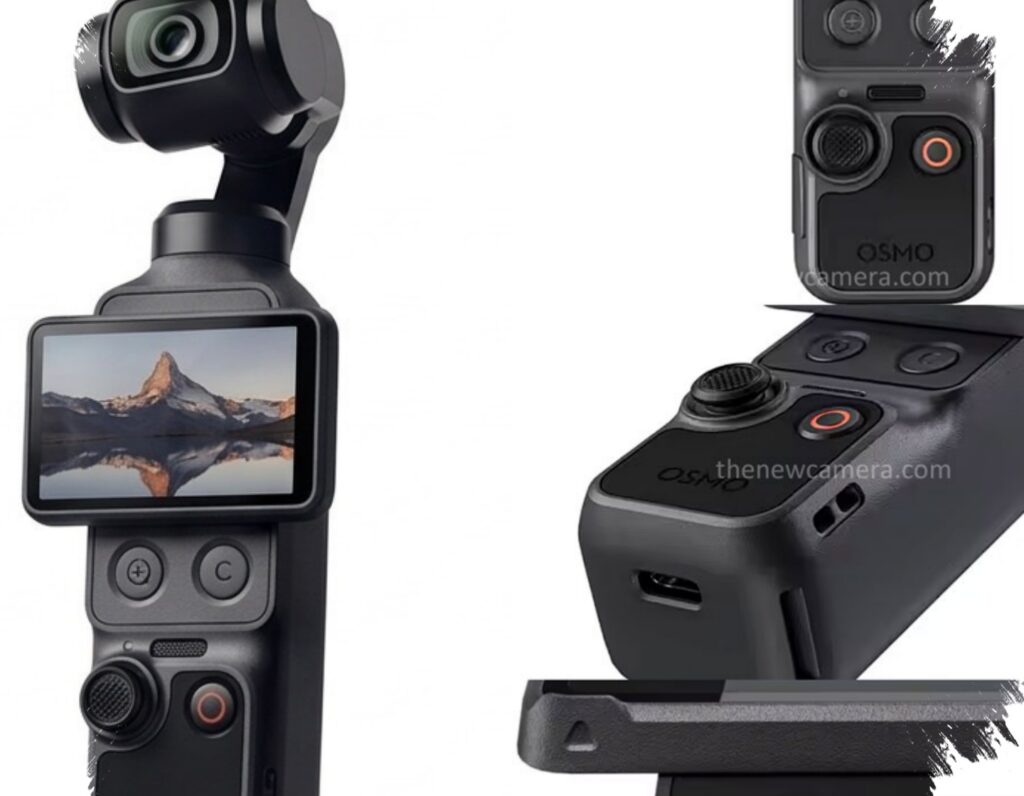
DJI has finally confirmed the launch of the Osmo Pocket 4, ending months of speculation around the compact gimbal camera. The company says the new model will debut on April 16, 2026 at 12:00 GMT, after a teaser posted on DJI Global’s X account on April 9 introduced the tagline “The World In My Pocket.”
The timing matters because the Osmo Pocket line has become a key tool for creators who want stabilized video in a pocket-sized body. This new release aims to push that formula further with a larger 1-inch sensor, 2x zoom, and a notable change in storage that removes the microSD slot entirely.
What DJI has officially confirmed
DJI has been careful with details, but the public teaser already confirms one of the biggest questions: the standard Osmo Pocket 4 keeps a single-camera design. That choice shuts down earlier rumors about a dual-lens setup for the base model.
The decision also signals that DJI wants the standard version to stay focused on portability, simplicity, and image quality. In practice, that means the company is keeping the Pocket lineup close to the design philosophy that helped the Osmo Pocket 3 win strong praise from vloggers and mobile creators.
Key leaked specifications
Retail packaging information that surfaced online has given the clearest picture yet of what the Osmo Pocket 4 may offer. The most important rumored upgrades look like this:
- 1-inch image sensor
- 14 stops of dynamic range
- 107GB of internal storage
- 2x lossless digital zoom
- 4-channel audio
- No microSD card slot
That last point is the most controversial. DJI appears to be replacing removable storage with built-in memory, which is a bold move in a camera category where many users still prefer expandable cards.
If the leaked numbers are accurate, the internal storage could record around 220 minutes of 4K/60fps video or more than 10 hours of Full HD footage. For many creators, that is enough for a full shooting day without swapping cards.
Why the 1-inch sensor matters
The jump from a 1/1.3-inch sensor on the Osmo Pocket 3 to a 1-inch sensor on the Pocket 4 is a major upgrade. A larger sensor usually improves low-light performance, dynamic range, and overall detail, especially in scenes with bright highlights and dark shadows.
That matters for travel creators, journalists, and anyone filming in mixed lighting. A 14-stop dynamic range would also give editors more flexibility when recovering highlight and shadow detail in post-production.
A closer look at the storage decision
Removing the microSD slot may look like a downgrade at first, but DJI seems to be betting on speed and reliability. The reported 107GB of internal storage is paired with read and write speeds of up to 800MB/s, which should help the camera handle high-bitrate video more efficiently.
For some users, this will be a welcome simplification. There is no card to forget, no slow card to troubleshoot, and no compatibility issue with third-party media, which often becomes a hidden problem for creators working under pressure.
What the hardware may add for creators
Early unboxing material suggests DJI is also focusing on comfort and control. The camera reportedly includes a dedicated zoom button, which should make framing easier without relying only on the touchscreen.
It is also expected to feature a customizable button for quick access to functions such as night mode, slow motion, or audio controls. A built-in smart fill light has also been mentioned, and that could help creators shoot better selfies or face-forward clips in dim environments.
The flip-out screen remains one of the Pocket series’ biggest strengths. It makes the device easier to use for vertical video, which is still essential for TikTok, Instagram Reels, and YouTube Shorts.
Launch schedule and market rollout
DJI is expected to launch the Osmo Pocket 4 in China first on April 16, 2026. The global release is reportedly scheduled for April 20, 2026, which places it right alongside NAB Show week in Las Vegas.
That move is significant because NAB is one of the most important events for broadcasters and video professionals. Launching during that window suggests DJI wants the Pocket 4 to be seen not just as a consumer gadget, but as a serious production tool.
FCC paperwork has also pointed to U.S. availability through normal retail channels. That reduces the chance of a limited regional launch and makes the camera more accessible to buyers in the American market.
Expected price and competition
The reported starting price is $499, which puts the Osmo Pocket 4 in a competitive position for a premium compact creator camera. Against that backdrop, DJI is likely targeting users who want better image quality than a smartphone can provide, but without the bulk of a mirrorless setup.
Its nearest competitor appears to be the Insta360 Luna, another upcoming compact camera with a 1-inch sensor and gimbal-style design. But as of April 2026, that product has not yet reached customers, which gives DJI an important timing advantage.
Why DJI may keep the standard model simple
The single-lens approach is not only about hardware limits. It also reflects a clearer product strategy, where the base version serves everyday creators and a possible Pocket 4 Pro handles more advanced needs.
In that model, DJI keeps the standard Pocket compact, fast, and easy to use, while leaving room for a more ambitious dual-camera variant later. That split would let the company cover both casual mobile filming and professional use without bloating one device with too many compromises.
For now, the Osmo Pocket 4 is shaping up to be one of DJI’s most important releases in the portable video category, combining a larger sensor, faster internal storage, and creator-friendly controls in a body that still fits easily in a pocket.