


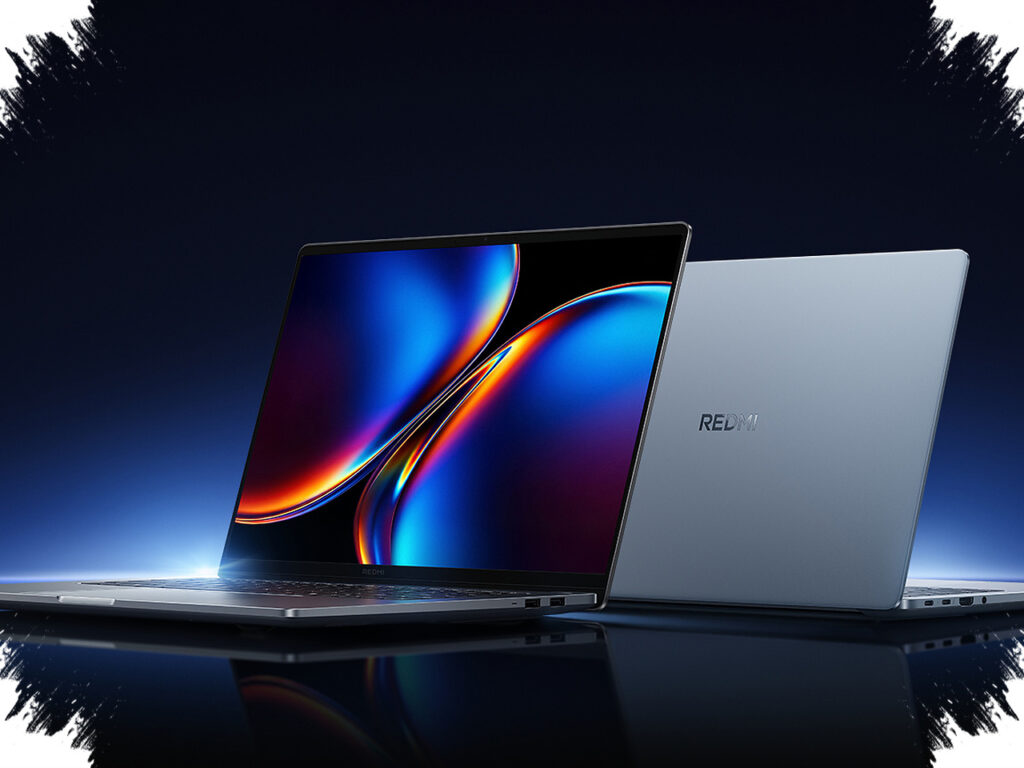
Xiaomi has officially expanded its laptop lineup with the Redmi Book Pro 2026 series, pairing a high-performance Intel Panther Lake platform with a more practical LCD display strategy. The new lineup comes in 14-inch and 16-inch versions, and it is positioned as a value-focused alternative to Xiaomi’s more premium Book Pro model with OLED.
What makes this launch notable is not only the hardware, but also the direction Xiaomi is taking in the Windows laptop market. The company appears to be betting that many buyers want strong AI performance, long battery life, and modern connectivity without paying a premium for OLED or touchscreen extras.
A New Redmi Strategy for Performance Buyers
Redmi Book Pro 2026 is built to bring advanced laptop features into a more accessible price band. Xiaomi is clearly separating the Redmi and Xiaomi-branded Book Pro lines, with the Redmi version using a high-refresh-rate LCD panel instead of OLED to keep costs lower and battery life stronger.
The hardware underneath is far from modest. Both sizes use Intel Core Ultra X7 358H, a processor based on Intel’s Panther Lake architecture and built on the Intel 18A process, which is one of the most talked-about upcoming manufacturing nodes in Intel’s roadmap.
Key hardware highlights include:
- Intel Core Ultra X7 358H with 16 CPU cores
- Intel Arc B390 graphics with 12 Xe3 cores
- AI performance rated at up to 180 TOPS
- LPDDR5X memory at 9,600 MT/s
- Two screen sizes: 14 inches and 16 inches
That combination places the Redmi Book Pro 2026 among the early Windows laptops expected to bring Panther Lake into mainstream retail channels, not just premium niche models.
Big Battery Claims Stand Out Most
Battery life is one of the strongest selling points Xiaomi is pushing. The larger 16-inch model uses a 99Wh battery, which sits at the maximum size commonly allowed for commercial air travel, while the 14-inch version carries a 92Wh battery and supports 90W fast charging.
Xiaomi also claims the 14-inch model can reach up to 37 hours of local video playback. That figure is unusually high for an x86 Windows laptop, especially one powered by Intel silicon, and it immediately raises interest around how efficient Panther Lake may be in real-world use.
Independent testing will matter here, but even if typical productivity use lands well below the headline number, the battery capacity alone suggests Xiaomi is aiming for all-day and possibly multi-day endurance in lighter workloads. For buyers who spend most of their time in web apps, documents, meetings, and streaming, that could be a major advantage.
Why Xiaomi Chose LCD Over OLED
Xiaomi’s decision to use LCD panels on the Redmi series is not a downgrade in the traditional sense. It is a product segmentation move that gives consumers a clear choice between premium display quality and practical endurance.
OLED panels offer richer contrast and deeper blacks, but they can be more expensive and may consume more power depending on usage patterns. LCD panels are usually more efficient for battery-focused laptops, and they also help Xiaomi keep the Redmi Book Pro 2026 below the price of the OLED-based Xiaomi Book Pro 14.
That creates a clean split in the company’s lineup. Buyers who want a 3.1K OLED touchscreen can look at the standard Xiaomi Book Pro 14, while buyers who want performance, better efficiency, and a lower price can choose the Redmi model.
How It Fits Into the Windows AI PC Race
The Redmi Book Pro 2026 also matters because of what it says about the broader Windows ecosystem. Intel has been under pressure to match the efficiency gains that Apple and Qualcomm have achieved in recent years, especially in laptops with AI-focused features.
With 180 TOPS of claimed AI performance, Panther Lake is clearly being positioned as an answer to that challenge. Microsoft’s Copilot+ push has already made AI capability a more visible selling point, and Xiaomi is now trying to package that capability at a price that feels more mainstream than premium.
What may appeal most to buyers:
- Strong AI acceleration for future Windows features
- Large battery capacity for travel and long work sessions
- High-speed LPDDR5X memory for multitasking
- Wi-Fi 7 and Bluetooth 5.4 for modern wireless connectivity
- A practical display choice instead of a costly OLED panel
The result is a laptop that seems designed for students, remote workers, mobile professionals, and creators who care more about lasting power and fast performance than about flashy display specs.
Expected Launch Window and Positioning
According to the referenced report, the Redmi Book Pro 2026 is expected to launch in late April 2026 alongside the Redmi K90 Max smartphone in China. Pricing is expected to stay below 7,999 yuan, which converts to roughly $1,100 USD, assuming current exchange estimates.
If Xiaomi can deliver Panther Lake, LPDDR5X memory at 9,600 MT/s, and a battery as large as 99Wh at that price point, the Redmi Book Pro 2026 could become one of the most aggressive value plays in the Windows laptop market. That would make it especially relevant in a segment where many brands still charge premium prices for AI-ready systems.
A Practical Alternative in a Crowded Market
The timing of this launch is important because the laptop market is becoming more polarized between premium AI machines and lower-cost devices with weaker specs. Xiaomi is trying to sit in the middle by combining advanced Intel hardware with a restrained design and a battery-first approach.
That formula may not attract users who want the sharpest OLED panel or the thinnest ultrabook possible, but it could appeal to buyers who want a dependable Windows machine with modern performance and fewer compromises. If Xiaomi’s battery and efficiency claims hold up in real-world testing, the Redmi Book Pro 2026 could become one of the most closely watched Windows laptops of 2026.