


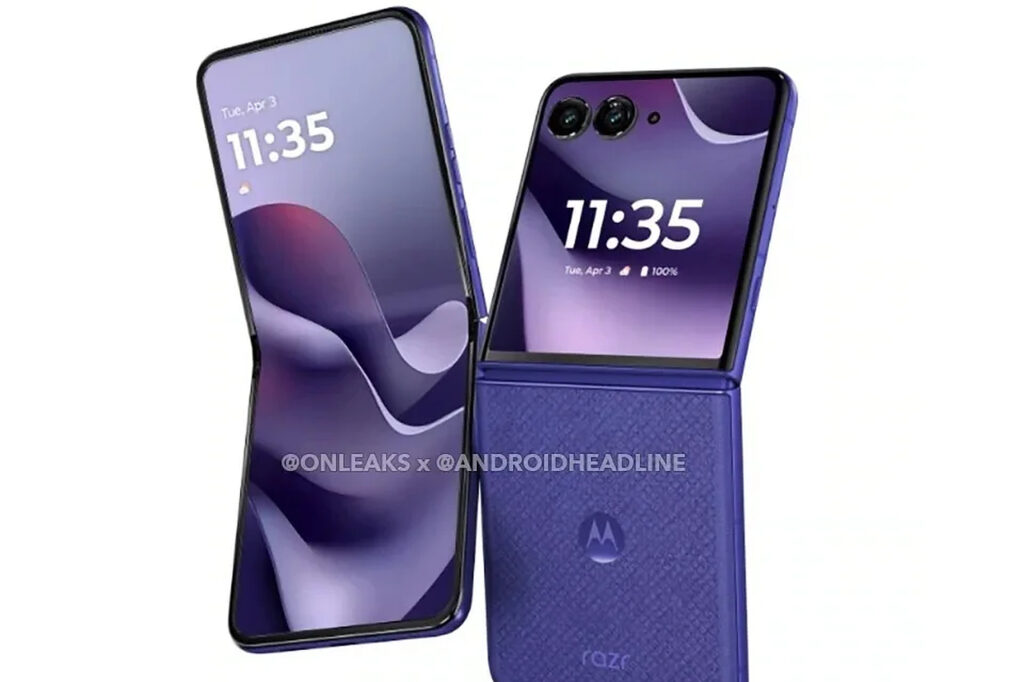
Motorola’s next two smartphones are moving closer to launch after both models appeared in certification databases. The Motorola Razr 70 Ultra and Motorola Edge 70 Pro have now surfaced in official filings, a development that usually suggests the devices are nearing the final stages before release.
The latest sightings add weight to earlier leaks and render reports that already hinted at Motorola’s upcoming refresh. While the certifications do not reveal every detail, they do confirm that the company is actively preparing both phones for broader market availability.
Certification sightings usually point to an advanced launch stage
Industry watchers often treat certification entries as one of the most reliable signs that a device is close to debut. As noted by XpertPick, a product appearing in such databases often means the manufacturer has already completed much of the internal testing and is now working through regulatory approval.
In this case, the Razr 70 Ultra was spotted in China’s 3C certification database. The Edge 70 Pro, meanwhile, appeared in the TDRA registry in the United Arab Emirates, which suggests Motorola may be lining up a phased global rollout.
That split in regions is important because it often reflects a launch plan that starts in selected markets before expanding to others. It also shows that Motorola is likely preparing both devices for commercial release rather than leaving them at the prototype or early testing stage.
Razr 70 Ultra looks like a measured update
The 3C certification lists 68W fast charging support for the Motorola Razr 70 Ultra. That is the same charging speed used by the previous Razr 60 Ultra, which points to continuity rather than a major shift in power delivery.
For a foldable phone, that decision makes practical sense. Foldable designs leave less room for larger batteries and can create more thermal challenges, so manufacturers often choose stability over aggressive charging upgrades.
At the same time, keeping the charging spec unchanged may disappoint users hoping for a bigger leap. In a market where competitors often highlight faster charging or larger batteries as headline features, Motorola will need to make the Razr 70 Ultra stand out through other improvements.
Those upgrades could come in areas such as hinge durability, internal display quality, camera tuning, or software features aimed at improving the foldable experience. Motorola has not confirmed those details yet, so the final value proposition remains unclear.
Edge 70 Pro appears more ambitious on battery life
The Motorola Edge 70 Pro seems to take a more aggressive approach. Earlier certification data from Anatel indicated that the phone could carry a 6,500 mAh battery, which is a notably large capacity for a flagship-class device.
If accurate, that battery would position the Edge 70 Pro as one of the more endurance-focused phones in its segment. For users who rely heavily on navigation, mobile video, gaming, and constant messaging, that kind of battery size can be a major selling point.
The phone is also reported to support 90W fast charging. Combined with the large battery, that would create a strong balance between long runtime and quick top-ups, especially for people who do not want to stay tethered to a charger for long.
Still, the TDRA filing in the UAE only confirms the device’s presence and model number. It does not provide chipset details, camera specifications, display information, or any other hardware changes, so several key questions remain open.
What the current certifications reveal so far
- Razr 70 Ultra has appeared in China’s 3C database.
- Edge 70 Pro has appeared in the UAE’s TDRA database.
- Razr 70 Ultra is listed with 68W charging support.
- Edge 70 Pro is linked to a 6,500 mAh battery in earlier certification data.
- Edge 70 Pro is expected to support 90W fast charging.
These details do not expose the full product story, but they do show how Motorola is shaping two different strategies for its next wave of devices. The Razr model appears to prioritize refinement and consistency, while the Edge model leans into battery capacity and charging speed.
Motorola is targeting two different buyer groups
The company’s approach makes sense from a market perspective. Foldable phones usually attract premium buyers who care about design, portability, and novelty, while traditional flagship phones often compete on endurance, performance, and practical everyday use.
By keeping the Razr 70 Ultra close to the charging formula of its predecessor, Motorola may be signaling that it wants to preserve reliability in the foldable lineup. In contrast, the Edge 70 Pro seems designed to appeal to users who value all-day battery life and fast charging more than experimental form factors.
This two-track strategy could help Motorola strengthen its position in multiple premium categories at once. If the company pairs these hardware choices with competitive pricing, the new lineup may draw attention from both foldable fans and mainstream flagship buyers.
For now, the certifications mostly confirm momentum. With both the Motorola Razr 70 Ultra and Edge 70 Pro now visible in official databases, the remaining wait is for Motorola to share the full specification sheets, regional availability, and launch timing that will finally clarify how these two phones are meant to compete.