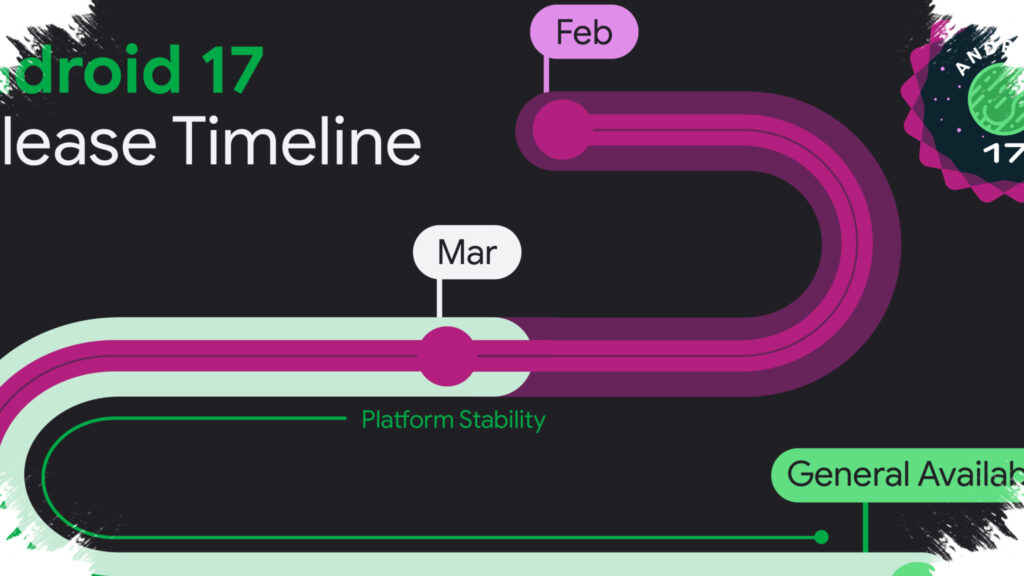
Android 17 Beta 4 arrives with a clear message: Google is tightening the operating system before the stable release. Rather than adding flashy new features, this final testing phase focuses on platform stability, app compatibility, and stronger system protections.
Two of the most noticeable changes in the build target apps that consume too much memory and apps that reach into local networks without clear permission. Both shifts are meant to make Android 17 behave more predictably while also giving users and developers tighter control over how apps run and connect.
Stricter control over RAM usage
One of the biggest updates in Android 17 Beta 4 affects memory management. Google now applies different memory limits to each app, using more conservative thresholds based on the total RAM available on the device.
If an app exceeds the allowed limit, the system may flag it or even stop it from running. The goal is straightforward: reduce slowdowns, avoid wasteful battery use, and keep the overall experience stable when multiple apps are active at once.
For developers and advanced users, Google has also introduced a clearer way to trace the issue. Affected apps can now be identified in system logs with the “MemoryLimiter” tag, making performance debugging easier. That label gives developers a practical starting point when an app needs to be adjusted to fit Android 17’s tighter memory policy.
Local network access now needs explicit permission
Another major change centers on privacy and device communication. For apps targeting Android 17, access to a local network is no longer granted by default.
That means an app cannot freely talk to other devices on the same Wi-Fi network unless it is allowed to do so. Developers must request the new ACCESS_LOCAL_NETWORK permission directly, which gives users a more visible way to understand and control network activity.
This update may affect apps that previously scanned or connected to nearby devices without a clear permission prompt. Google’s approach places a stronger boundary around local network interactions and makes permission handling more explicit at the platform level.
Security work also extends into quantum-era protection
Beyond memory and network rules, Android 17 Beta 4 adds support for post-quantum cryptography. The build brings ML-DSA support to Android Keystore, extending the platform’s security toolkit with a digital signature method designed for hardware that can support it.
ML-DSA, short for Module-Lattice-Based Digital Signature Algorithm, is presented as a more future-ready option against threats from quantum computing. While the effect may not be obvious to everyday users right away, the addition matters for apps and services that rely on stronger data protection.
Android Keystore remains an important layer in that effort, since it is the system path used for more advanced security implementations. This move shows that Google is laying groundwork for longer-term protection rather than waiting until new threats become immediate.
Background audio rules get a narrow exception
Google also refined how apps are allowed to handle audio in the background. In general, apps are still restricted from playing audio or changing volume while running behind the scenes.
Android 17 Beta 4, however, makes room for exceptions tied to alarms and certain foreground services. That adjustment suggests a deliberate balance between system control and the needs of apps that must keep working under specific conditions.
Large-screen support continues to tighten
The beta also keeps pushing Android toward a more consistent experience on large displays. Apps are now required to support resizable layouts and orientation changes on screens larger than 600 dp.
This is no longer an optional direction for developers, which means tablets and foldables are likely to benefit most. The change should also help reduce display issues in multitasking environments, where app behavior can break down more easily on bigger screens.
Android 17 Beta 4 is already available for eligible Pixel phones, starting with the Google Pixel 6 and newer models. Users enrolled in the Android Beta Programme can receive it over the air as Google moves closer to the stable release.