WhatsApp is moving toward a major change in how chat backups are stored, and the biggest shift is not just about location but control. The company is reportedly developing its own cloud backup system, with end-to-end encryption required as a built-in condition rather than an optional extra.
This direction could change the habits of millions of users who currently rely on Google Drive on Android and iCloud on iPhone. Instead of treating backup storage as a feature handed off to third-party platforms, WhatsApp appears to be building a more direct role in how chat archives are kept and protected.
A first-party cloud option inside WhatsApp
WABetaInfo says the new feature is being prepared as an additional backup storage option inside WhatsApp. That would allow users to choose WhatsApp’s own servers as the backup destination, rather than depending only on external services.
The setup is described as a first-party cloud system, which means chat backups would be stored on infrastructure owned by WhatsApp itself. From the interface shown by WABetaInfo, this option does not seem designed to automatically replace Google Drive or iCloud.
Instead, the approach appears to widen the choices available for users who want more flexibility over where their chat data is stored. It also points to a broader push by WhatsApp to manage backup infrastructure more independently.
Encryption moves from optional to mandatory
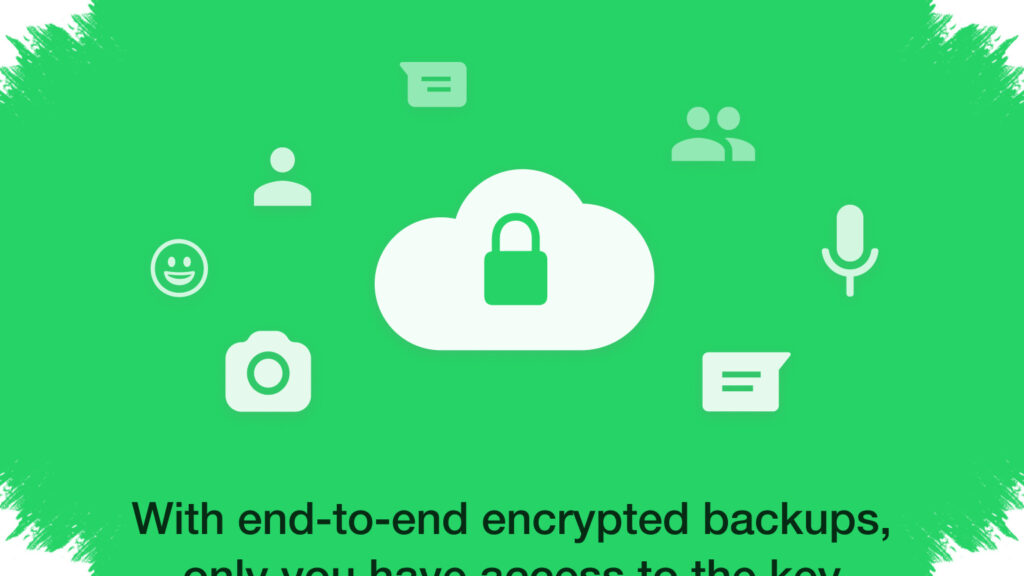
The most notable part of the plan is the security model. WhatsApp is said to require end-to-end encryption for cloud backups, which differs from the backup experience on Google Drive and iCloud, where encryption is still optional.
To unlock a backup, users would need to use a passkey or enter a 64-digit encryption key. That means access to the backup would be protected from the start, rather than through an added setting that users may or may not activate later.
This matters because backups are often one of the weakest points in data protection. Messages inside the app may already be encrypted, but that protection has not always carried over in the same way once data moves to cloud storage.
Possible storage tiers and limits
One detail that stands out is the free capacity, which is said to reach 2 GB. For users with larger needs, the same report mentions a WhatsApp Plus subscription tier that would open access to as much as 50 GB of cloud backup storage.
Those figures suggest WhatsApp is thinking beyond a simple on-or-off backup tool. The setup would give the company room to define capacity, access levels, and service structure within its own ecosystem.
At the same time, the reported tiers do not indicate that every user must switch immediately. The cloud backup option appears to be designed as an extra choice rather than a forced replacement for existing methods.
What it could mean for Google Drive and iCloud
If the feature reaches public release, WhatsApp would reduce its dependence on Google Drive and iCloud for chat backup handling. That would shift more control into WhatsApp’s own environment and allow the company to manage storage and security more directly.
For users, the change could create a more uniform backup experience across devices. It may also appeal to people who place a higher value on built-in encryption and want that protection tied directly to the backup process.
Even so, the current indication is that the WhatsApp-hosted cloud backup will remain optional. That leaves room for users who are comfortable with Google Drive or iCloud to keep their existing habits.
Still under development
The encrypted cloud storage backup is still in development, and there is no confirmed timeline for beta testing or a wider launch. Several details may still change before the feature becomes publicly available.
The free storage limit, the subscription structure, and the method for choosing a backup provider are all still subject to adjustment. For now, the clearest signal is the direction of travel: WhatsApp wants more control over backups, while making encryption a core requirement of the system itself.
Source: gadgets.beebom.com