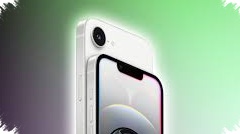
JerryRigEverything’s teardown of the iPhone 17e has highlighted a detail that may matter more in daily use than its newer chip or tougher display glass: MagSafe support. The device can charge wirelessly at up to 15 W through MagSafe, and the feature also opens the door to magnetic accessories that attach to the back of the phone.
The same teardown also suggests that Apple’s two affordable models are closely related inside. Several components in the iPhone 17e appear to match those in the iPhone 16e, including the motherboard, which raises the possibility of parts being swapped between the two phones.
MagSafe becomes the standout upgrade
Compared with changes such as the Apple A19 chip and Ceramic Shield 2 protection, MagSafe looks like the more practical addition for everyday users. It is not only about charging, since the system also makes magnet mounts and other back-mounted accessories easier to use.
That is why the teardown result drew attention beyond the usual durability test. The iPhone 17e’s rear glass, which includes the MagSafe coil, can reportedly be fitted onto the iPhone 16e.
Once that part is moved over, the iPhone 16e can also work with MagSafe accessories such as magnetic chargers. Even so, the benefit is not fully identical to the iPhone 17e, because wireless charging on the iPhone 16e remains limited to 7.5 W through Qi.
What the teardown revealed inside
The internal inspection showed that the overlap between the two phones runs deeper than the exterior design. JerryRigEverything found that multiple parts appear to be compatible, suggesting Apple built the two models on a very similar hardware foundation.
The clearest example is the motherboard. In theory, the iPhone 17e motherboard could be transferred into the iPhone 16e and bring the A19 chip with it. That possibility sounds straightforward, but the mod is not completely seamless in practice.
Face ID on the iPhone 17e is reportedly tied to the motherboard. If that board is moved into another device, Face ID on the modified unit no longer functions.
Durability remains a strong point
Beyond the compatibility findings, the iPhone 17e also held up well in the familiar stress tests. During scratch testing, the screen began to show marks at level 6, although the damage was described as barely noticeable.
The burn test and bend test did not reveal major problems either. JerryRigEverything’s results suggest the phone’s structure remains solid despite Apple limiting the size of the refresh.
That matters because it shows the iPhone 17e is not only about a few new features, but also about keeping the device physically dependable for everyday use. For buyers, it reinforces the idea that a modest upgrade cycle does not necessarily mean weaker build quality.
Why the teardown matters for service and repair
The shared components between the iPhone 17e and iPhone 16e may also be relevant for repair ecosystems. If more parts can be used across both models, spare-parts availability could become broader.
That can help technicians and users who rely on replacement components, especially where original parts matter. In practice, though, not every compatible piece brings every feature with it.
The teardown makes that boundary clear. Physical compatibility does not automatically transfer all functions, since software controls and component authentication still limit features such as MagSafe charging speed and Face ID behavior.