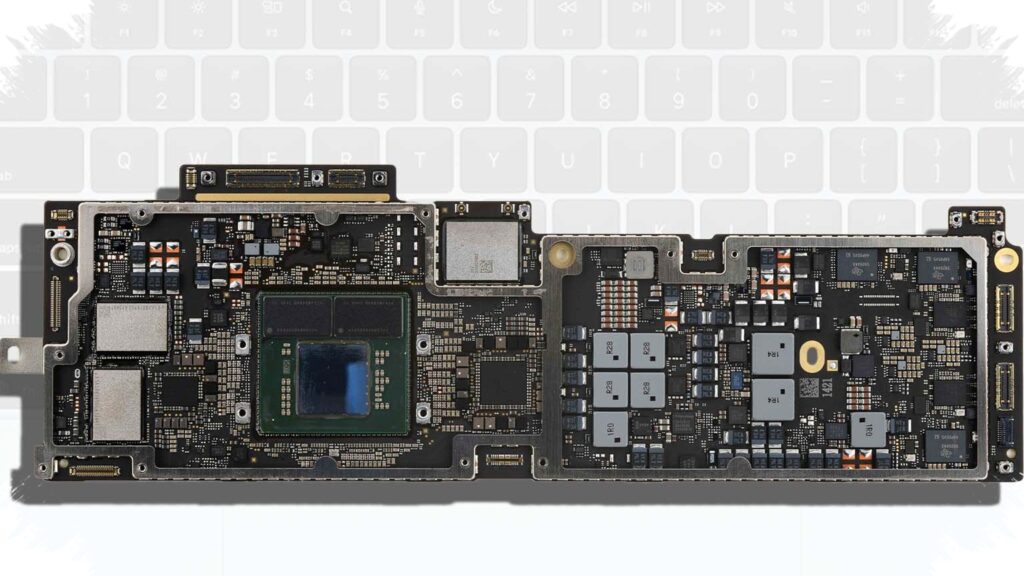
Apple’s M5 chip is drawing attention not just for speed, but for a major security shift aimed at one of the most common weak points exploited by attackers: memory vulnerabilities. With Memory Integrity Enforcement, Apple is pushing protection deeper into the hardware layer and making memory abuse harder to turn into a working exploit.
That matters because memory bugs have long served as a starting point for modern attacks. They are often used against browsers, apps, and operating systems, which makes this part of the chip an especially important target for defense.
Protection that starts the moment the device powers on
Apple says the new approach in M5 works at the silicon level rather than relying only on software. In practice, that means monitoring of memory use begins as soon as the device is switched on, instead of waiting for macOS and other software layers to finish loading.
Memory Integrity Enforcement is designed to watch how applications and the system access memory inside the chip. If a program tries to reach memory outside the allowed boundary, the system stops it before damage can occur.
That access may come from an ordinary bug or from an exploit built deliberately by an attacker. Apple’s goal is to block both before they can be used to compromise the device.
A step beyond older software mitigations
Apple distinguishes this system from familiar protections such as Address Space Layout Randomization, or ASLR, and stack canaries. Those defenses typically make attacks harder to carry out, but Apple describes Memory Integrity Enforcement as going further by stopping exploitation from the device’s architectural foundation.
Because the protection is embedded in silicon, it remains active even before macOS is fully loaded. That is a meaningful difference, since security gaps are not always waiting for the operating system to be ready before they are targeted.
Apple also says memory-related security bugs are frequently at the root of successful exploits. Strengthening that layer is therefore seen as a critical way to reduce the chance that a small flaw becomes a larger breach.
Limited to new hardware
The feature depends on a new hardware architecture and cannot be added to older Macs through a software update. As a result, Memory Integrity Enforcement is available only on devices with the M5 and A19 chips.
Older Mac generations with M1, M2, M3, and M4 do not receive the same protection. The MacBook Pro M5 is the first Mac to ship with this technology.
Apple positions that as especially relevant for professional users, enterprises, software developers, and sectors that handle sensitive data. For these groups, a single successful exploit can lead to data theft, system disruption, or broader intrusion into a digital workspace.
Automatic and designed to stay out of the way
Apple says there is no manual switch or special menu in System Settings to turn the feature on. Once the device powers up, the protection is active by default.
That approach reduces dependence on users changing settings themselves. It also fits Apple’s broader security model, which aims to make strong defenses work without requiring extra effort from the owner.
Apple further claims that Memory Integrity Enforcement does not create a significant performance impact. Since it is built into hardware, the system is said to run without noticeable overhead for everyday use.
Part of a broader Apple Silicon security stack
Memory Integrity Enforcement is not the only security layer in the M5. It joins other protections already present in Apple Silicon, which Apple describes as a “vault inside a bank.”
The idea is that highly sensitive components remain protected even if the operating system is breached. The chip still includes Secure Enclave for biometric data and encryption keys, Secure Boot to ensure only official macOS can run, and Data Protection to encrypt data directly through silicon.
Together, those layers show Apple’s effort to make the Mac more suitable for enterprise security without making the user experience complicated. On M5, the company is treating security as a core part of the hardware design, not just an added software feature.
Source: inet.detik.com