Signify is tying its smart-city strategy to a single measurable outcome: large-scale energy savings. Through its Brighter Lives, Better World 2030 program, the company aims to help customers save 60 TWh of energy cumulatively by the end of the decade.
That target sits alongside a broader sustainability push that combines lower emissions with new business opportunities. Signify is also updating its Interact connected lighting platform to support smart buildings and city infrastructure, with a focus on operational efficiency, real-time data, and reduced emissions.
Energy savings at the center of the strategy
The company says the program is designed to respond to rising global electricity demand, climate pressure, and limited energy resources. Signify Chief Executive Officer As Tempelman said the effort is meant to deliver real impact for communities while strengthening the business in a sustainable way.
Tempelman added that the solutions should improve quality of life, save energy, and use resources more effectively based on customer needs. That framing places energy efficiency at the center of both the sustainability agenda and the commercial strategy.
A wider sustainability target beyond lighting
Inside the same program, Signify has set another aggressive goal: reducing portfolio CO₂ emissions intensity by 35% per year. It also wants revenue from non-lighting solutions to reach 41%.
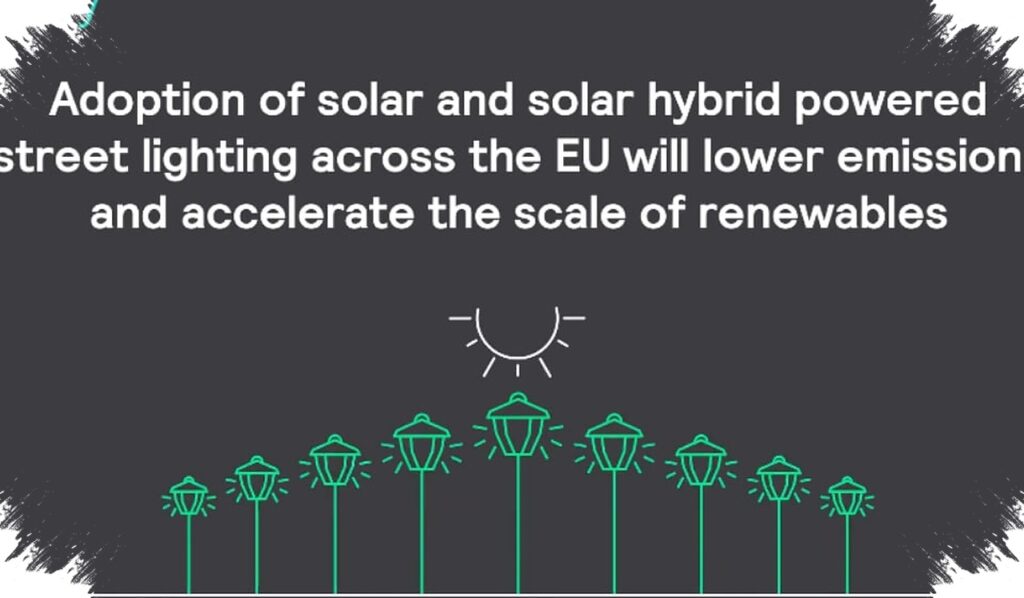
Those non-lighting solutions include health, security, solar lighting, and food production efficiency. The company presents this expansion as part of its effort to grow while addressing the energy transition.
Circular economy tools for faster transition
To speed up the move toward a circular economy, Signify is using the principle of “use less, use longer, use again.” That approach is being carried out through two new programs, Signify Circle and Signify Switch.
Signify Circle targets professional customers with circularity-based products and services. It includes Circle-specific products, Light as a Service, remanufacturing, plus upgrade kits and spare parts.
Signify Switch is aimed at helping customers move to energy-efficient LED systems. The program combines financing with modern lighting technology implementation to make migration faster.
Why Southeast Asia matters
Signify also points to Southeast Asia as a region where the energy challenge is especially urgent. Jitender Khurana, Chief Executive Officer of Professional Business for Southeast Asia & Far East, said nearly 80% of the region’s energy needs still come from fossil fuels.
He also said regional emissions are expected to rise by as much as one-third by 2050. At the same time, buildings account for around 40% of global energy consumption and emissions.
Khurana said upgrading lighting systems can cut energy use by up to 80% and directly reduce Scope 1 and Scope 2 emissions. That makes lighting one of the more practical starting points for urban energy efficiency.
Interact gets new tools for buildings and cities
At Light + Building 2026, Signify introduced four major updates to the Interact platform. The latest version uses real-time data to improve operational efficiency in buildings and smart-city infrastructure.
Interact for Intelligent Buildings provides centralized real-time monitoring for smarter building environments. The solution supports automated lighting optimization, lowers operating costs, and improves energy efficiency, and it has been deployed in more than 40,000 projects worldwide.
Interact EasyConnect simplifies connected outdoor lighting deployment through mobile and hybrid connectivity. By reducing the need for complex wiring, it makes implementation faster, more flexible, and easier to scale.
Outdoor lighting designed to adapt
Signify also unveiled a Central Management System, or CMS, for large-scale outdoor lighting networks. The system allows centralized, real-time management and helps local governments and city operators improve maintenance efficiency, speed up operational response, and keep lighting performance consistent.
Another new addition is the Traffic and Weather Adaptive Lighting Systems. This technology adjusts lighting automatically based on traffic and weather conditions, which can improve road safety while reducing unnecessary energy use during low-activity periods.
Together, the sustainability program and the latest Interact updates point in the same direction: cities and buildings that use less energy, operate more efficiently, and generate lower emissions.