


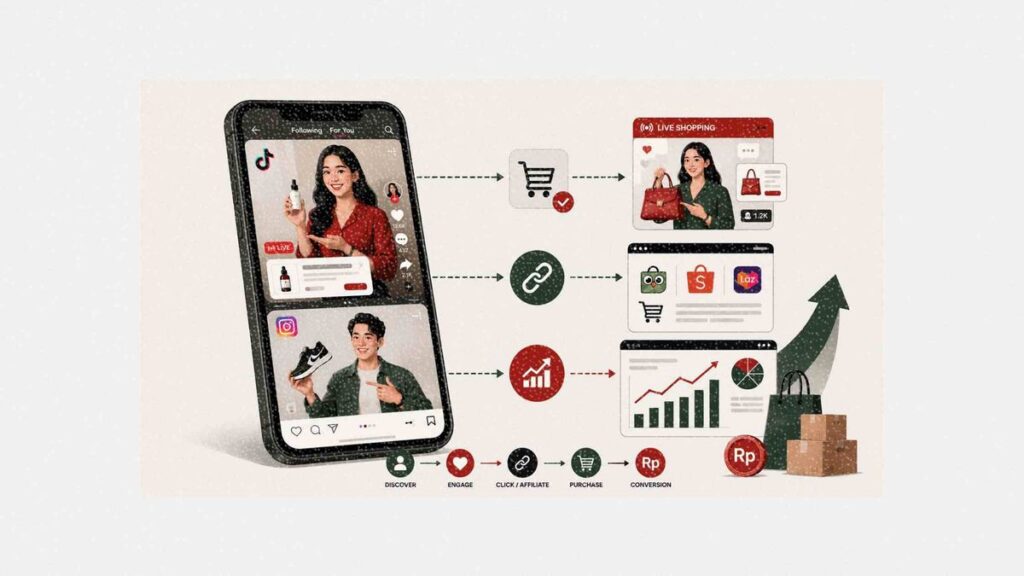
Indonesia has become the most performance-driven influencer market in Asia-Pacific, and that shift is forcing brands to rethink how they buy creator media. In a market with more than 1.1 million Instagram influencers, reach alone is no longer enough to justify a campaign.
What matters now is measurable action, from link clicks and add-to-cart behavior to TikTok Shop purchases and affiliate conversions. According to AnyMind Group’s State of Influence in APAC 2026 report, 74% of influencer campaigns in Indonesia are now designed with performance outcomes in mind.
Why performance now leads the market
The numbers show a broader regional shift, but Indonesia is moving faster than the rest of APAC. Across the region, outcome-driven campaigns grew from 28.24% of tracked influencer activity in 2023 to 42.47% in 2025, yet Indonesia has already pulled ahead of that pace.
That creates a more demanding environment for brands and creators alike. Campaigns that cannot be tracked are increasingly harder to defend, which is why creator vetting and fraud checks matter more than ever.
TikTok, Instagram, and YouTube each serve a different role
TikTok is the discovery engine in Indonesia. AnyMind Group’s analysis of Southeast Asia influencer trends showed TikTok campaign activity rising from 28.35% in 2023 to 50.58% in 2025 across the region, while DataReportal’s Digital 2026: Indonesia report said the platform reached 180 million adult users in late 2025.
That scale has turned TikTok into a commerce channel, not just an awareness channel. TikTok Shop, creator storefronts, affiliate links, and live selling now compress the path from recommendation to purchase.
Instagram still matters for higher-consideration categories, especially beauty, fashion, and brands targeting more professional audiences. YouTube also holds meaningful value in Indonesia for reviews, tutorials, and comparison content, particularly when consumers need more detail before buying.
What kind of content converts
The clearest pattern in Indonesia is that raw, scenario-based content often beats polished production. Audiences respond better to creators filming in real settings, such as a skincare routine in a bathroom or a food unboxing in a home kitchen, than to glossy studio shoots.
The shift is tied to trust. As cited by www.contentgrip.com, Dinda Anandita of Content Collision said creators filming on their phone in natural light can outperform brand-produced videos because high polish reads as an ad, not a recommendation.
Comparison content also performs well, especially in tech and electronics. Formats like side-by-side reviews and “which should you buy” videos match how Indonesian consumers research before they commit.
Creator tiers and pricing in Indonesia
Indonesia has a deep nano and micro creator base, especially on Instagram. Of the more than 1.1 million influencers on the platform, about 980,000 are in the nano tier under 10,000 followers.
That tier matters because engagement remains strongest at the low end of the creator stack. Nano influencers in Indonesia generate about 7.2% engagement on Instagram and a median 8.1% on TikTok, compared with 1.1% for Instagram creators above 100,000 followers.
Typical pricing varies by tier, format, and usage terms. The ranges below are approximate and quoted in Indonesian Rupiah.
| Creator tier | Followers | Sponsored post (IDR) | TikTok video (IDR) |
|---|---|---|---|
| Nano | 1K-10K | Rp200K-Rp1M | Rp400K-Rp2M |
| Micro | 10K-100K | Rp1M-Rp10M | Rp2M-Rp15M |
| Macro | 100K-500K | Rp10M-Rp25M | Rp15M-Rp50M |
| Mega | 500K-1M | Rp25M-Rp80M | Rp50M-Rp150M |
Hybrid deals that combine a lower flat fee with affiliate commissions are increasingly common in the market. For categories where creators believe their audience will convert, those arrangements can work better than flat-fee-only campaigns.
Usage rights are separate, especially when a brand wants to run creator content as paid media through whitelisting or dark posting. That needs to be negotiated explicitly, since organic posting terms do not automatically cover paid amplification.
Where the strongest demand sits
Fashion and beauty remain the biggest categories for influencer activity in Indonesia. Within beauty, halal-certified and locally produced products are growing fast, helped by a large Muslim consumer base with specific expectations around formulation and brand fit.
Food and beverage is another major category, especially for recipe content, restaurant discovery, and packaged food reviews. Live commerce also plays a large role in Indonesia, alongside Thailand and Vietnam, for categories such as beauty, fashion, and food.
Brands that align platform choice, creator tier, and content style are in the strongest position to get results. In Indonesia, the winning formula is less about polished reach and more about trust, tracking, and the ability to turn creator attention into action.