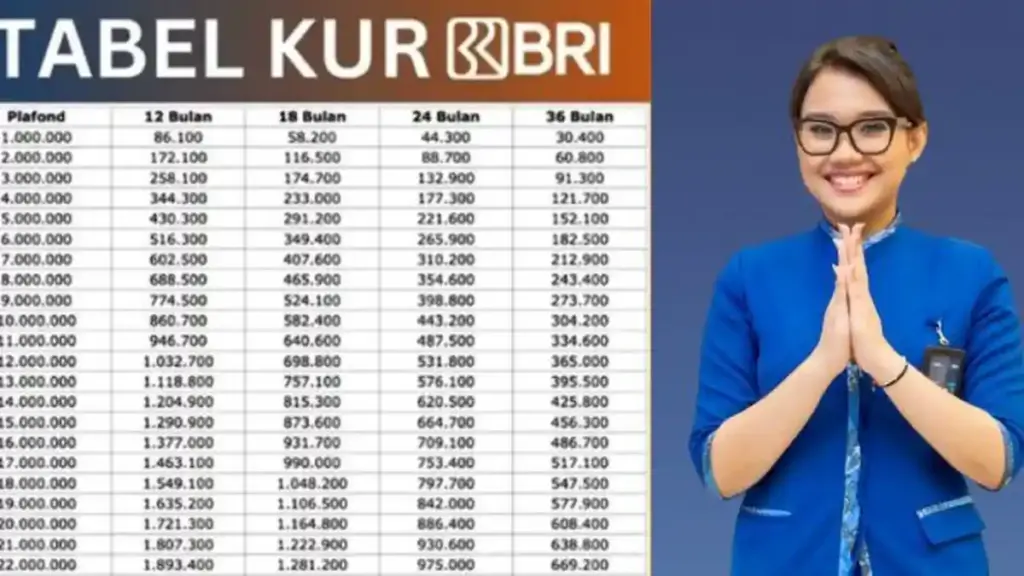
For many micro and small business owners, the hardest part of applying for business financing is not the loan amount itself, but the lack of collateral. That is why BRI’s unsecured KUR option continues to draw attention, especially because it allows business funding of up to Rp100 juta without additional collateral.
The scheme is seen as practical for UMKM operators who need working capital quickly but do not have a house certificate or other valuable assets to pledge. Approval is still based on business feasibility and repayment ability, yet the process is considered easier because it is integrated with digital systems and national population data.
What makes the scheme stand out
KUR BRI remains part of the government’s Kredit Usaha Rakyat program, distributed through Bank BRI. Its main purpose is to support micro, small, and medium-sized businesses with low-interest financing.
In this setup, collateral-free access becomes an important entry point for small entrepreneurs. Instead of relying on additional assets, the bank focuses more on whether the business is active and whether the applicant can manage installments.
Loan ceilings and interest rates
The most sought-after category in the no-collateral segment is KUR Mikro. Its ceiling ranges from Rp10 juta to Rp100 juta without additional collateral, making it the key option for many small business owners.
BRI also offers KUR Super Mikro with a maximum ceiling of Rp10 juta and an annual interest rate of 3 percent. For KUR Mikro without collateral, the applicable rate is 6 percent effective per year.
There is also KUR Kecil, which provides financing from Rp100 juta to Rp500 juta. Unlike the collateral-free option, this category requires additional collateral, so it serves a different segment of borrowers.
Who benefits most
The unsecured scheme is especially relevant for applicants who have a viable business but lack pledgeable assets. It is often used by home-based businesses, small traders, and agricultural operators that need extra funds to keep operating or expand gradually.
For these groups, the loan can be used to increase inventory, buy equipment, or support business activities that are already running. That makes the no-collateral option more realistic for many UMKM actors than conventional lending that depends heavily on asset ownership.
Requirements that still apply
Even though the process is said to be easier, applicants must still meet basic criteria. They must be Indonesian citizens, have an active e-KTP and Family Card, and be at least 21 years old or already married.
The business must also have been active for at least six months. In addition, applicants must not have active productive credit at another bank.
BRI requires business legality documents such as NIB or a Business Certificate, while NPWP is also needed for certain loan applications according to bank rules. The applicant’s credit history will also be checked through SLIK OJK to ensure there are no problematic arrears.
Why the process feels simpler
The streamlined impression comes from the connection between digital application systems and national identity data. That integration shortens the administrative flow, but it does not remove the bank’s screening process.
Applicants who meet the document requirements generally have a better chance of being processed further. The final assessment still centers on business viability, administrative completeness, and repayment capacity.
For UMKM owners looking for additional capital, the combination of low interest, structured requirements, and a ceiling of up to Rp100 juta without extra collateral keeps KUR BRI among the most attractive productive financing options available. It remains particularly important for small businesses that need room to grow without having to hand over assets as security.