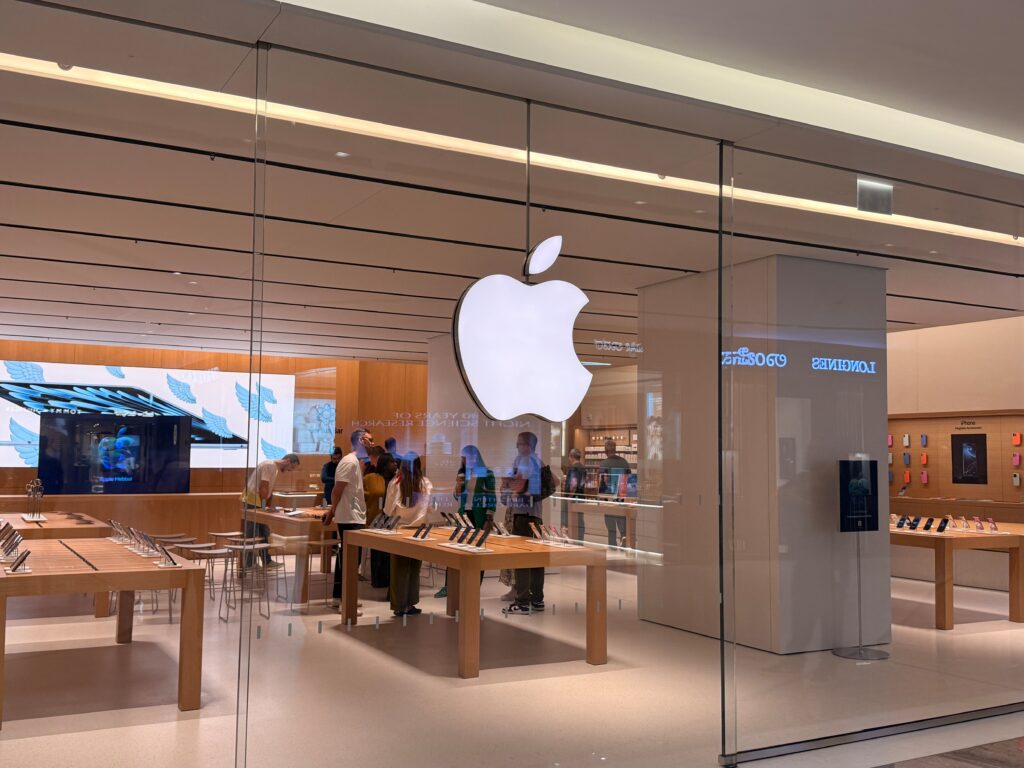
Apple’s retail expansion in India is moving deeper into Bengaluru, with a second store reportedly planned for the city. The move signals that the company sees strong enough demand to justify a larger offline presence in one of India’s most important premium tech markets.
The likely location is Whitefield in eastern Bengaluru, an area closely tied to the city’s technology economy. With a dense mix of tech parks, startups, and multinational offices, the district has become one of the most logical places for Apple to strengthen its direct retail footprint.
Whitefield stands out as the likely next step
Several reports point to Phoenix Marketcity in Whitefield as the most probable site for the new outlet. The store is expected to open at the beginning of 2027, giving Apple a stronger position along Bengaluru’s eastern technology corridor.
That location choice is not accidental. Whitefield, together with nearby areas such as Marathahalli and Outer Ring Road, continues to show strong interest in premium electronics and high-end gadgets. For Apple, that makes the area a natural fit for a store aimed at affluent and tech-savvy buyers.
Bengaluru already plays an important role in Apple’s India strategy. The city has a large base of smartphone users, software professionals, and consumers familiar with premium devices, all of which align closely with Apple’s core customer profile.
A city that already matters to Apple
Apple currently operates one official store in Bengaluru, located in Hebbal. That outlet opened in 2025 and became the company’s third official retail store in India at the time.
Adding a second store in the same city suggests that Apple sees Bengaluru as more than a single-store market. It points to a broader effort to capture demand across different parts of the city, especially in neighborhoods with heavy tech-sector activity and strong purchasing power.
The expansion also shows how Apple is using physical retail to deepen its relationship with customers in India. The company is not relying only on online channels or partner stores as it builds out its presence in the country.
India’s offline network keeps growing
Apple’s retail push in India has accelerated in recent years. The company now has stores in Mumbai, Delhi-NCR, Bengaluru, Pune, and Noida.
Its first flagship stores in India opened in Mumbai and Delhi in 2023. Since then, Apple has added outlets in Bengaluru, Pune, and Noida to widen its reach in the premium consumer segment.
This pattern suggests a deliberate strategy. Apple appears to be building a direct-to-consumer retail ecosystem in India through stores it controls itself, rather than depending entirely on third-party distribution.
That physical presence serves more than one purpose. Analysts note that retail stores can support direct customer service, product demonstrations, trade-in programs, and Today at Apple sessions that are popular in other markets.
Why Bengaluru matters in the bigger picture
India remains one of Apple’s fastest-growing markets globally. Rising demand for premium smartphones, a younger consumer base, and stronger local manufacturing have all supported the company’s expansion.
Apple has also increased investment in India across manufacturing and retail. As local iPhone production expands, the opening of official stores in major cities helps reinforce the brand’s premium positioning.
Bengaluru has a special place in that plan. It is not only India’s technology capital, but also home to many consumers with strong buying power and a clear preference for premium devices.
The reported second store in Whitefield therefore carries a wider message. It indicates that Apple still sees room for growth in Bengaluru and expects enough demand to support another physical outlet in the city.
If the plan moves forward as expected, Bengaluru will become an even more important anchor for Apple’s retail ambitions in India. The Whitefield location would give the company a stronger foothold in the city’s eastern tech belt, where premium demand remains high.
Source: sundayguardianlive.com