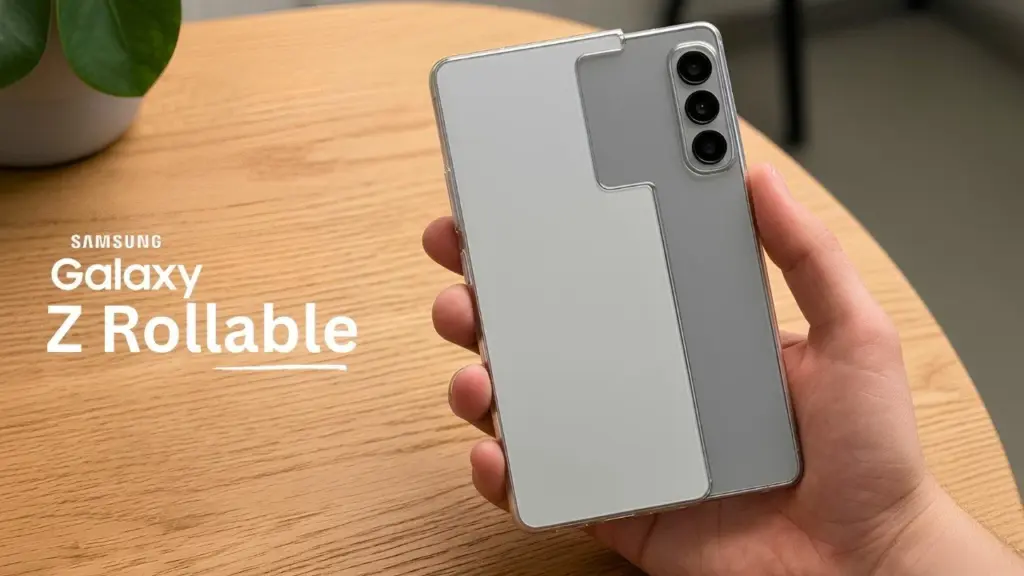
Samsung’s next big flex in smartphone design may not involve folding at all. New patent details point to a Galaxy Z Rollable concept that expands the display outward instead of bending it on a hinge.
That shift matters because it targets one of the biggest complaints about foldables: bulk. By keeping the screen stored inside the body and extending it only when needed, Samsung appears to be exploring a slimmer and cleaner alternative to the current foldable formula.
A different path from the foldable playbook
The main distinction is simple but significant. Foldable phones rely on a hinge and a panel that bends, while a rollable device enlarges its display by extending it outward.
That approach could create a smoother transition between an everyday compact mode and a larger-screen mode. It also gives the device a more futuristic look, which is becoming an important part of Samsung’s design direction in flexible smartphones.
Slimmer hardware is the main appeal
The strongest draw of the Galaxy Z Rollable concept is the possibility of a thinner body. Foldables have often been criticized for feeling thick because they need space for hinges and protective display structures.
A rollable design changes that equation by keeping the expandable screen inside the device itself. In theory, that allows Samsung to preserve a slimmer profile while still offering a larger display when the user needs it.
For daily use, the compact form would remain practical for messaging, calls, and web browsing. When expanded, the larger screen could make video streaming, gaming, and multitasking feel more comfortable.
A cleaner front display with hidden camera tech
The patent also points to a hidden camera built into the rollable screen. If implemented, that would remove the need for a notch or punch-hole cutout on the front panel.
A full, uninterrupted display would improve immersion during video playback, gaming, and other full-screen tasks. It would also strengthen the visual identity of the device, giving Samsung a cleaner and more futuristic front design.
The camera detail suggests that Samsung is not only rethinking how the screen moves. It is also trying to reduce visual interruptions on the display surface itself.
More than a one-off concept
This is not the first sign of Samsung’s interest in rollable technology. The company has reportedly filed multiple patents related to expandable display systems over the past few years.
That pattern suggests a longer-term commitment rather than a one-off experiment. Samsung appears to be building a path toward a rollable smartphone that could stand as a real alternative to the foldable lineup.
The company’s experience in display technology gives it a strong base for that effort. It also places Samsung among the most important names pushing flexible screen design forward.
LG showed the idea, but not the market
Samsung is not the first company to be linked with a rollable phone. LG previously showed a rollable prototype that drew attention, but the device never reached the market after LG left the smartphone business.
That history gives Samsung a useful reference point. The concept has already shown enough promise to interest the industry, yet it has not been proven at commercial scale.
Samsung may have the technical depth to refine the idea further. If that happens, the rollable form factor could move from an intriguing prototype concept into a product class with real market relevance.
Why the concept matters for smartphones
If Galaxy Z Rollable becomes a real product, its impact could extend beyond one device. A rollable phone would combine portability with the larger viewing space that flexible displays are meant to deliver.
That balance could appeal to users who want one device for both work and media consumption. It may also push other manufacturers to revisit rollable technology as an alternative to the familiar slab and foldable formats.
For now, the Galaxy Z Rollable remains tied to patent leaks and design clues. Even so, the idea already shows where Samsung may want the next phase of smartphone design to go: thinner, cleaner, and more adaptable than the foldable era.
Source: www.geeky-gadgets.com