Formula 1’s 2026 regulation changes may look technical on paper, but they point toward a much larger shift in how races are shaped. The biggest change is the move toward active aerodynamics, where wings and other aero components can adapt to the track and to race conditions in real time.
That matters because F1 has long been caught between two goals that do not always align: making cars faster and making racing closer. The 2026 direction suggests the sport wants both, while also pushing efficiency and a more predictable battle on track.
A new stage for aero performance
The idea behind active aerodynamics is straightforward, even if the engineering is not. Instead of relying on a fixed body shape, the car would use dynamic aero parts to adjust performance as conditions change.
That approach could change how grip is created and how the car behaves across different parts of a lap. It also reflects a wider shift in F1, where aerodynamics has moved from a supporting role to the center of performance.
Why the sport keeps returning to aero
F1’s history shows a long progression from mechanical grip toward airflow management. In the early years, grip depended heavily on tires, suspension, and weight distribution, but once teams started experimenting with wings, aero quickly became a decisive factor.
Wings evolved from simple devices in the late 1960s into essential design elements. They increased downforce, improved cornering speed, and became one of the clearest ways to gain lap time.
That development also brought risks. Movable wing concepts raised major safety concerns, which helped push the sport toward fixed designs in the 1970s.
The long shadow of ground effect
A major turning point came in the late 1970s with ground effect. By using the floor of the car to create low pressure underneath, teams could generate massive downforce and make the car feel as if it was glued to the track.
Lotus 78, developed under Colin Chapman, became a key milestone in that revolution. Sliding skirts helped seal the underside of the car, allowing ground effect to work more effectively without the drag penalty of oversized wings.
But the concept had a serious weakness. If the underfloor sealing failed or the car hit a bump, downforce could vanish suddenly, creating dangerous high-speed situations. That was one reason sliding skirts were banned in 1982.
What 2022 changed first
The 2026 rules do not appear in isolation. They follow the logic of the 2022 regulations, which brought ground effect back through underfloor tunnels.
That redesign was meant to reduce the dirty air that cars produce behind them. With less turbulent airflow reaching the following car, drivers have a better chance of staying close and setting up overtakes.
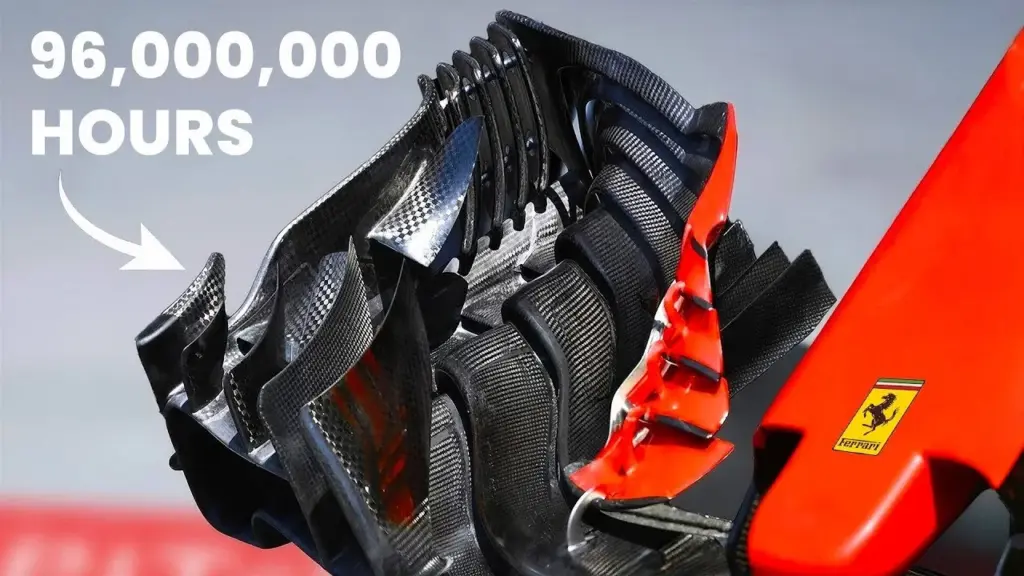
Dirty air had already become a major problem in earlier eras. By the late 2000s, F1 cars had become extremely complex aerodynamically, with winglets, barge boards, and chimneys all working to control airflow in fine detail.
Complexity, simplicity, and the next step
The 2009 regulations tried to simplify aero by cutting back on add-on elements and changing wing dimensions. Even so, the problem of turbulent air was not fully solved, and the sport kept searching for a better balance.
That is why 2026 stands out. If 2022 reworked the basic aerodynamics of the car, 2026 appears to take the next step by making aero itself more adaptable.
Active aero is not only about outright speed. It is also linked to energy efficiency, which has become increasingly important in the direction F1 is taking.
Technology makes the shift possible
The sport now has the tools to support that kind of change with far more precision than in the past. Since the 1980s and 1990s, wind tunnels have helped teams study airflow and refine component shapes in detail.
Computational Fluid Dynamics, or CFD, then accelerated that process by allowing engineers to simulate airflow digitally. Instead of relying only on physical testing, teams can now use data to guide design choices much faster.
3D printing has also shortened development cycles. Aero parts can be produced and tested more quickly, which makes iterative development more aggressive and more accurate.
That combination of tools helps explain why a change that may seem hidden can matter so much. In 2026, the most important shift may not be a visibly different wing shape, but a new philosophy for how an F1 car generates grip, manages turbulence, and stays efficient while racing wheel to wheel.
Source: www.geeky-gadgets.com