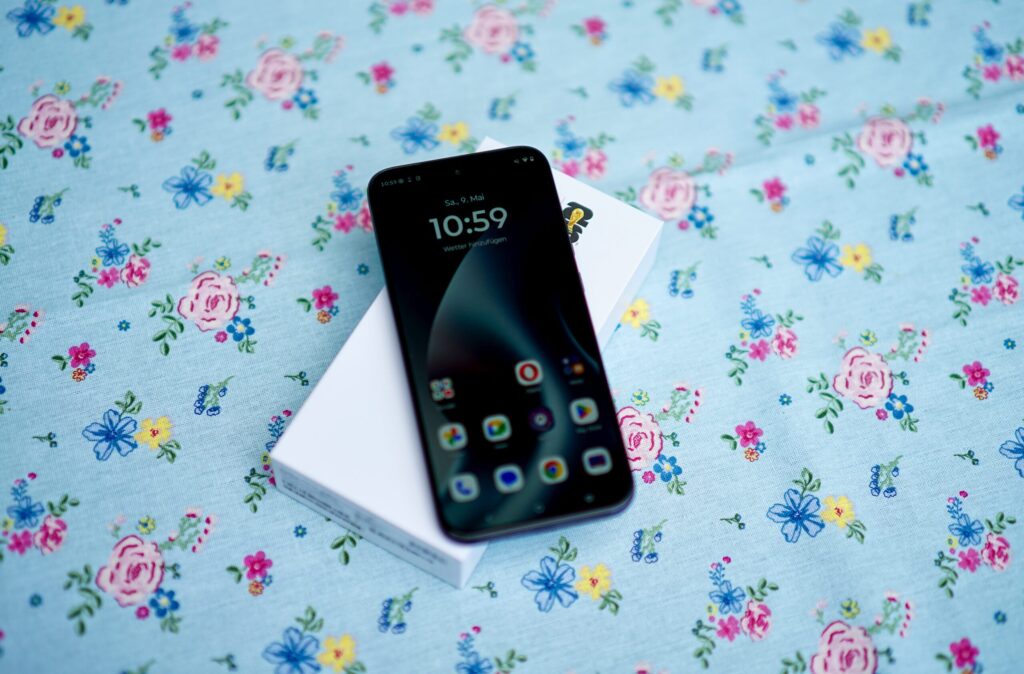
A screen can impress on a spec sheet and still feel demanding in daily use, and that is exactly the tension surrounding the Moto G87. Its 6.78-inch AMOLED panel is one of the brightest in the midrange, but that strength does not always translate into comfort indoors.
The display has been measured at a peak of 3,500 nits, while the manufacturer claims it can go up to 5,000 nits. Alongside that headline number, the panel also offers 1.5K resolution and a 120 Hz refresh rate, giving it a modern set of specifications on paper.
Built to win outdoors
In bright environments, the Moto G87’s screen makes a strong case for itself. Laboratory testing found that it remained easy to read even under direct sunlight, which puts it ahead of many competitors in the roughly US$450 price range.
That level of outdoor visibility is the display’s most obvious advantage. For users who spend a lot of time outside, the aggressive brightness can make the phone feel immediately more practical than many rivals.
Why the same strength becomes a drawback indoors
The problem starts once the phone moves into an indoor setting. At that point, the panel can feel overly intense, and the brightness may become tiring during longer sessions of reading, scrolling, or watching video.
In regular use, the brightness often needs to be lowered when the phone is under shade or in artificial light. That means the display’s biggest selling point does not always lead to a better everyday experience.
The gap between peak brightness and sustained brightness also matters here. The 3,500-nit figure appears only in specific conditions, while continuous brightness is much lower.
Battery life pays part of the price
Very high brightness does not come free. The display’s power demand rises with it, and that can put pressure on battery life during heavy use.
For that reason, the Moto G87’s screen should not be judged only by its brightness peak. Efficiency also plays a role in how comfortable the phone feels across a full day, especially if the display stays bright for long periods.
Automatic adjustment still needs polish
Another limitation appears in the brightness control system itself. In day-to-day use, the automatic adjustment has been reported to react a little slowly over time.
When lighting changes are not followed smoothly, the shift can feel abrupt. That is especially noticeable when moving from outdoors to indoors, where the display can go from very useful to slightly uncomfortable in a short span.
Strong brightness, narrower advantage
Against the Samsung Galaxy A57, the Moto G87 clearly has the edge in brightness. Under the same lighting conditions, Samsung’s screen loses readability sooner.
Even so, Samsung remains competitive in color accuracy and viewing angle stability. That leaves the Moto G87 with a clear advantage in one major area, but not in every aspect of display quality.
The result is a screen that stands out for raw brightness, yet asks for compromise in indoor comfort. For many buyers, the Moto G87 may be one of the easiest midrange phones to see outdoors, but not necessarily the easiest to live with inside.
Source: www.notebookcheck.net