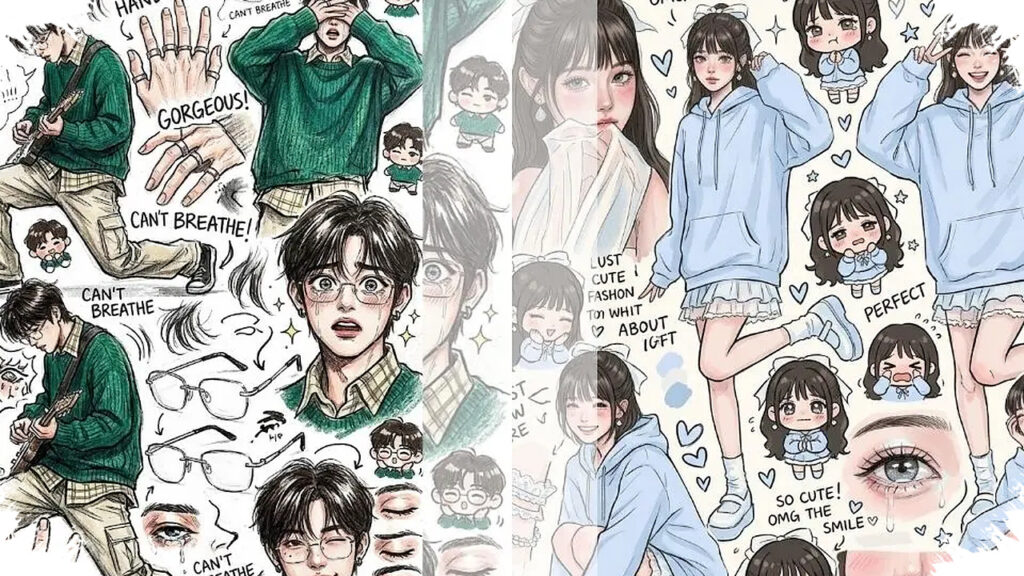
What makes the current sketchbook-style Gemini AI prompt trend stand out is not polish, but its deliberate messiness. The images feel warmer and more expressive than a standard photo edit because they are built to look like pages filled with spontaneous marks, loose ideas, and a strong personal voice.
That visual approach has gained attention on social media as more users turn simple portraits into artworks that resemble an artist’s notebook. The appeal lies in the way the results combine cute details, emotional energy, and a handcrafted look that feels less rigid than typical AI-generated visuals.
A style built around controlled chaos
The sketchbook look depends on details that seem unplanned. Random scribbles, light pencil stains, thin ink lines, paper folds, and uneven composition help create the impression of a page that has been lived in rather than designed to look perfect.
That is also why the format feels authentic to many users. Instead of a clean and symmetrical layout, the page often looks full of overlapping ideas, as if one fan artist kept drawing until the entire sheet was covered.
Why the images feel more personal
The style has also become popular because it gives posts a stronger visual identity. Many people use it for profile pictures, digital posters, and aesthetic content that needs to look distinctive without feeling overly polished.
The blend of fan-art energy and more modern realism plays a major role in that effect. The result often looks natural and expressive, making it easier for the image to feel like a personal statement rather than a machine-made output.
Common elements found in the prompts
Several circulating prompts share the same visual formula. They usually place a character on one full sketchbook page, then fill the surrounding space with layered poses, tiny chibi doodles, exaggerated reactions, and close-up studies of hands, eyes, hair, or facial details.
One variation frames the character as a fan artist who fills an entire page with chaotic sketches. It includes full-body poses from multiple angles, random close-ups, and an outfit in black and silver with a modern streetwear feel.
Another version uses a softer tone by showing a favorite character stacked across a clean white page. Small chibi forms, silly reactions, and emotional poses appear alongside a pastel blue-and-white outfit and an oversized hoodie, which makes the result feel gentler and more playful.
How the “cute” effect is created
The cute quality does not come only from the character design. It also comes from the composition, which often looks intentionally untidy and packed with visual noise.
Many prompts rely on a plain white background with no grid, no strong structure, and no symmetry. That emptiness makes the page look as if ideas were poured onto it all at once, which strengthens the sketchbook illusion.
Some versions push the fandom mood even further with chaotic poses and exaggerated expressions. A maroon-and-black gothic-modern outfit, an oversized coat, thick boots, and dramatic illustration lighting can make the page feel intense while still keeping the playful sketchbook identity.
Different prompts, same expressive mood
Other variations add more layers to the same concept. They use dynamic full-body sketches, chibi figures in the corners, and close-up doodles of eyes, fingers, hair, and accessories to make the page feel busy and alive.
A sweater with an oversized fit, layered fabric texture, and anime-inspired realism can make the result feel creative without becoming excessive. In another prompt, the character becomes the center of a chaotic fan artist’s obsession, supported by dark purple and gray cyber-futuristic streetwear, layered accessories, and realistic illustration details.
The overall trend shows why this style keeps spreading. It offers a mix of cute, emotional, and wild energy in a single image, and that combination gives social media posts a more memorable presence.
Source: radartasik.id