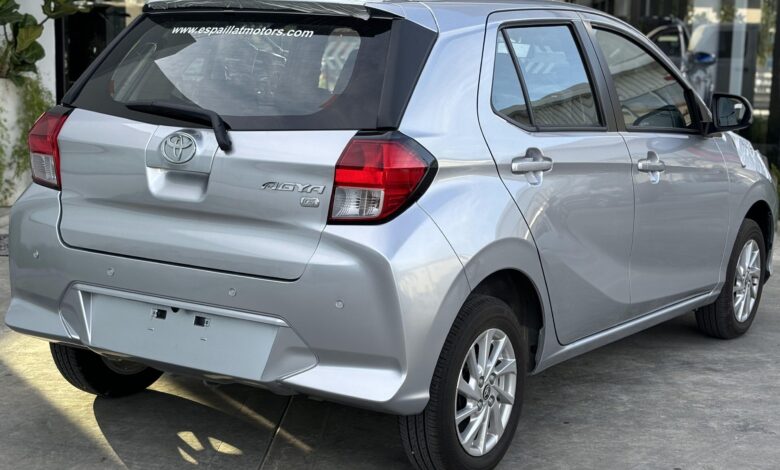
Toyota Agya continues to stand out because it solves a very specific need: simple, affordable, and practical daily mobility. In a segment crowded with compact city cars and hatchbacks, that formula remains one of its strongest advantages as buyers look for low running costs rather than excess power or complicated features.
That position feels even more relevant in 2026, when urban driving still rewards cars that are easy to own and easy to live with. Agya does not try to be a performance model, but it keeps focusing on the qualities many daily users value most.
Built for city traffic
Its compact body size remains one of the most important reasons the Agya works well in dense urban areas. The car is easy to maneuver through narrow streets and easier to place in tight parking spaces than larger vehicles.
That kind of convenience matters in stop-and-go traffic, where agility often brings more value than outright horsepower. For many commuters, the ability to move cleanly through the city is more useful than performance that rarely gets used to its full potential.
A sharper and more modern look
The latest Agya also brings a more aggressive visual identity than the model it replaced. A large front grille, modern LED lighting, and firmer body lines give it a sportier and fresher appearance.
New alloy wheel designs add to that impression without making the car look oversized. Even with the updated styling, the Agya still keeps its core city car character intact.
Functional cabin with useful features
Inside, the cabin is simple but arranged with practicality in mind. The dashboard looks modern and ergonomic, while the use of hard plastic materials keeps it aligned with the expectations of its class.
The Agya does not aim to feel luxurious, but the build quality is described as good for the segment. Its equipment list is also reasonably complete for a city car, with a touchscreen head unit, Bluetooth, USB port, steering switch control, digital MID, power window, and central lock.
Comfort basics also remain part of the package. The air conditioning is said to be cold and responsive, and the cabin space feels adequate for a car of this size.
Efficiency remains the main advantage
Under the hood, Toyota Agya 2026 still relies on a 1.2-liter Dual VVT-i engine. The unit is known for efficiency and ease of maintenance, which are two major priorities for buyers in the affordable car segment.
The output is considered sufficient for daily use, especially in city driving where light responses matter more than peak power. Acceleration from a standstill is said to feel responsive, particularly in the CVT version, which delivers smoother power transfer and a more relaxed driving experience.
On highways, the performance is still regarded as adequate. Even so, the Agya remains clearly oriented toward commuting rather than sustained high-speed driving.
Fuel consumption keeps it relevant
Fuel economy is still the strongest reason many buyers look at the Agya. In normal urban use, consumption is said to be around 18–22 km/liter, depending on traffic conditions and driving style.
That level of efficiency gives the car an important edge for people who need an economical vehicle every day. On longer trips outside the city, the efficiency is said to be even better.
Taken together, the efficient 1.2-liter engine, compact body, and relatively low maintenance costs keep the Agya competitive. For buyers who want a low-cost city car that stays practical without adding unnecessary complexity, it still offers a combination that is difficult to match.