


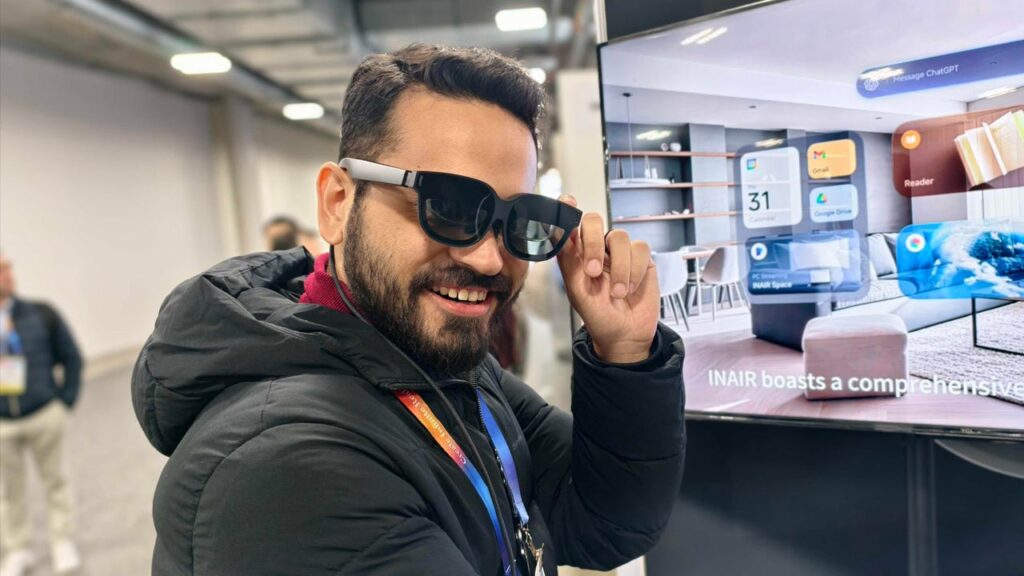
Smart glasses are no longer just a consumer gadget concern. In exam halls, they are now being treated as a serious threat because they can hide cameras, microphones, speakers, displays, and AI tools inside frames that look ordinary.
The latest warning sign came from South Korea, where two TOEIC test takers were caught using AI-enabled smart glasses during an exam. It was described as the country’s first case of its kind, and it surfaced only weeks after Ray-Ban Meta smart glasses officially went on sale in the local market.
A cheating method that is hard to spot
What makes the devices difficult to police is their design. Unlike a phone or a sheet of notes, smart glasses can sit unnoticed on a candidate’s face while quietly recording, processing, and relaying information.
Officials at TOEIC said suspicion began as soon as the test started after invigilators reported a participant who appeared to be wearing AI glasses. To avoid disrupting the session, the verification happened after the exam, and action followed once the violation was confirmed.
The two results were canceled, and both candidates were barred from taking TOEIC for four years. The punishment shows how seriously test organizers are beginning to treat wearable AI devices as a threat to exam integrity.
Although the exact method has not been confirmed, investigators believe the glasses may have used the built-in camera, in-lens display, or speaker system to translate questions and deliver answers through AI features.
Testing bodies are tightening their rules
The concern is spreading beyond South Korea. In the United States, the College Board has banned smart glasses from SAT exams since March 2026.
Priscilla Rodriguez, senior vice president at the College Board, said the organization’s exam security and technology teams continue to monitor emerging threats. She added that they had been following pre-launch announcements of these glasses and similar devices even before they reached the market.
That approach reflects a broader shift in how exam authorities now view consumer technology. The risk no longer comes only from phones, smartwatches, or hidden communication tools, but also from everyday accessories that can conceal powerful hardware.
In the United Kingdom, Ofqual has also identified smart glasses as one of the methods used to cheat in exams. A regulator official said schools had reported hidden earpieces, smart glasses that quietly played text inside the lens, and pens with tiny video screens that were almost impossible to notice.
The product race is making enforcement harder
Many modern smart glasses are marketed around exactly the kinds of features that create problems in exams. Cameras, speakers, microphones, and AI are sold as tools for recording moments, taking voice commands, or accessing information quickly.
Inside an exam room, those same functions can work in the opposite direction. A camera can capture a question, AI can process it, and the answer can be sent back through audio or text visible only to the wearer.
The specific model used in the South Korean TOEIC case has not been confirmed. One report even said the devices were not an officially sold model in South Korea.
That detail makes the problem harder for schools and exam organizers. They cannot rely only on devices that are formally sold in the local market, because candidates may buy products overseas or bring them in through other channels.
Ray-Ban and Oakley smart glasses versions arrived in South Korea on May 25, 2026. Meta’s similar products were already available in the United States, the United Kingdom, and several other regions.
Meta has also released the Meta Ray-Ban Display smart glasses in the United States, a model that combines a display and a camera. The company has not launched it in the United Kingdom or other regions yet.
There are also devices such as the Even Realities G2, which does not include a camera but still has a display in the lens. That means the exam risk is not limited to recording ability, because hidden visual output alone can create a cheating channel.
The next wave may be even larger. Samsung and Google are expected to launch their first smart glasses with cameras and AI later this year.
As more of these products reach consumers, schools, universities, and certification bodies face growing pressure to update exam rules. The South Korean case shows that the loophole is no longer theoretical; it is already being used.
Outside the exam room, smart glasses are already dealing with other concerns, from problems at sporting events to privacy worries in public spaces. In education, that list now includes a more specific danger: AI-assisted cheating that can be hidden in plain sight.