


Residents of Jakarta who cannot install an outdoor antenna still have several practical ways to keep TV digital reception stable. In dense neighborhoods, apartments, and buildings surrounded by high-rises, the main challenge is often not the television itself, but how the signal is captured.
That difficulty is especially common in central, western, and southern parts of the city, where tall buildings, thick concrete walls, and metal structures can obstruct the signal path. In some cases, the signal also bounces off nearby buildings before reaching the antenna, creating multipath interference that can reduce picture stability.
Indoor antennas can do more than expected
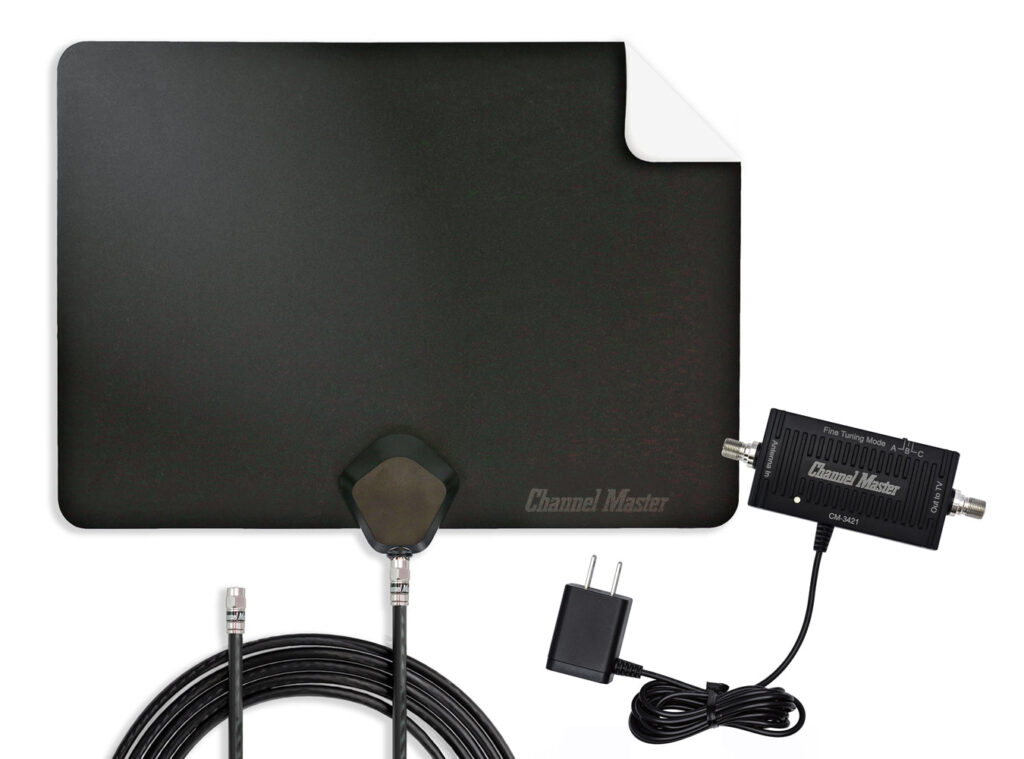
A modern indoor antenna is often the most realistic option when rooftop installation is not possible. For parts of Jakarta that are relatively close to digital TV transmitters, a good indoor antenna can be enough for daily viewing.
Placement matters more than appearance or size. The antenna should be positioned near a window facing open space and kept away from large cabinets, reinforced concrete walls, and other electronic devices.
Devices such as WiFi routers and microwaves should also be kept at a distance from the antenna. This simple step can reduce interference and improve reception quality.
Balkonies and semi-outdoor spaces may help
For apartment residents, a balcony can be a useful middle ground between indoor and outdoor placement. This semi-outdoor position often gives the antenna a clearer path to the signal without requiring a rooftop mount.
The approach is also generally safer and more practical under building management rules. A quality coaxial cable remains important here, because poor cabling can weaken the signal before it reaches the television or set-top box.
Signal quality matters more than raw strength
One common mistake is focusing only on the highest strength reading. In digital broadcasting, signal quality is often more important than strength when it comes to keeping the picture and sound stable.
When adjusting the antenna position, users should pay attention to the signal information menu on the television or set-top box. The best location is usually the one that delivers the strongest quality reading, even if the strength number is not the highest.
Rescan channels after changes
Missing channels do not always mean the antenna is faulty. In many cases, the device simply has not updated its channel list.
Running an auto scan can help the television or set-top box find the latest available frequencies in Jakarta. This step often restores channels without any additional equipment.
Check cables and antenna direction
Antenna cables are easy to overlook, but they play a major role in signal stability. Old, damaged, or loose cables can cause significant signal loss.
In a city environment full of electromagnetic noise, using a quality coaxial cable is worth considering. Good cabling helps reduce signal leakage and keeps picture and sound more stable.
Even when using an indoor antenna, direction still matters. Residents can use a digital TV signal-checking app to locate the nearest transmitter and then adjust the antenna to face the source more accurately.
For many Jakarta households, that combination of a well-placed indoor antenna, a semi-outdoor spot, quality cabling, correct direction, and a fresh channel scan is enough to keep digital TV watching clear without installing an outdoor antenna.