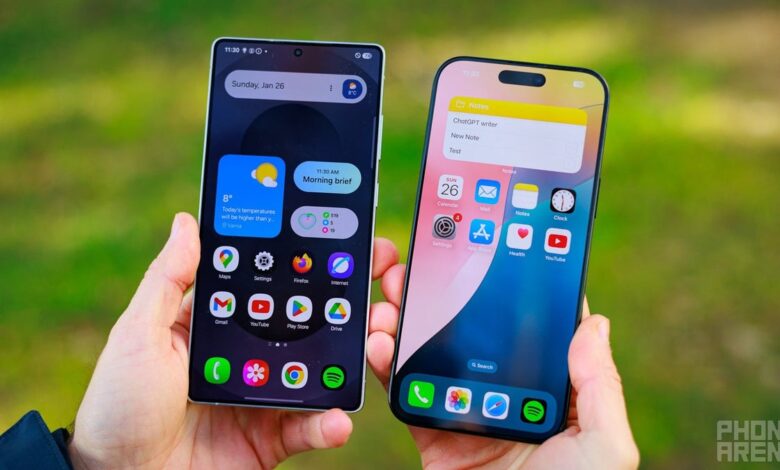
The choice between iPhone and Android is not only about brand preference. It comes down to how much control a user wants, and how much simplicity they are willing to trade for it.
That difference matters most in daily use, where speed, battery efficiency, software support, and app behavior shape the experience far more than marketing claims. For many buyers, the real question is whether they want a tightly managed device or a more flexible one.
Why iPhone feels consistent
Apple builds the iPhone around close integration between the chipset, software, and hardware design. That unified approach helps deliver smoother performance, including when several apps are running at the same time.
Power management is another advantage. Even with a relatively small battery capacity, the device can last through a full day of regular use because the system is optimized to use energy efficiently.
Long software support remains a major draw
Apple is also known for providing iOS updates for around five years. That longer support cycle gives older devices access to newer features and current security protection.
It also helps maintain resale value. In the used market, iPhone models tend to hold their price better because their usable life is seen as longer.
Android wins on flexibility
Android appeals to users who want more freedom to shape their phone. The open operating system makes it easier to change the interface, from icon themes and interactive widgets to basic navigation settings.
For many people, that level of personalization makes the phone feel more personal and more closely matched to individual habits. It is one of the main reasons Android continues to attract users who prefer control over a locked-down experience.
The limits that still matter
iPhone, despite its premium image, remains relatively closed. Data transfers with non-Apple devices can feel more complicated, and users are expected to follow the rules of the official App Store.
That approach can feel restrictive for people who like to explore beyond a tightly controlled ecosystem. Android avoids that kind of enclosure, but it brings a different set of trade-offs.
Fragmentation continues to weaken Android
Because Android is used by hundreds of manufacturers, system updates are difficult to distribute evenly. The result is fragmentation, and it is still one of the platform’s biggest weaknesses.
The problem is often most visible in entry-level phones. On devices in that class, security updates can stop after roughly one year of daily use, leaving a shorter protection window than many users expect.
App optimization is not always equal
Android also faces uneven optimization from third-party apps. In some cases, popular apps such as Instagram can feel less smooth than they do on competing platforms.
That is why Android often suits users who value freedom and customization more than consistency. iPhone, by contrast, is usually the safer choice for buyers who want stable performance, longer updates, and a more controlled experience.