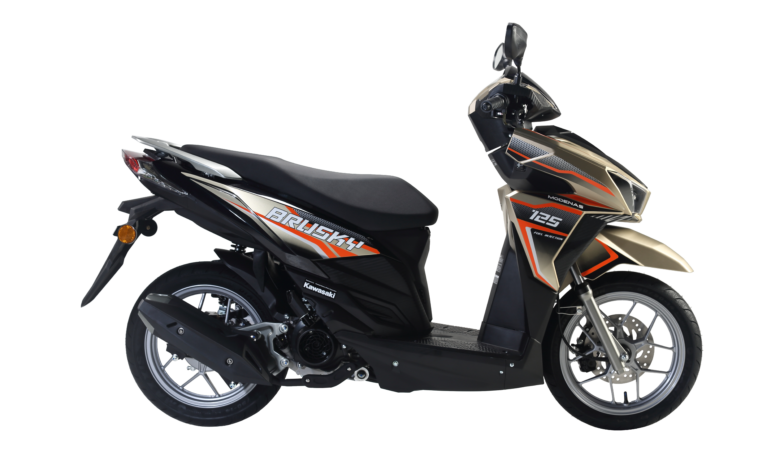
Kawasaki’s move with the Brusky 125 signals a clear shift in strategy at a time when conventional sport bikes are losing momentum. Instead of relying only on the image that built its reputation, the brand is reaching into the 125cc scooter market, where daily commuting demand remains strong.
That choice matters because the scooter segment has become one of the biggest volume drivers in urban mobility. For many riders, practicality now outweighs performance claims, and that has pushed manufacturers to rethink where future growth is most likely to come from.
A response to a changing market
The rise of city traffic has made automatic scooters more appealing for everyday use. Buyers are also paying closer attention to fuel efficiency and maintenance costs, which makes the 125cc class especially attractive for practical commuting.
In that context, Brusky 125 is more than a new model. It reflects Kawasaki’s willingness to move beyond its long-standing sport-bike identity and compete in a segment dominated by established scooter players.
Sport styling in a practical package
Even with its commuter focus, Brusky 125 does not abandon Kawasaki’s familiar visual language. The front end uses twin-lamp styling and sharp lines that echo the look of the Ninja family.
That design approach gives the scooter a more aggressive presence than many rivals in the same class. It also helps Kawasaki reach two audiences at once: riders who want a practical scooter and fans who already recognize the brand’s sport-oriented character.
Why the 125cc class matters
The engine size is a major part of the appeal. A 125cc scooter is often seen as a balanced choice for daily mobility because it can support routine use while remaining relatively economical to own and maintain.
Brusky 125 is positioned to benefit from that logic. It offers a more accessible entry point for buyers who like Kawasaki’s name but have not been able to move into its sport-bike lineup.
Broader reach for the brand
The model may also help Kawasaki expand its customer base beyond the group that normally follows its performance bikes. That is important in a market where brand relevance increasingly depends on how quickly a manufacturer adapts to changing habits.
Industry observers see the move as a sign that the company is reading consumer behavior carefully. As demand shifts toward simpler and more economical two-wheelers, entering the scooter arena may be one of the most direct ways for Kawasaki to stay competitive.
The challenge remains steep, since the scooter segment is already crowded with strong rivals. Still, the Brusky 125 shows that Kawasaki is no longer content to stay in a comfortable lane, and that alone makes the model a notable turn in the brand’s direction.