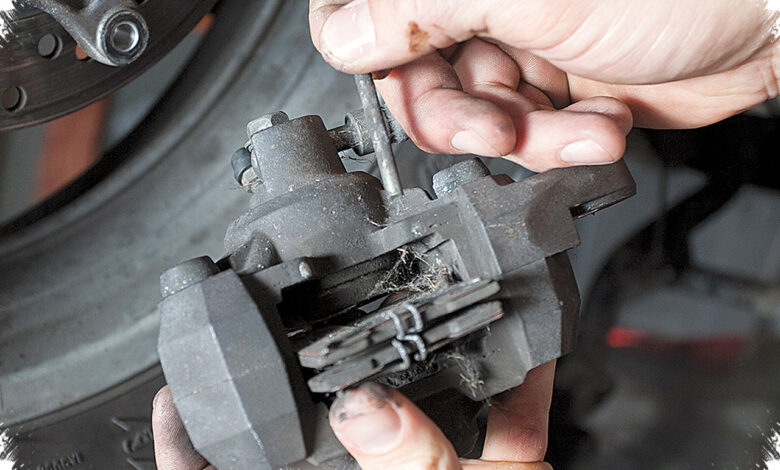
A motorbike brake that starts making noise should not be treated as a minor annoyance. Squeaks, grinding sounds, and friction noises often signal a problem in the braking system that can affect safety, comfort, and stopping performance.
When left unchecked, the damage can spread to other components and lead to higher repair costs. In many cases, the longer the issue is ignored, the more expensive the fix becomes.
Worn pads remain the most common trigger
One of the most frequent causes is brake pads that have worn thin. Once the lining becomes too thin, metal can begin rubbing directly against the disc and create a sharp squeaking sound.
That noise is not only distracting. It also accelerates disc wear, which is why brake pads should be replaced before they are completely worn out.
Dirt, uneven discs, and weak hardware can add noise
Contamination on the pad surface is another common source of noise. Dust, sand, mud, and leftover pad material can build up and rub against the disc during braking.
Uneven disc surfaces can also cause trouble. A disc may warp from excessive heat or wear, leading to uneven contact, noise, and vibration at the brake lever.
| Problem | What It Can Cause | Typical Effect |
|---|---|---|
| Worn brake pads | Metal-to-disc contact | Squeaking and faster disc wear |
| Dirty pad surfaces | Abrasive friction | Noise during braking |
| Warped disc | Uneven pad contact | Noise and lever vibration |
Calipers, drum brakes, and brake fluid also matter
The caliper plays a key role because it presses the pad against the disc. If the caliper piston is dirty and does not move smoothly, pressure becomes uneven and noise can appear.
Drum brakes can face similar issues. Dust buildup inside the drum housing or worn drum brake shoes may produce a squeaking sound when the brake is applied.
Brake fluid should also be monitored closely. The fluid has a limited service life and absorbs moisture from the air over time, which can reduce braking response and speed up wear in hydraulic components.
Loose brake bolts are another overlooked source of sound. Continuous vibration during riding can reduce bolt tightness, and the parts may begin to make abnormal noises when the brake is used.
Storage habits and riding style can make the problem worse
A motorbike that has been parked for a long time may also make noise when braking. Moisture and condensation can create a thin layer of rust on the disc, and the sound usually appears when the pad first rubs against that surface.
That condition is often temporary if the sound disappears after several braking attempts. Even so, riders should stay alert if the noise does not go away.
Brake pad quality is another important factor. Pads made from overly hard or low-quality material tend to create rougher friction and make noise more often.
Hard braking habits can also accelerate damage. Excess heat may cause the pad surface to harden or glaze, making it slippery and more likely to produce sound during use.
Inspection and maintenance are the safest response
Regular checks are the most important step. Brake pad thickness, disc condition, caliper cleanliness, bolt tightness, and brake fluid quality should all be inspected routinely so small issues do not develop further.
Cleaning the braking components also helps maintain smoother operation. A clean caliper allows the piston to move more freely, while a well-maintained drum housing supports smoother braking.
Using quality brake pads that match the manufacturer’s specifications is also strongly recommended. The right parts help preserve braking performance and reduce the chance of abnormal noise.
Riding habits should be adjusted as well. Frequent emergency braking should be avoided, and regular servicing should be carried out on schedule so the braking system stays in proper condition.
If the sound becomes louder, stopping distance feels longer, the handlebar vibrates, or brake failure and brake fluid leakage appear, the motorbike should be checked by a mechanic immediately. Early inspection helps prevent larger damage and supports rider safety.