


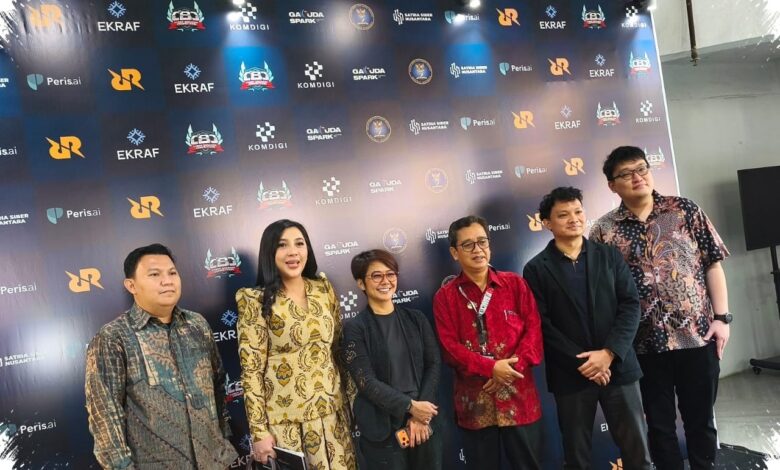
Cyber Breaker Competition Season 3 has turned into a clear sign that Indonesia’s cyber talent pipeline is expanding fast. The event drew 916 participants from 458 teams, making it one of the largest local cybersecurity competitions in the country.
The scale is even more striking when viewed against the competition’s earlier seasons. Season 1 had only 137 participants, before Season 2 rose to 616 participants, showing a steady climb that now points to deeper public interest in cybersecurity as a career path.
A competition that now functions as an ecosystem
Peris.ai Cybersecurity CEO and Co-Founder David Samuel said participation in Season 3 rose by more than 350% compared with the first edition. He said Cyber Breaker has grown beyond a contest and is now becoming a space for learning, community building, and talent development in Indonesia’s cybersecurity scene.
David added that the ecosystem built by Peris.ai has connected more than 1,500 talents. Participants came from multiple regions and represented six regional areas, including Java, Sumatra, and Kalimantan.
That spread suggests cybersecurity talent is not concentrated in one area alone. The larger need, David said, is for room, access, and an ecosystem that can connect industry, government, and communities so talent can develop legally, in a directed way, and with responsibility.
Competition format brought cybersecurity closer to the public
After the online qualifying round, the eight best teams advanced to the league and playoff stages. From there, the top three teams met in the offline final through the Lower Bracket Final and Grand Final to compete for the Season 3 title.
The format combined live hacking battles, public education, competitive storytelling, and an esports-style match experience. It was designed to make cybersecurity more accessible to the public, especially for digital-native audiences who may not usually engage with technical security topics.
Participants were tested across Web, Crypto, Pwn, and Reverse categories. The challenges measured analysis, problem-solving strategy, team role distribution, and decision-making under pressure.
| Stage | Description | Participants/Teams |
|---|---|---|
| Qualifying round | Held online | 458 teams, 916 participants |
| League and playoff stage | Advanced by the eight best teams | 8 teams |
| Offline final | Lower Bracket Final and Grand Final | 3 best teams |
RRQ and sponsors helped widen the reach
The partnership with esports organization RRQ set this year’s event apart. RRQ Chief Product Officer Nurul Fikri said the collaboration strengthened Cyber Breaker’s position as a local intellectual property linking cybersecurity, esports, education, content, community, and digital talent development.
Additional support came from PT Satria Siber Nusantara as the main sponsor. President Director Stepi Anriani said the company is committed to supporting national cybersecurity development.
Stepi also said the company is opening its doors without a test for participants who place in the top 10. She described the move as part of efforts to strengthen the cybersecurity talent ecosystem.
Government and industry still see a large talent gap
The Grand Final of Cyber Breaker Competition Season 3 was attended by representatives from government, industry, community, and academia. Among those present were Agustini Rahayu, Expert Staff for Intellectual Property and Digital Transformation at the Ministry of Creative Economy/Creative Economy Agency, and Slamet Aji Pamungkas, Deputy for Cybersecurity and Economic Sand Security at BSSN.
Their presence reflected broader cross-sector cooperation aimed at building national cyber resilience. The focus remains on digital literacy, human resource development, and support for local innovation.
Peris.ai said demand for cybersecurity talent will continue to rise as the industry grows. The Indonesian cybersecurity market is projected to increase from around Rp22.2 trillion in 2024 to around Rp52 trillion in 2027 and reach about Rp65.35 trillion in 2029.
Those figures highlight both the opportunity and the challenge facing Indonesia. Without stronger local talent, the country’s growing cybersecurity needs risk remaining heavily dependent on foreign players.