


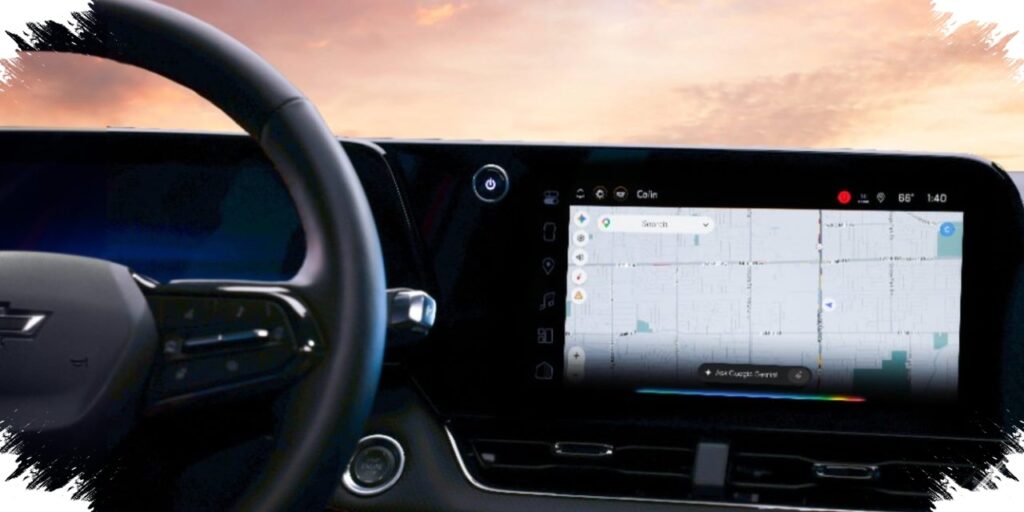
Driving with Google built-in is getting a more flexible voice assistant, as Gemini begins replacing Google Assistant in supported cars. The change is aimed at making in-car commands feel less rigid and more like a normal conversation, even when the request is phrased in an imperfect way.
Instead of forcing drivers to remember exact voice commands, Gemini is built to understand everyday speech and context. That matters behind the wheel, where short, rushed, or vague instructions are often more natural than carefully scripted ones.
Google is rolling out the update through software for vehicles that already support Google built-in. The first wave is limited to English-speaking users in the United States, with expansion planned in the months ahead.
For eligible drivers who are signed into their Google Account in the car, an option to switch to Gemini will appear. Once enabled, the assistant can be activated with “Hey Google,” the microphone icon on the home screen, or the steering wheel button.
More natural commands in the cabin
One of the biggest changes is how Gemini handles loose, conversational requests. Google says the system is designed to do a better job than Google Assistant at interpreting commands that are not phrased with precision.
A request such as “It’s fogging and freezing in here” can be understood as a need to raise the cabin temperature and turn on the defroster. That approach makes everyday interactions more practical, since drivers do not need to learn special wording for basic vehicle functions.
Gemini Live is also coming to the car for more open-ended conversations. Google positions it as a tool for brainstorming or idea generation during a trip, adding another layer to the assistant’s role beyond standard command-and-response use.
Connected to the vehicle itself
Because Google built-in runs on Android Automotive OS, Gemini can connect more deeply with the car’s systems. That means the assistant is not limited to general knowledge queries and can also help with functions tied to the vehicle.
A notable example is access to the manufacturer’s owner manual. With that support, Gemini can answer questions tailored to a specific model, although Google notes that availability and completeness will vary depending on the brand and vehicle.
That distinction is important, because the experience is not expected to be identical across all cars. The information available to Gemini depends on what each manufacturer provides.
Useful for daily driving and EV ownership
Google is also extending Gemini’s role into electric-vehicle use cases. The assistant can explain battery status in relation to a trip, including an estimate of arrival charge.
Google gives an example prompt such as “What’s my battery on arrival,” which can surface the expected battery level at the destination. From there, the conversation can continue into practical next steps, such as finding a cafe near a charging stop.
That kind of back-and-forth shows one of Gemini’s strengths: it can keep context across multiple questions. A driver can move from a technical battery question to a nearby amenity search without starting over.
Google says the rollout will expand to more languages and countries later. The company also says drivers will eventually be able to access their information securely from apps such as Gmail, Calendar, and Google Home.
For now, the focus remains on English-speaking users in the US and on features that are immediately useful inside the car. The move signals that Google wants Gemini to become a more central part of the driving experience, combining contextual answers, vehicle controls, and more natural conversation on the road.