

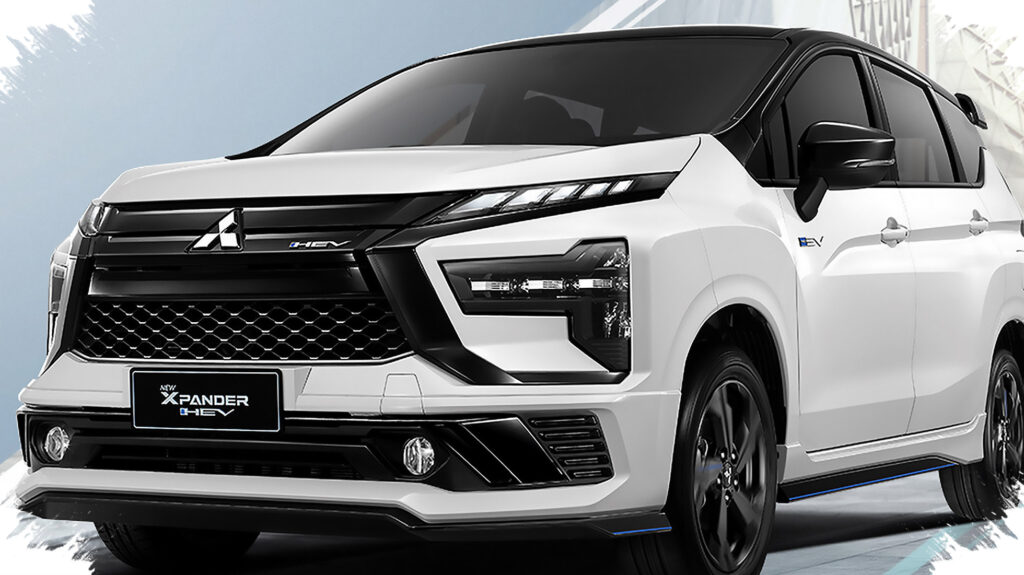
A family MPV that promises both strong low-end pull and frugal fuel use naturally stands out, and that is the combination Mitsubishi is pushing with the Xpander Hybrid. The claimed figure of 255 Nm is the headline, especially because it is presented as having the feel of a 2,500 cc engine during initial acceleration.
That character matters in city traffic, where stop-and-go driving often exposes the weakness of larger family cars. Mitsubishi is also positioning the Xpander Hybrid as a practical answer to that problem by claiming fuel efficiency in the 19.2 km per liter to 20 km per liter range.
The efficiency claim becomes even more relevant when the car is viewed as a seven-seat MPV aimed at daily family use. For urban driving, the figure is estimated at around 17 km per liter, while outside the city it is said to exceed 21 km per liter.
Price also plays into its appeal, with the Xpander Hybrid marketed from around Rp405 million. That places it in the range of buyers looking for a comfortable MPV but wanting lower operating costs over regular use.
Hybrid system built for everyday driving
Under the hood, Mitsubishi uses a 1,598 cc 4-cylinder Atkinson Cycle engine coded 4A92. It is paired with an AC Synchronous electric motor, and the combined output is around 114 hp to 116 hp.
The main focus, however, is not peak horsepower. The 255 Nm torque figure is intended to deliver an immediate response that feels more suitable for urban starts, light traffic bursts, and everyday family travel.
An e-CVT transmission helps shape that delivery into a smoother driving experience. Compared with a conventional automatic, it is meant to reduce sudden shifts and make progress feel more fluid in congested conditions.
Quiet cabin and practical layout
The hybrid setup also brings another benefit that families will notice quickly: reduced noise and vibration when electric mode is active. That quieter behavior can make daily commuting and longer trips feel less tiring for both driver and passengers.
Mitsubishi also keeps the package functional rather than overly complex. The Xpander Hybrid uses a 1.1 kWh lithium-ion battery, front-wheel drive, and a ground clearance of about 220 mm to 225 mm for added ease on uneven roads or light puddles.
Key specifications
| Specification | Detail |
|---|---|
| Engine | 1,598 cc 4-cylinder Atkinson Cycle |
| Engine code | 4A92 |
| Electric motor | AC Synchronous |
| Combined output | 114 hp to 116 hp |
| Torque | 255 Nm |
| Battery | Lithium-ion 1.1 kWh |
| Transmission | e-CVT |
| Drivetrain | FWD |
| Ground clearance | 220 mm to 225 mm |
Driving modes and safety equipment
Mitsubishi gives the Xpander Hybrid seven driving modes: Normal, Wet, Gravel, Tarmac, Mud, Charge, and EV. These modes are designed to give the driver more flexibility as road and surface conditions change.
For stability support, Active Yaw Control is included. The model also carries Diamond Sense safety features and six airbags to help protect occupants.
That combination shows Mitsubishi is not presenting the Xpander Hybrid as an efficiency-only product. It is being aimed at family buyers who still want a calm cabin, strong low-speed response, and a level of control that suits full passenger loads.
The result is a hybrid MPV positioned around a simple idea: deliver the pull of a larger engine feel without giving up the fuel economy that matters in daily use. In a segment where practicality usually comes first, the Xpander Hybrid tries to add stronger torque and better efficiency to the same family-oriented formula.